
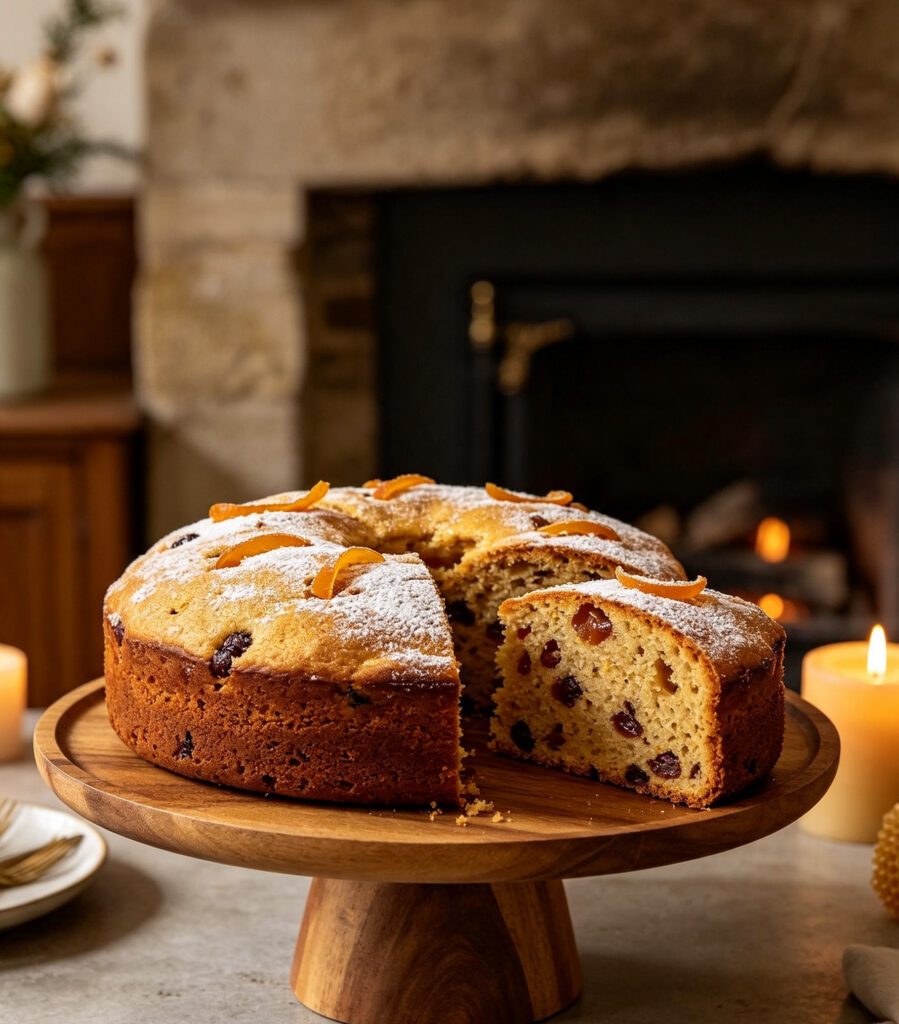
Twelfth Cake (Twelfth Night Cake)
The Quirky Foodster Team
Ingredients
- Unsalted butter, softened — 250 g (1 cup plus 2 tbsp)
- Sugar — 250 g (1.25 cups)
- Large eggs — 5
- Plain flour — 350 g (2.75 cups)
- Ground cinnamon — 1 tsp
- Ground nutmeg — 1/2 tsp
- Ground cloves — 1/4 tsp
- Fine salt — 1/2 tsp
- Mixed dried fruit (currants, raisins, chopped candied peel) — 400 g (2.5 cups)
- Sweet sherry or spiced wine — 100 ml (1/3 cup plus 1 tbsp)
- Dried bean and 1 dried pea, for tradition — 1
Method
- Preheat the oven to 160°C (320°F) and grease and line a 9-inch round cake tin.
- Cream the butter and sugar together until pale and fluffy, then beat in the eggs one at a time.
- Sift together the flour, cinnamon, nutmeg, cloves and salt, and fold gently into the butter mixture.
- Fold in the mixed dried fruit and sherry or spiced wine until evenly distributed.
- Push the dried bean and pea into the batter at two separate points, without marking their positions.
- Spoon the batter into the prepared tin and smooth the top.
- Bake for 1 hour 30 minutes to 1 hour 45 minutes, until a skewer inserted into the centre comes out clean; cover loosely with foil after 1 hour if the top is browning too quickly.
- Cool in the tin for 20 minutes before turning out onto a wire rack to cool completely.
Introduction: A rich, spiced fruit cake baked for Twelfth Night, this festive centrepiece traditionally concealed a bean and a pea used to crown a mock king and queen for the evening.
Cultural Background: Twelfth Night, marking the end of the twelve days of Christmas, was one of the most significant feast days of the Tudor calendar, celebrated with elaborate entertainment and this special cake. Whoever found the hidden bean in their slice was crowned King of the Bean for the night, and whoever found the pea became Queen, a tradition of role-reversal and revelry recorded in Tudor court accounts.
Tips: (cid:127) Warn guests in advance that the cake contains a hidden bean and pea, as a courtesy and safety measure. (cid:127) This cake keeps and matures well, so baking it a day or two in advance improves the flavour and moisture.
Variations: (cid:127) A layer of marchpane can be rolled out and placed over the top of the cooled cake for an especially festive, feast-worthy presentation. (cid:127) Chopped glace cherries or dried apricots can be added alongside the traditional currants and raisins for variety.
Storage: Wrap tightly and store in an airtight tin at room temperature for up to 2 weeks; the flavour improves after a few days.
Reheating: This cake is served at room temperature and does not require reheating.
Nutrition: Per serving (approx.): 380 kcal, 5 g protein, 52 g carbohydrate, 16 g fat, 2 g fibre, 180 mg sodium.
FAQs:
Q: What happens if someone finds the bean or pea?
A: Traditionally, the person who found the bean was crowned King of the Bean and the person who found the pea became Queen, presiding over the Twelfth Night festivities for the evening. (cid:127) Q: Can I omit the bean and pea for safety reasons? A: Yes, they can be omitted or replaced with a note describing the tradition tucked beside the cake, particularly if serving to young children.
- Unsalted butter, softened — 250 g (1 cup plus 2 tbsp)
- Sugar — 250 g (1.25 cups)
- Large eggs — 5
- Plain flour — 350 g (2.75 cups)
- Ground cinnamon — 1 tsp
- Ground nutmeg — 1/2 tsp
- Ground cloves — 1/4 tsp
- Fine salt — 1/2 tsp
- Mixed dried fruit (currants, raisins, chopped candied peel) — 400 g (2.5 cups)
- Sweet sherry or spiced wine — 100 ml (1/3 cup plus 1 tbsp)
- Dried bean and 1 dried pea, for tradition — 1
Please log in to leave a comment.