
Maslin Bread (Rye and Wheat Bread)
The Quirky Foodster Team
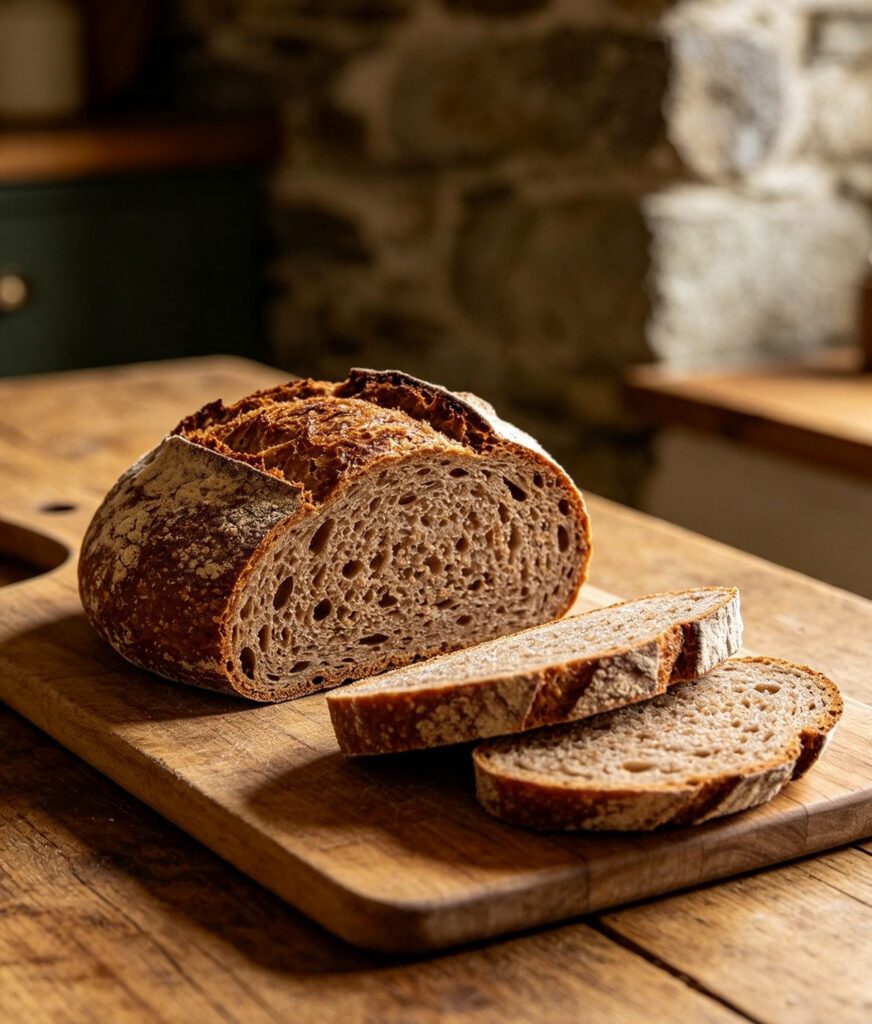
Ingredients
- Rye flour — 300 g (2.5 cups)
- Strong wholemeal wheat flour — 200 g (1.5 cups)
- Fine salt — 10 g (2 tsp)
- Fast-action dried yeast — 7 g (2 tsp)
- Warm water — 350 ml (1.5 cups)
- Honey — 1 tbsp
Method
- In a large bowl, combine the rye flour, wholemeal flour, salt and yeast.
- Stir the honey into the warm water until dissolved, then add to the dry ingredients and mix to form a sticky dough.
- Knead on a floured surface for 8-10 minutes; the dough will be denser and less elastic than a pure wheat dough.
- Place in a lightly oiled bowl, cover with a tea towel, and leave to rise in a warm place for 1 hour, or until noticeably risen.
- Knock back the dough and shape into a loaf, placing it in a greased loaf tin.
- Cover and prove for a further 30-40 minutes.
- Preheat the oven to 200°C (400°F) and bake for 35-40 minutes, until deeply golden brown and hollow-sounding when tapped.
- Cool on a wire rack before slicing.
Introduction: A hearty, dense loaf made from a mixture of rye and wheat flours, maslin bread was the everyday bread of ordinary Tudor households.
Cultural Background: Maslin, meaning a mixture of grains, was the standard bread of common Tudor households, made from a blend of wheat and rye that was more affordable and reliably available than the pure white wheat flour used for manchet. Its darker colour and denser crumb reflected the everyday, practical nature of the diet for the majority of the population.
Tips: (cid:127) Rye flour produces a stickier, denser dough than wheat flour alone, so resist the urge to add too much extra flour while kneading. (cid:127) This bread keeps well and often tastes even better a day after baking, once the flavours have settled.
Variations: (cid:127) Add a tablespoon of caraway seeds to the dough for a traditional, slightly aromatic variation. (cid:127) Adjust the ratio of rye to wheat flour to taste; a higher proportion of rye gives a denser, more rustic loaf.
Storage: Store wrapped in a cloth or paper bag at room temperature for up to 4 days.
Reheating: Refresh briefly in an oven preheated to 180°C (350°F) for 5 minutes, or toast slices as needed.
Nutrition: Per serving (approx., 1 slice): 150 kcal, 5 g protein, 30 g carbohydrate, 1 g fat, 3 g fibre, 260 mg sodium.
FAQs:
Q: Why is maslin bread denser than manchet?
A: The inclusion of rye flour and wholemeal wheat, rather than finely bolted white wheat flour, naturally produces a heavier, denser crumb. (cid:127) Q: Can I make this bread with all wheat flour? A: You can, though it will no longer be a true maslin; the mix of rye and wheat is what defines this historical bread.
- Rye flour — 300 g (2.5 cups)
- Strong wholemeal wheat flour — 200 g (1.5 cups)
- Fine salt — 10 g (2 tsp)
- Fast-action dried yeast — 7 g (2 tsp)
- Warm water — 350 ml (1.5 cups)
- Honey — 1 tbsp
Please log in to leave a comment.