
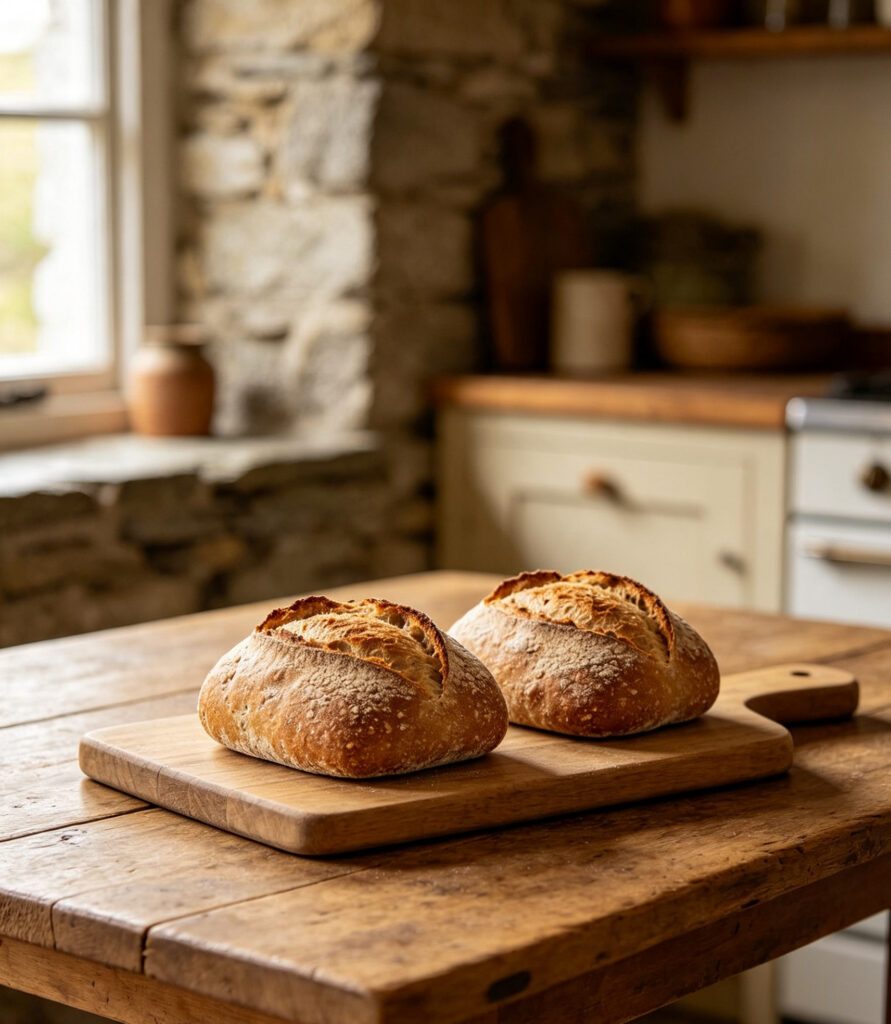
Emmer Wheat Loaves
The Quirky Foodster Team
Ingredients
- Emmer wheat flour — 350 g (2.8 cups)
- Warm water — 220 ml (0.9 cup)
- Salt — 1 tsp
- Natural leaven or a small piece of reserved fermented dough, optional — 1 tsp
Method
- Combine the emmer flour and salt in the bowl.
- If using a leaven, dissolve it in the warm water first, then add to the flour; otherwise add the water directly for an unleavened loaf.
- Mix and knead into a firm dough, about 8 minutes.
- If leavened, let rise in a warm place for 1-2 hours, until noticeably puffed.
- Shape into a small, dense round loaf.
- Bake in a tannur-style oven or a conventional oven at 220C (425F) for 25-30 minutes, until firm and lightly browned.
- Cool before slicing.
Introduction: A denser loaf made from emmer wheat flour, an alternative to barley bread using Mesopotamia’s other significant cultivated grain.
Cultural Background: Emmer wheat, as noted in the Sides section, is well attested as a significant Mesopotamian grain alongside barley, and bread-baking itself, whether in tannur-style ovens or on hot griddles, is extensively documented archaeologically and textually across ancient Mesopotamian sites; a loaf made specifically from emmer flour reflects this well-attested grain used in its most fundamental cooked form.
Tips: – Emmer flour produces a denser crumb than modern bread wheat; do not expect the same lightness as a modern loaf. – A small piece of reserved dough from a previous batch, kept and fed like a simple starter, is a plausible period-consistent way of achieving a leavened loaf, though unleavened flatbreads were likely more common for everyday eating.
Variations: – Naturally vegan as written. – A mix of emmer and barley flour gives a loaf using both of Mesopotamia’s significant grains together.
Storage: Keeps wrapped at room temperature for 2-3 days.
Reheating: Warm briefly in a moderate oven for 5 minutes if a softer texture is preferred.
Nutrition: Per serving (approx.): 200 kcal, 6 g protein, 40 g carbohydrate, 1.5 g fat, 4 g fibre.
FAQs:
Q: Was leavened bread common in ancient Mesopotamia?
A: Both leavened and unleavened breads are plausible based on general ancient Near Eastern baking practices, though unleavened flatbreads were likely the more common everyday form; this recipe offers the leavening step as an optional variation.
Q: How is emmer bread different from modern wheat bread?
A: It produces a denser, more close-textured crumb than modern bread wheat, similar to loaves made today from farro, emmer’s close modern relative.
- Emmer wheat flour — 350 g (2.8 cups)
- Warm water — 220 ml (0.9 cup)
- Salt — 1 tsp
- Natural leaven or a small piece of reserved fermented dough, optional — 1 tsp
Please log in to leave a comment.