
Rice and Fish Pottage
The Quirky Foodster Team
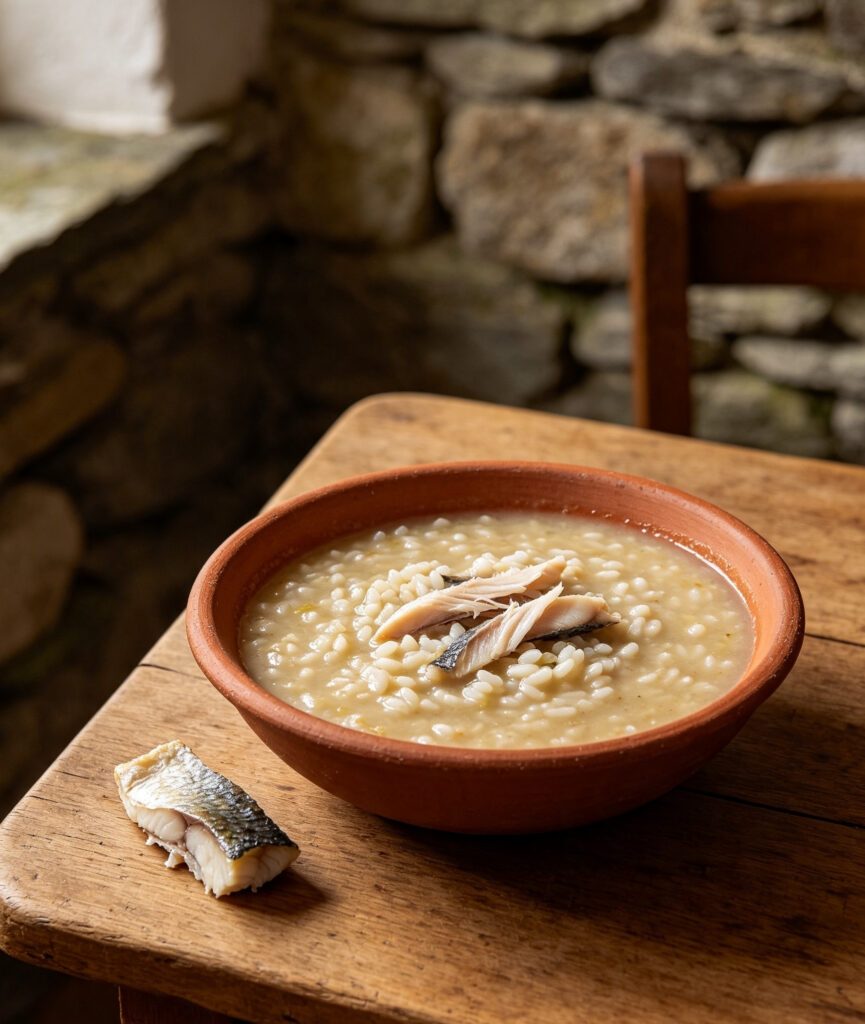
Ingredients
- Rice — 250 g (1.25 cups)
- River fish, cleaned and cut into pieces — 400 g (0.9 lb)
- Onion, chopped — 1
- Water — 750 ml (3 cups)
- Salt — 1 pinch
Method
- Bring the water to a simmer in the pot and add the rice and onion.
- Cook for 10 minutes, then add the fish pieces.
- Continue simmering gently for 12-15 minutes, until the rice is tender and the fish is cooked through and flaking easily.
- Season with salt and serve hot.
Introduction: Rice simmered with river fish, drawing on two staple foods of the Niger inland delta: West African rice cultivation and the fishing communities of the river’s seasonal floods.
Cultural Background: Rice, particularly in the inland Niger delta, is documented as a staple crop of the Mali Empire, and Ibn Battuta directly lists rice among the foods traded for along his route through Mali territory; fishing during the Niger delta’s seasonal floods is separately documented as a major subsistence activity, alongside farming and herding, for much of the empire’s population.
Tips: – Add the fish partway through cooking rather than at the start, so it stays tender rather than overcooking. – West African rice varieties can differ in cooking time from long-grain rice elsewhere; check for tenderness from the 10-minute mark.
Variations: – Naturally gluten-free and dairy-free as written. – Okra can be added, following the well-attested West African use of okra as a thickener (see Soups section).
Storage: Refrigerate covered for up to 2 days, as fish dishes are best eaten fresh.
Reheating: Reheat gently in a pot over low heat with a splash of water for 5-6 minutes, stirring.
Nutrition: Per serving (approx.): 280 kcal, 22 g protein, 38 g carbohydrate, 4 g fat.
FAQs:
Q: Is rice really documented as a Mali Empire crop?
A: Yes, rice cultivation, particularly in the Niger inland delta, is documented as a staple crop of the Mali Empire, and Ibn Battuta directly records trading for rice among other local foods during his journey through Mali territory.
Q: How important was river fishing to the Mali Empire’s economy?
A: Fishing during the Niger delta’s seasonal floods is documented as a major subsistence activity for much of the population, alongside farming and herding, reflecting the river’s central importance to the empire’s food economy.
- Rice — 250 g (1.25 cups)
- River fish, cleaned and cut into pieces — 400 g (0.9 lb)
- Onion, chopped — 1
- Water — 750 ml (3 cups)
- Salt — 1 pinch
Please log in to leave a comment.