
Emmer Bread
The Quirky Foodster Team
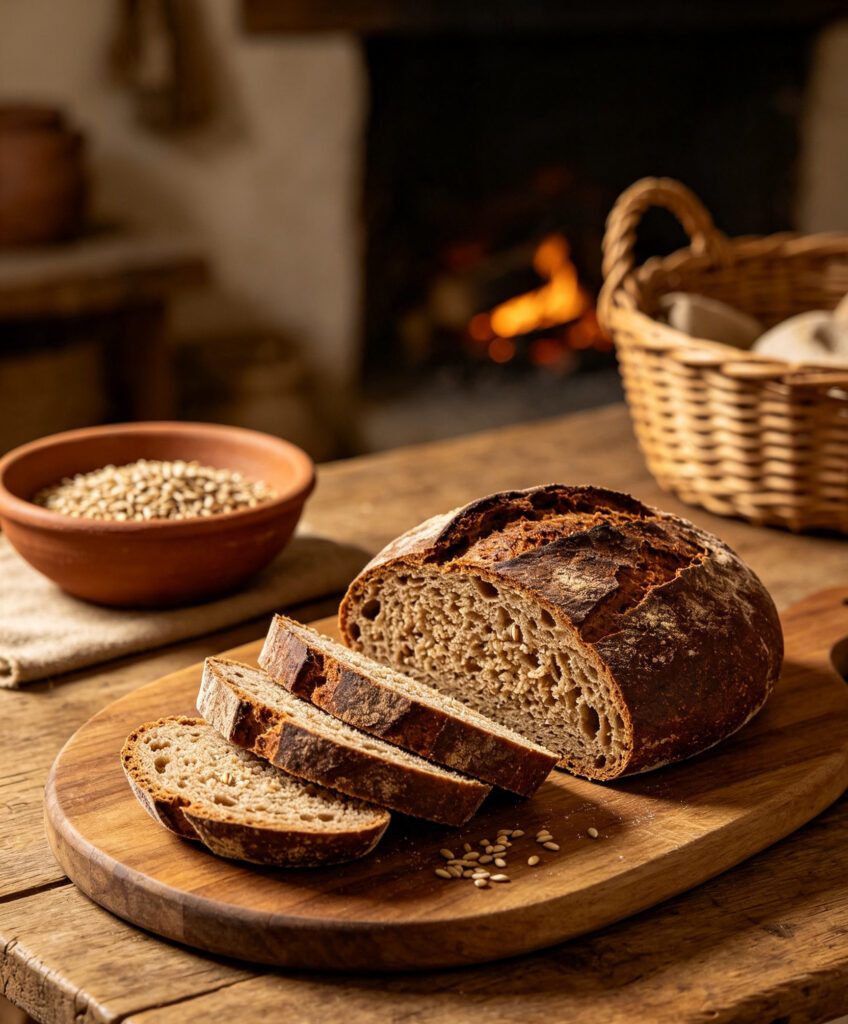
Ingredients
- Emmer wheat flour — 350 g (2.8 cups)
- Warm water — 220 ml (0.9 cup)
- Salt — 1 tsp
Method
- Combine the emmer flour and salt in the bowl.
- Gradually add the water, mixing to a firm, workable dough.
- Knead briefly to bring the dough together, about 5 minutes.
- Shape into a small, dense round loaf.
- Bake on a hot griddle or in a simple clay oven for 25-30 minutes, until firm and lightly browned.
- Cool before slicing.
Introduction: A dense loaf made from emmer wheat flour, using one of the two staple cereals most consistently attested across Iron Age Gallic farming sites.
Cultural Background: Emmer wheat is well documented in Iron Age Gallic and central European archaeobotanical assemblages alongside barley, and simple hearth or griddle-baked breads made without yeast represent the technologically straightforward bread form supported by the basic cooking equipment documented archaeologically at continental Celtic settlements.
Tips: – Emmer flour produces a denser crumb than modern bread wheat; do not expect the same lightness as a modern loaf. – Cook over moderate rather than high heat so the inside cooks through before the outside burns.
Variations: – Naturally vegan as written. – A little butter worked into the dough gives a richer, slightly more tender loaf, reflecting Gaul’s documented dairy use.
Storage: Keeps wrapped at room temperature for 2-3 days.
Reheating: Warm briefly on a dry griddle or in a low oven for a few minutes if a softer texture is preferred.
Nutrition: Per serving (approx.): 190 kcal, 6 g protein, 38 g carbohydrate, 1 g fat, 4 g fibre.
FAQs:
Q: Why griddle- or hearth-bake rather than a modern oven?
A: Domestic ovens of the modern kind were not standard equipment in Iron Age Gallic households; a hot griddle, hearthstone or simple clay oven was the widely available and archaeologically supported method for baking bread of this kind.
Q: How does emmer bread differ from modern wheat bread?
A: It produces a denser, more close-textured crumb than modern bread wheat, similar to loaves made today from farro, emmer’s close modern relative.
- Emmer wheat flour — 350 g (2.8 cups)
- Warm water — 220 ml (0.9 cup)
- Salt — 1 tsp
Please log in to leave a comment.