
Buckwheat Noodles with Dipping Sauce
The Quirky Foodster Team
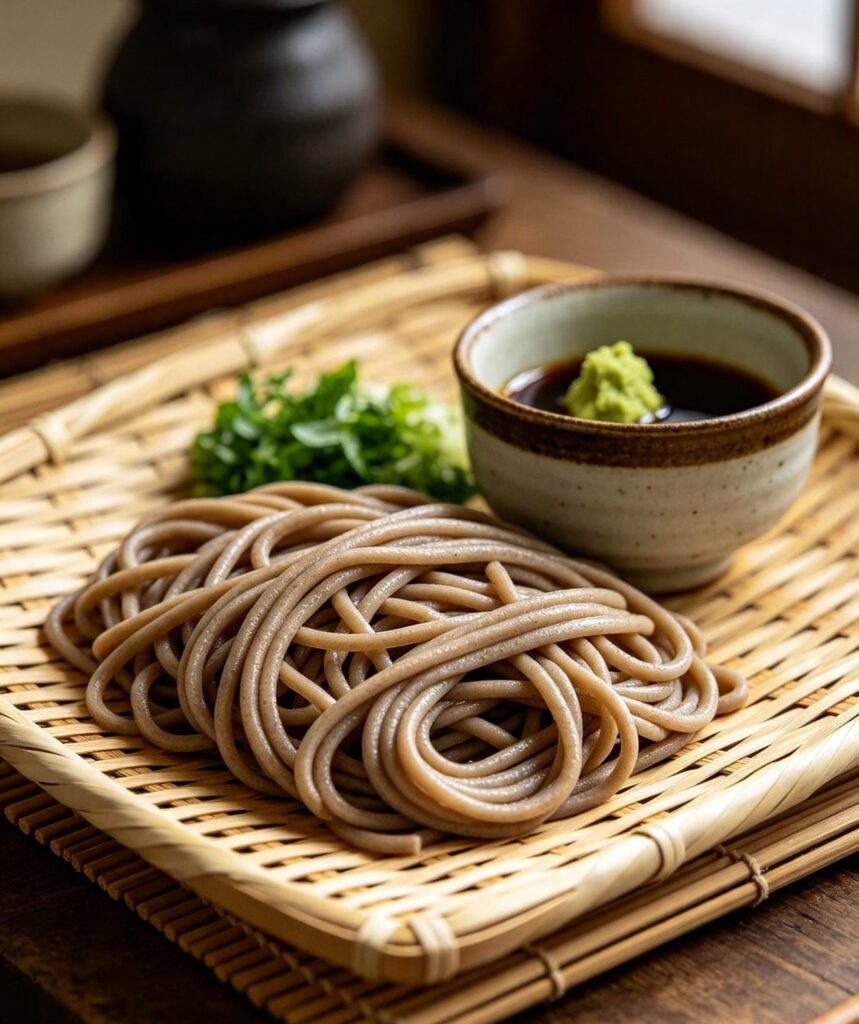
Ingredients
- Dried soba noodles — 300 g (10.6 oz)
- Dashi broth — 200 ml (3/4 cup)
- Soy sauce — 60 ml (1/4 cup)
- Mirin — 60 ml (1/4 cup)
- Spring onions, finely sliced — 2
- Grated fresh ginger or wasabi, to serve — a little
Method
- Cook the soba noodles in boiling water according to the packet, then drain and rinse thoroughly under cold water.
- Combine the dashi, soy sauce, and mirin in a small saucepan and bring to a brief simmer, then let cool or chill.
- Divide the chilled dipping sauce among small bowls.
- Serve the cold noodles alongside, with spring onion and grated ginger or wasabi for dipping.
Introduction: Buckwheat noodles served chilled with a savoury dipping sauce, a popular midday meal that gained particular prominence during the Edo period.
Cultural Background: Soba noodles rose dramatically in popularity during the Edo period, when soba shops became a common feature of urban life, offering city dwellers a quick, satisfying meal that remains deeply tied to Japanese food culture.
Tips: Rinsing the noodles thoroughly under cold water removes excess starch and keeps them from clumping.
Variations: A few pieces of tempura can be served alongside for a heartier meal.
Nutrition: Approx. 320 kcal per serving.
FAQs:
Q: Why did soba become so popular in the Edo period?
A: The growth of Edo (modern Tokyo) as a bustling urban centre created demand for quick, affordable meals, and soba shops flourished to meet this need.
Q: What is dashi?
A: A foundational Japanese broth typically made from kombu seaweed and dried bonito flakes, forming the flavour base of countless dishes.
- Dried soba noodles — 300 g (10.6 oz)
- Dashi broth — 200 ml (3/4 cup)
- Soy sauce — 60 ml (1/4 cup)
- Mirin — 60 ml (1/4 cup)
- Spring onions, finely sliced — 2
- Grated fresh ginger or wasabi, to serve — a little
Please log in to leave a comment.