
Breads
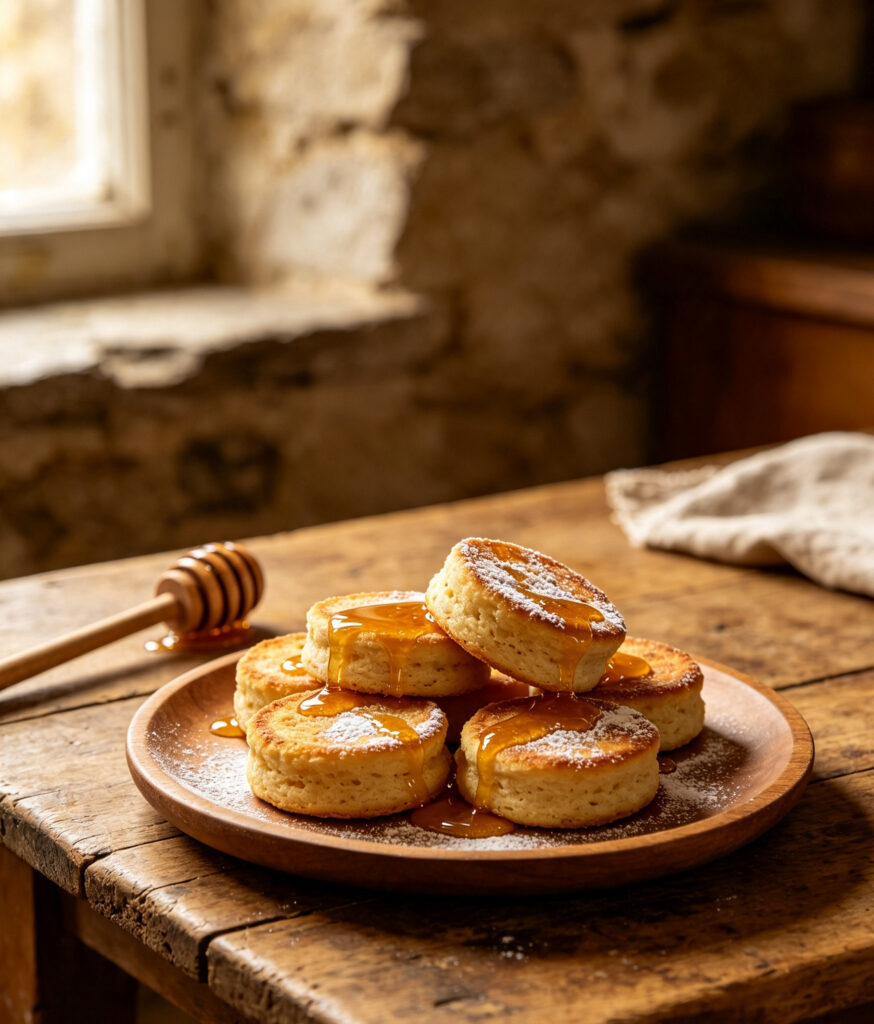
Honey Wheat Cakes (Ugot Devash)
sjfegan
Ingredients
- 250g (2 cups) Wheat flour
- 85g (1/4 cup) Honey
- 180ml (3/4 cup) Warm water
- 2 tbsp olive oil
Method
- Combine the honey, water and olive oil, mixing well.
- Add the wheat flour, combining into a soft dough.
- Divide into small portions and flatten each into a small round cake.
- Heat a griddle over medium heat.
- Cook each cake for 3–4 minutes per side until golden and cooked through.
- Serve warm.
Introduction: Small wheat cakes lightly sweetened with honey, a treasured treat reflecting the relative luxury of wheat flour and honey in Carthaginian households.
Cultural Background: While barley served as the everyday grain, wheat flour was valued as a somewhat finer ingredient, and combining it with honey for a lightly sweetened cake would have made for a special treat among Carthaginian households of greater means.
Tips: Cook over moderate heat, as the honey in the dough can cause faster browning. Watch closely to avoid burning, given the added sugar content.
Variations: Sprinkle with a few sesame seeds before cooking for extra texture. Serve alongside fresh fruit.
Storage: Store cooled cakes in an airtight container at room temperature for up to 2 days.
Reheating: Warm briefly on a dry griddle for a minute per side.
Nutrition: Per serving (approx., 1 cake): 200 kcal, 4 g protein, 5 g fat, 36 g carbohydrate.
FAQs:
Q: Was wheat flour a luxury in Carthage?
A: Relative to barley, wheat was somewhat more valued and less universally available, making wheat-based treats like this a step up from everyday fare for many households.
Q: Was honey widely available in Carthaginian territory?
A: Yes, beekeeping was practised across the ancient Mediterranean and North African world, making honey an accessible, if valued, sweetener.
Please log in to leave a comment.