
Breads
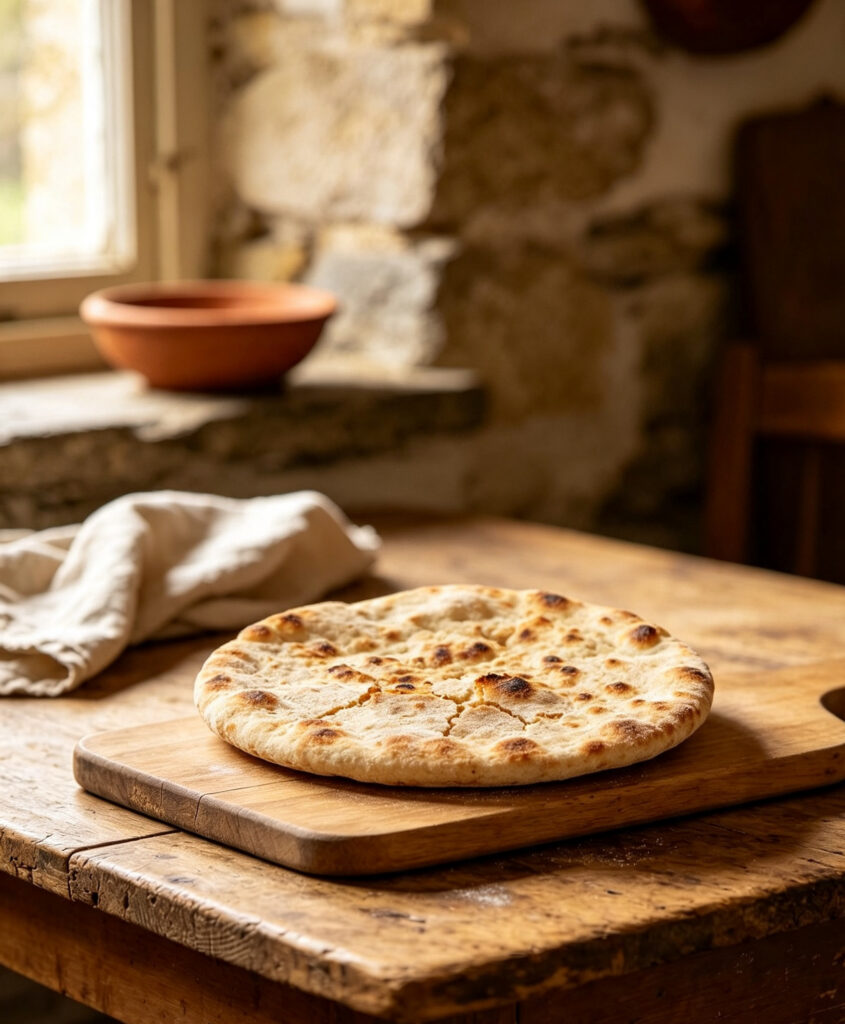
Barley Flatbread (Lechem Se’orim)
sjfegan
Ingredients
- 420g (3 cups) Barley flour
- 360ml (1.5 cups) Warm water
- 1 tsp salt
- 2 tbsp olive oil
Method
- Combine the barley flour, water, salt and olive oil into a soft, cohesive dough.
- Divide into portions and flatten each into a round.
- Heat a flat griddle over medium-high heat.
- Cook each flatbread for 3–4 minutes per side until lightly browned and cooked through.
- Serve warm.
Introduction: A simple, dense flatbread made from barley flour, the everyday staple bread of ordinary Carthaginian households.
Cultural Background: Barley bread formed the daily staple across much of the ancient Mediterranean and North African world, including Carthage, wheat bread generally reserved for wealthier households and special occasions.
Tips: Barley flour produces a denser dough than wheat — work it gently. Cook over moderate heat so the bread cooks through without burning.
Variations: Add a few crushed herbs to the dough for extra flavour. Serve alongside cheese, olives or a legume dish.
Storage: Store cooled flatbread in an airtight container at room temperature for up to 1 day.
Reheating: Warm briefly on a dry griddle for a minute or two per side.
Nutrition: Per serving (approx., 1 flatbread): 220 kcal, 6 g protein, 5 g fat, 40 g carbohydrate.
FAQs:
Q: Was barley bread the everyday staple across Carthage?
A: Yes, barley was more widely accessible and affordable than wheat, making barley bread the common daily food for most Carthaginian households.
Q: Was Carthaginian bread-making sophisticated?
A: Agricultural writings from Carthage, later studied by the Romans, suggest a well-developed understanding of grain cultivation and processing across the region.
Please log in to leave a comment.