
Lunches
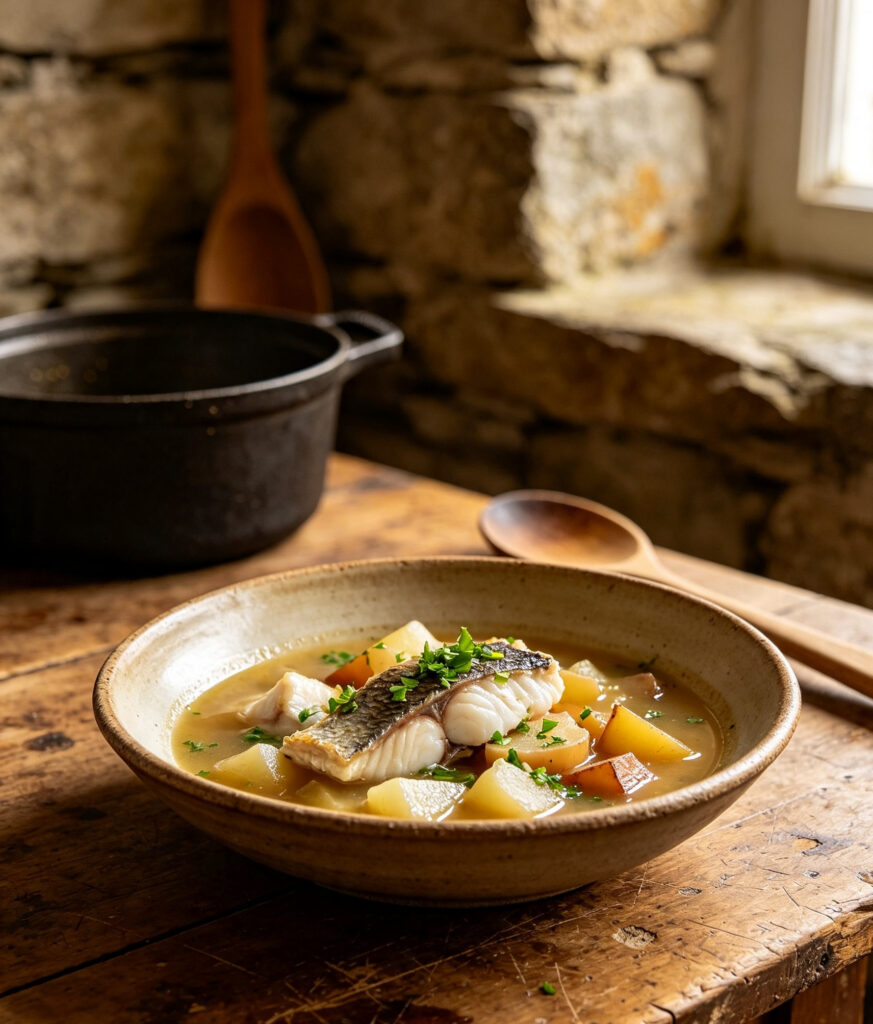
Fish Stew with Silphium (Nazid Dagim)
sjfegan
Ingredients
- 600g Firm white fish, cut into pieces
- 1 onion, chopped
- 2 tomatoes-substitute: use extra onion and herbs for period accuracy, chopped
- 2 tbsp olive oil
- 1 tsp ground fennel seed (as a silphium substitute)
- 2 cloves garlic, minced
- 480ml (2 cups) Water
- Salt to taste
Method
- Heat the olive oil in a pot and sauté the onion and garlic until softened.
- Add the fennel seed and cook briefly until fragrant.
- Add the water and bring to a simmer.
- Add the fish pieces and simmer gently for 12–15 minutes until just cooked through.
- Season with salt before serving hot.
Introduction: Fish simmered with vegetables and a pungent herb seasoning, a hearty lunch reflecting Carthage’s position as a great maritime and trading power.
Cultural Background: As master seafarers controlling extensive Mediterranean trade routes, Carthaginians had ready access to fish and to prized seasonings like silphium (a now-extinct plant valued across the ancient world), reflected here through a modern aromatic substitute.
Tips: Simmer the fish gently rather than boiling vigorously, to keep it tender. Fennel seed offers a reasonable modern approximation of silphium’s aromatic, slightly bitter character.
Variations: Add a handful of olives for extra Mediterranean flavour. Serve with bread to soak up the broth.
Storage: Refrigerate in an airtight container for up to 2 days.
Reheating: Reheat gently on the stovetop over low heat until warmed through.
Nutrition: Per serving (approx.): 240 kcal, 26 g protein, 10 g fat, 6 g carbohydrate.
FAQs:
Q: What was silphium?
A: A now-extinct plant, likely from North Africa, extraordinarily prized across the ancient Mediterranean world for its flavour and other properties; its exact taste is unknown today, though fennel and asafoetida are commonly suggested as approximations.
Q: Why was Carthage known for its fish trade?
A: As a dominant maritime power controlling key Mediterranean routes, Carthage had extensive access to seafood and a strong tradition of fish processing and trade, including the production of fish sauces.
Please log in to leave a comment.