
Breads
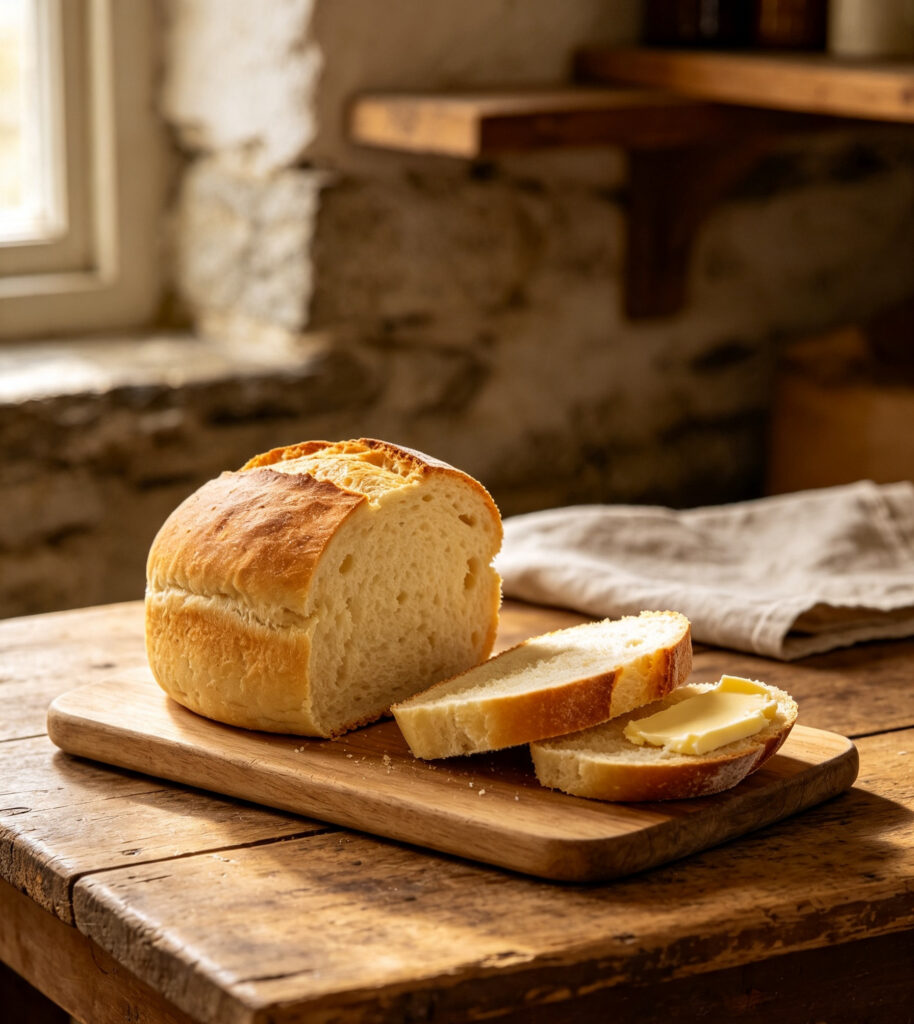
Sally Lunn Bread (Sally Lunn Bread)
sjfegan
Ingredients
- 4 cups flour (500 g / 1 lb 2 oz)
- 50g (1/4 cup) Sugar
- 2 tsp active dry yeast (or a traditional leavening)
- 240ml (1 cup) Warm milk
- 3 eggs
- 115g (1/2 cup) Butter, softened
- 1 tsp salt
Method
- Dissolve the yeast and a little sugar in the warm milk and let sit for 10 minutes until foamy.
- Combine the flour, remaining sugar and salt in a large bowl, then add the yeast mixture, eggs and softened butter, beating thoroughly until smooth (this dough is looser than a standard bread dough).
- Cover and let rise in a warm place for 1–1.5 hours, or until doubled.
- Pour into a greased round baking tin or mould.
- Let rise for a further 30 minutes.
- Preheat the oven to 180°C (350°F) and bake for 35–40 minutes until deeply golden and a skewer comes out clean.
Introduction: A soft, slightly sweet enriched bread, baked in a round mould, a beloved bread with English roots that became a fixture of colonial Southern tables.
Cultural Background: Sally Lunn bread carries English culinary heritage into the colonies, particularly cherished in the Southern colonies like Virginia, its light, slightly sweet enriched dough making it suitable for both everyday meals and more genteel occasions.
Tips: This dough is notably softer and stickier than a standard bread dough — beat it thoroughly rather than kneading by hand. Let the bread cool for at least 15 minutes before slicing to allow the crumb to set.
Variations: Serve warm with butter, a classic and simple presentation. Add a little grated nutmeg to the dough for extra fragrance, a period-appropriate touch.
Storage: Store wrapped at room temperature for up to 2 days.
Reheating: Warm briefly in an oven at 160°C (325°F) for 5–8 minutes to refresh.
Nutrition: Per serving (approx., 1 slice): 240 kcal, 6 g protein, 8 g fat, 36 g carbohydrate.
FAQs:
Q: Where does the name ‘Sally Lunn’ come from?
A: Its exact origin is debated, with some accounts linking it to an English bun-seller and others to a French phrase, but the bread itself carries clear English colonial heritage.
Q: Was this bread eaten every day or reserved for special occasions?
A: Its slightly enriched, sweeter character made it suitable for both everyday meals and more special gatherings, particularly in the Southern colonies.
Please log in to leave a comment.