
Lunches
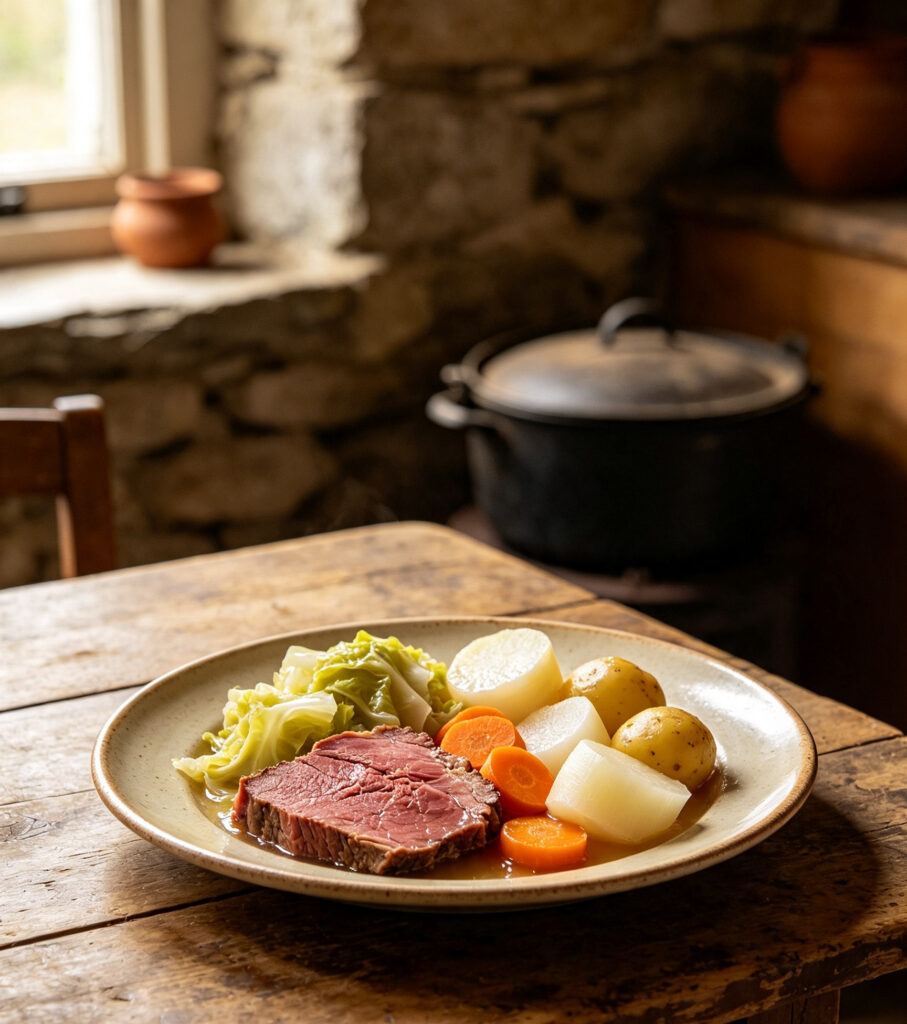
Boiled Dinner (New England Boiled Dinner)
sjfegan
Ingredients
- 1kg Salted beef brisket, soaked overnight to reduce saltiness
- 4 potatoes, halved
- 4 carrots, cut into pieces
- 1 turnip, cubed
- 1/2 cabbage, cut into wedges
- 1 onion, quartered
- 8 cups water (1.9 litres / 64 fl oz)
Method
- Drain the soaked beef and place in a large pot with fresh water to cover.
- Bring to a boil, skim any foam, then reduce to a simmer and cook for 2–2.5 hours until tender.
- Add the potato, carrot, turnip and onion, and simmer for a further 25 minutes.
- Add the cabbage wedges and simmer for a final 12–15 minutes until all the vegetables are tender.
- Slice the beef and serve with the vegetables and a little of the cooking broth.
Introduction: Salted beef simmered with root vegetables and cabbage, a hearty and practical one-pot meal from the colonial New England kitchen.
Cultural Background: Boiled dinners reflect the practical, preservation-focused cooking of colonial households, salted meat and root vegetables that kept well through winter combined into one substantial, communal pot for a satisfying midday meal.
Tips: Soaking the salted beef overnight is essential to reduce excessive saltiness before cooking. Add the vegetables in stages according to their cooking times, so nothing is overdone.
Variations: Serve with a simple mustard or horseradish sauce on the side. Add a few beets, cooked separately to avoid colouring the whole pot, for a New England-style presentation.
Storage: Refrigerate in an airtight container for up to 3 days.
Reheating: Reheat gently on the stovetop over medium heat until warmed through.
Nutrition: Per serving (approx.): 420 kcal, 32 g protein, 18 g fat, 32 g carbohydrate.
FAQs:
Q: Why was the beef salted?
A: Salting was a fundamental preservation method in colonial times, before refrigeration, allowing meat to be stored for extended periods.
Q: Is this dish an ancestor of modern New England boiled dinner?
A: Yes, this colonial-era practice is a direct precursor to the boiled dinner still enjoyed in New England households today.
Please log in to leave a comment.