
Holidays & Special Occasions
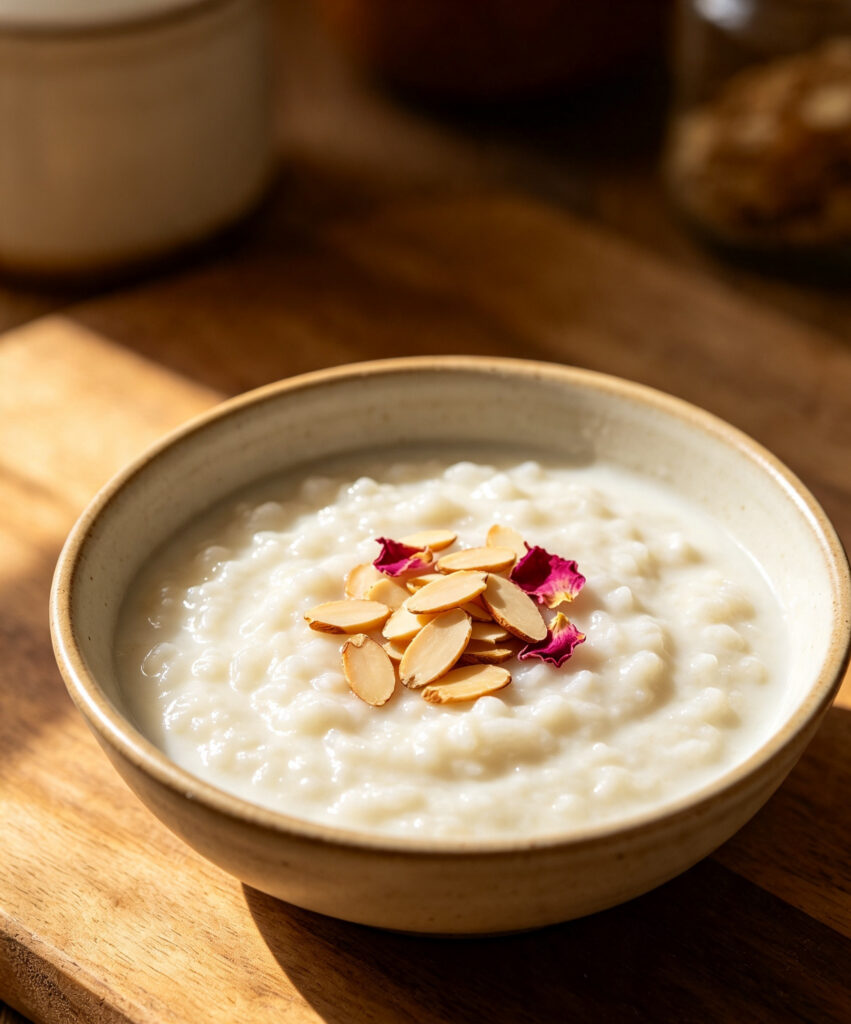
Court Banquet Almond Milk Rice Pudding (Muhallabiyya al-Balat)
sjfegan
Ingredients
- 60g (1/2 cup) Rice flour
- 960ml (4 cups) Almond milk
- 100g (1/2 cup) Sugar
- 2 tbsp rosewater
- 35g (1/4 cup) Chopped pistachios, to garnish
- 1 tbsp dried rose petals, to garnish (optional)
Method
- Whisk the rice flour with a little of the almond milk to form a smooth slurry.
- Bring the remaining almond milk and sugar to a gentle simmer in a saucepan.
- Gradually whisk in the rice flour slurry, stirring constantly.
- Cook, stirring, for 8–10 minutes until thickened into a smooth, silky pudding.
- Remove from heat and stir in the rosewater.
- Pour into individual serving dishes and chill for at least 2 hours.
- Garnish with chopped pistachios and dried rose petals before serving to the gathered celebration.
Introduction: A luxuriously smooth pudding of rice flour and almond milk, perfumed with rosewater, a dessert reserved for the grandest occasions of the Abbasid court.
Cultural Background: Muhallabiyya represented the pinnacle of Abbasid dessert sophistication, its silky texture and delicate perfume of rosewater reflecting the refined tastes of court banquets, where such elegant sweets marked the most significant celebrations.
Tips: Whisk constantly while thickening to keep the pudding perfectly smooth and lump-free. Chill thoroughly, as this dessert is traditionally served cold, with a silky, set texture.
Variations: Use cow’s milk in place of almond milk for a simpler, though less period-luxurious, version. Adjust the rosewater to taste, as it can vary in strength.
Storage: Store covered in the refrigerator for up to 4 days.
Reheating: This dessert is served cold and is not reheated.
Nutrition: Per serving (approx.): 220 kcal, 3 g protein, 8 g fat, 34 g carbohydrate.
FAQs:
Q: What made muhallabiyya a court dessert specifically?
A: Its refined, silky texture and use of costly ingredients like rosewater and almond milk reflected the sophisticated tastes associated with Abbasid court banquets and grand celebrations.
Q: Is this dessert still made today?
A: Yes, variations of muhallabiyya remain a beloved dessert across the Middle East, a direct legacy of Abbasid-era culinary refinement.
Please log in to leave a comment.