
Lunches
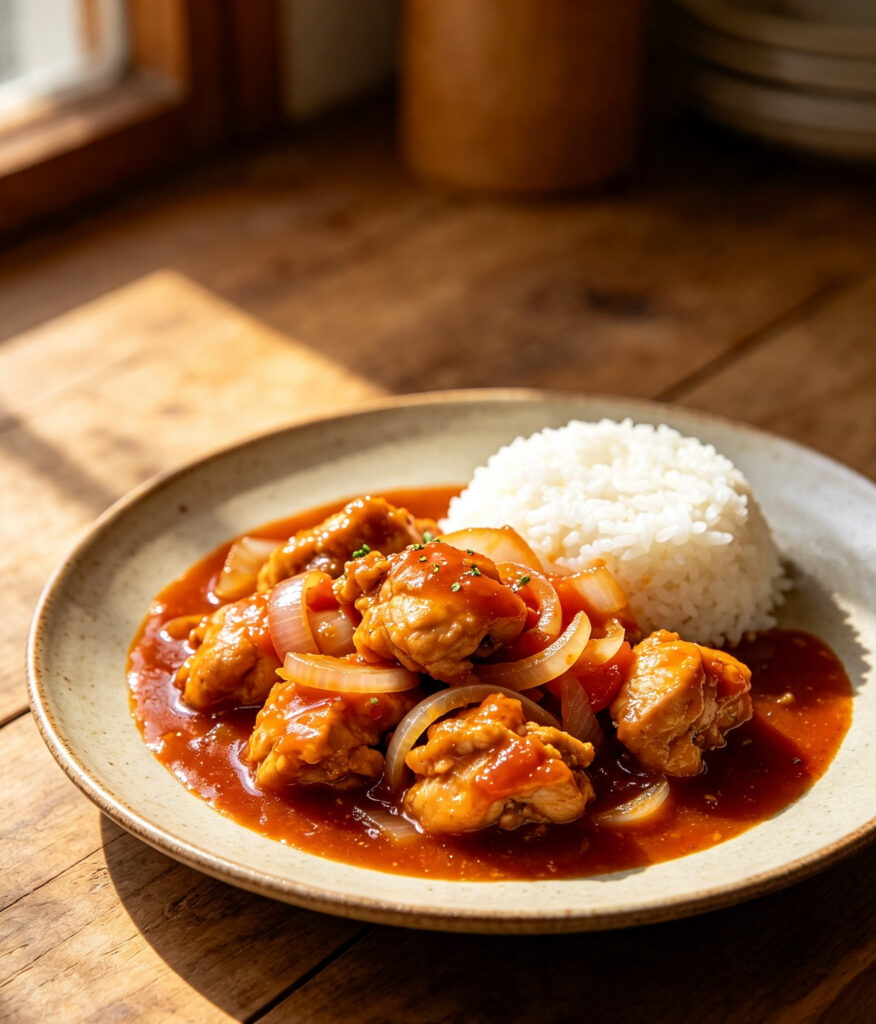
Sweet and Sour Chicken (Sikbaj)
sjfegan
Ingredients
- 1 whole chicken, cut into pieces (about 1.5 kg / 3.3 lb)
- 1 onion, chopped
- 60ml (1/4 cup) Vinegar
- 3 tbsp honey
- 75g (1/2 cup) Dried apricots, chopped
- 1 tsp ground cinnamon
- 1/2 tsp ground ginger
- 3 tbsp oil
- 480ml (2 cups) Water
- Salt to taste
Method
- Heat the oil in a large pot and brown the chicken pieces on all sides.
- Add the onion and sauté until softened.
- Add the vinegar, honey, dried apricots, cinnamon, ginger and water.
- Bring to a simmer, then cover and cook over low heat for 40–45 minutes until the chicken is tender.
- Season with salt.
- Simmer uncovered for a final 5–10 minutes to reduce and thicken the sauce before serving hot.
Introduction: Chicken simmered in a rich vinegar and honey sauce with dried fruit, one of the most celebrated dishes of Abbasid haute cuisine.
Cultural Background: Sikbaj was considered among the most prestigious dishes of the Abbasid court, its sophisticated balance of sweet, sour and savoury flavours documented extensively in surviving cookbooks, reflecting the era’s celebrated culinary refinement.
Tips: Balance the vinegar and honey carefully, tasting as you go, to achieve the dish’s characteristic sweet-sour harmony. Simmer gently and patiently for the chicken to become properly tender and the flavours to meld.
Variations: Add a few raisins alongside the apricots for extra sweetness. Serve over rice to soak up the rich sauce.
Storage: Refrigerate in an airtight container for up to 3 days.
Reheating: Reheat gently on the stovetop over low heat, stirring occasionally, until hot throughout.
Nutrition: Per serving (approx.): 420 kcal, 32 g protein, 20 g fat, 26 g carbohydrate.
FAQs:
Q: Why was sikbaj so prestigious in Abbasid cuisine?
A: It was considered a hallmark dish of refined cooking, its complex balance of sweet, sour and spiced flavours documented in numerous surviving Abbasid-era culinary texts as a mark of sophisticated taste.
Q: What made Abbasid cooking so distinctive?
A: The era is celebrated for its elaborate use of spices, sweet-sour flavour combinations and dried fruits, reflecting extensive trade connections and genuine culinary artistry.
Please log in to leave a comment.