
Vermicelles (Swiss Chestnut Cream Dessert)
The Quirky Foodster Team
Ingredients
- Chestnuts, peeled (or 400 g / 14 oz pre-cooked chestnuts) — 500 g (1.1 lb)
- Milk — 480 ml (2 cups)
- Sugar — 100 g (1/2 cup)
- Vanilla extract — 1 tsp
- Kirsch (cherry brandy), optional — 30 ml (2 tbsp)
- Heavy cream, whipped — 240 ml (1 cup)
- Meringue shells, to serve (optional)
Method
- Simmer the chestnuts in milk with the sugar and vanilla for 20-25 minutes until very soft.
- Drain, reserving a little of the milk, and blend or pass the chestnuts through a food mill until smooth, adding reserved milk as needed for a firm but pipeable paste.
- Stir in the kirsch if using, then chill the chestnut paste for at least 1 hour.
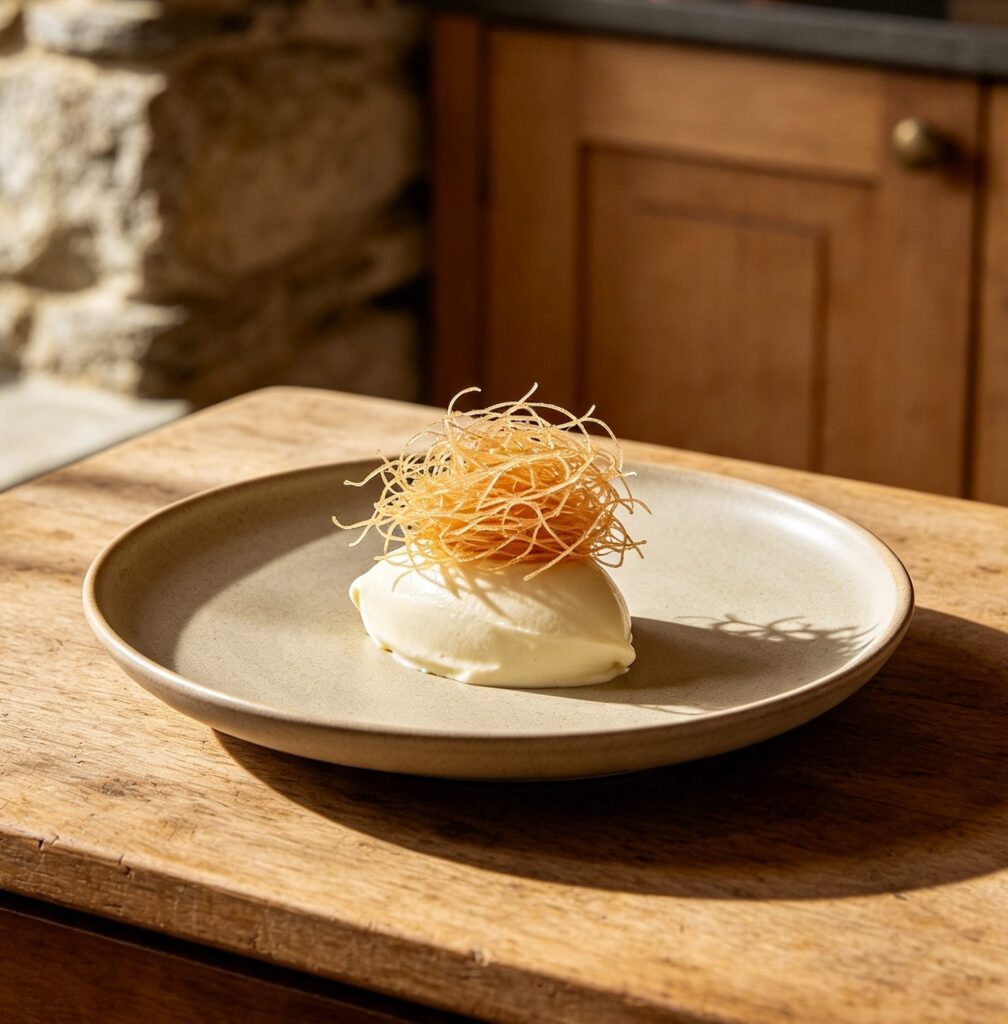
- Press the chilled paste through a potato ricer directly over dessert plates or meringue shells, forming thin noodle-like strands.
- Top with a generous dollop of whipped cream and serve immediately.
Introduction: Named for its noodle-like appearance, vermicelles is a beloved Swiss café dessert made by pushing sweetened chestnut purée through a ricer into delicate strands, piled over whipped cream — a celebration of the autumn chestnut harvest.
Cultural Background: Named for its noodle-like appearance, vermicelles is a beloved Swiss café dessert made by pushing sweetened chestnut purée through a ricer into delicate strands, piled over whipped cream — a celebration of the autumn chestnut harvest.
Tips: Chilling the paste well before ricing helps it hold its noodle shape. Vacuum-packed pre-cooked chestnuts save considerable time over fresh ones.
Variations: Serve over a crisp meringue base for extra texture. Add a touch of cocoa powder to the chestnut paste for a chocolatey variation.
Storage: Refrigerate the chestnut paste (unassembled) in an airtight container for up to 3 days.
Reheating: Served cold; no reheating required.
FAQs:
Q: Can I use pre-cooked chestnuts?
A: Yes, vacuum-packed cooked chestnuts work very well and greatly reduce preparation time.
Q: Why is it called vermicelles?
A: The chestnut paste is pushed through a ricer into thin strands resembling vermicelli pasta.
- Chestnuts, peeled (or 400 g / 14 oz pre-cooked chestnuts) — 500 g (1.1 lb)
- Milk — 480 ml (2 cups)
- Sugar — 100 g (1/2 cup)
- Vanilla extract — 1 tsp
- Kirsch (cherry brandy), optional — 30 ml (2 tbsp)
- Heavy cream, whipped — 240 ml (1 cup)
- Meringue shells, to serve (optional)
Please log in to leave a comment.