
Surinamese Chicken Curry Roti (Roti met Kip Kerrie)
The Quirky Foodster Team
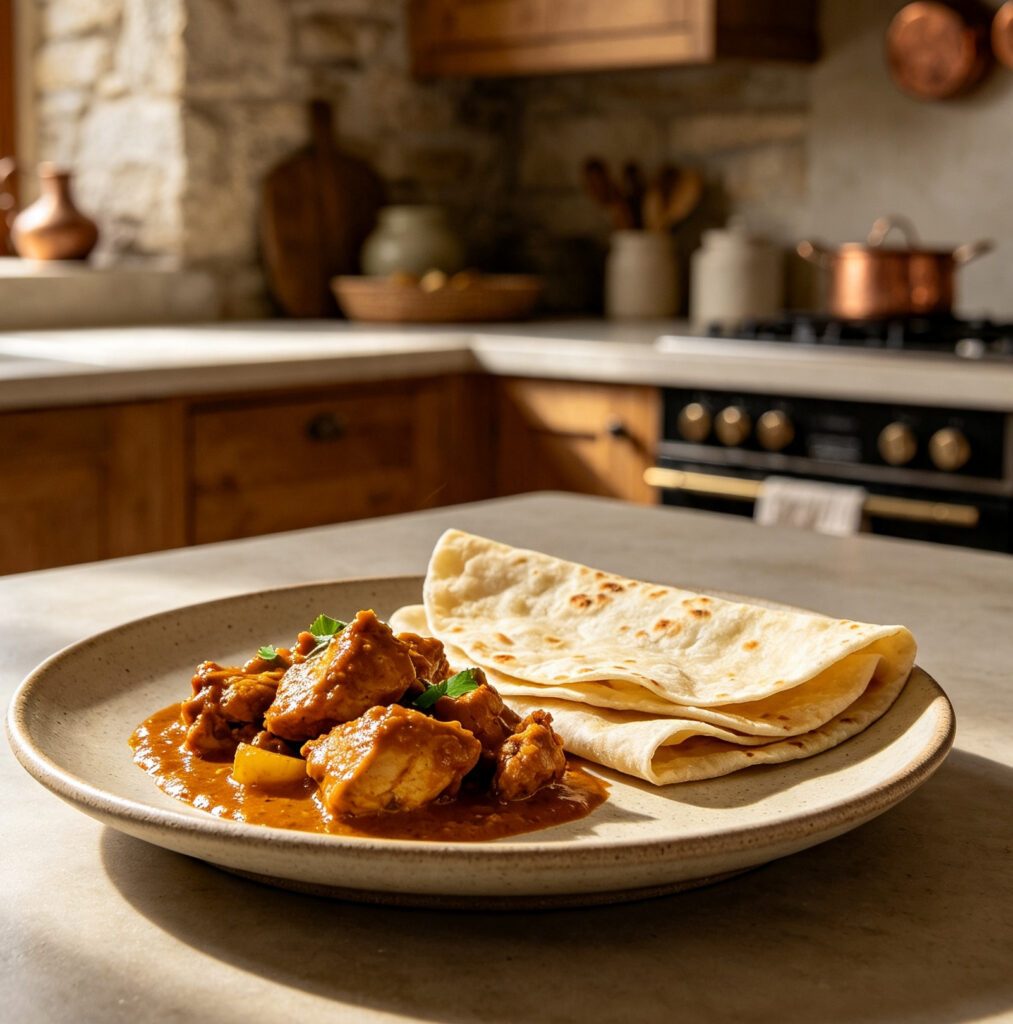
Ingredients
- All-purpose flour, plus extra for dusting — 400 g (3 1/4 cups)
- Baking powder — 1 tsp
- Salt — 1 tsp
- Water, warm — 240 ml (1 cup)
- Vegetable oil, divided — 4 tbsp
- Chicken thighs, bone-in, skin removed — 800 g (1.75 lb)
- Medium Potatoes, peeled and quartered — 3
- Large Onion, sliced — 1
- Garlic, minced — 4 cloves
- Surinamese roti masala (curry powder) — 3 tbsp
- Fresh ginger, grated — 1 tbsp
- Medium Tomato, chopped — 1
- Water or chicken stock — 500 ml (2 cups)
Method
- Make the roti dough: mix flour, baking powder and salt, then work in the warm water to form a soft, smooth dough. Cover and rest 30 minutes.
- For the curry, heat 3 tablespoons oil in a large pot and saute the onion until soft, then add garlic and ginger and cook 1 minute.
- Stir in the curry powder and cook for 1 minute until fragrant, then add the chicken and turn to coat.
- Add the potatoes, tomato and water or stock. Bring to a simmer, cover, and cook 30-35 minutes until the chicken is tender and the potatoes have partly broken down to thicken the sauce. Season with salt.
- While the curry simmers, divide the roti dough into 8 balls. Roll each thinly, brush with a little oil, and cook on a hot dry griddle 1-2 minutes per side until lightly speckled and cooked through, keeping warm in a cloth.
- Serve the curry hot with the warm roti alongside for wrapping or scooping.
Introduction: Roti arrived in Suriname with Hindustani indentured labourers brought from India in the late 19th and early 20th centuries to work the plantations after the abolition of slavery.
Cultural Background: Roti arrived in Suriname with Hindustani indentured labourers brought from India in the late 19th and early 20th centuries to work the plantations after the abolition of slavery. Over generations the dish evolved a distinctly Surinamese identity, with a thinner, more elastic flatbread and a milder, potato-thickened curry than its Indian ancestor. Today it is considered a national dish, sold everywhere from home kitchens to roti shops in Paramaribo.
Tips: Letting the dough rest fully makes it much easier to roll thin. Surinamese roti masala is milder than Indian curry powder; if using a stronger blend, use slightly less. Keep cooked roti wrapped in a clean cloth to stay soft while you finish the batch.
Variations: Use goat or beef in place of chicken for a heartier version, simmering longer until tender. Add long beans or pumpkin to the curry pot in the last 10 minutes for extra vegetables. A vegetarian version can be made by replacing the chicken with chickpeas and extra potato and pumpkin, added in the last 15 minutes of simmering so they do not overcook.
Storage: Store curry and roti separately in airtight containers in the refrigerator for up to 3 days.
Reheating: Reheat the curry gently on the stovetop with a splash of water; warm roti briefly on a dry pan or wrapped in foil in a low oven.
FAQs:
Q: What is roti masala?
A: It is a Surinamese Hindustani curry powder blend, typically including coriander, cumin, fennel and turmeric, roasted and ground; it is milder and more aromatic than many Indian curry powders and is sold ready-made in Surinamese and Dutch grocery stores.
Q: Why does the potato break down in the curry?
A: Letting some potato pieces disintegrate during simmering is traditional — it naturally thickens the curry sauce without needing flour or cornstarch.
Q: Can I make the roti dough ahead?
A: Yes, the dough can be made a few hours ahead and kept covered at room temperature, or refrigerated overnight and brought back to room temperature before rolling.
- All-purpose flour, plus extra for dusting — 400 g (3 1/4 cups)
- Baking powder — 1 tsp
- Salt — 1 tsp
- Water, warm — 240 ml (1 cup)
- Vegetable oil, divided — 4 tbsp
- Chicken thighs, bone-in, skin removed — 800 g (1.75 lb)
- Medium Potatoes, peeled and quartered — 3
- Large Onion, sliced — 1
- Garlic, minced — 4 cloves
- Surinamese roti masala (curry powder) — 3 tbsp
- Fresh ginger, grated — 1 tbsp
- Medium Tomato, chopped — 1
- Water or chicken stock — 500 ml (2 cups)
Please log in to leave a comment.