
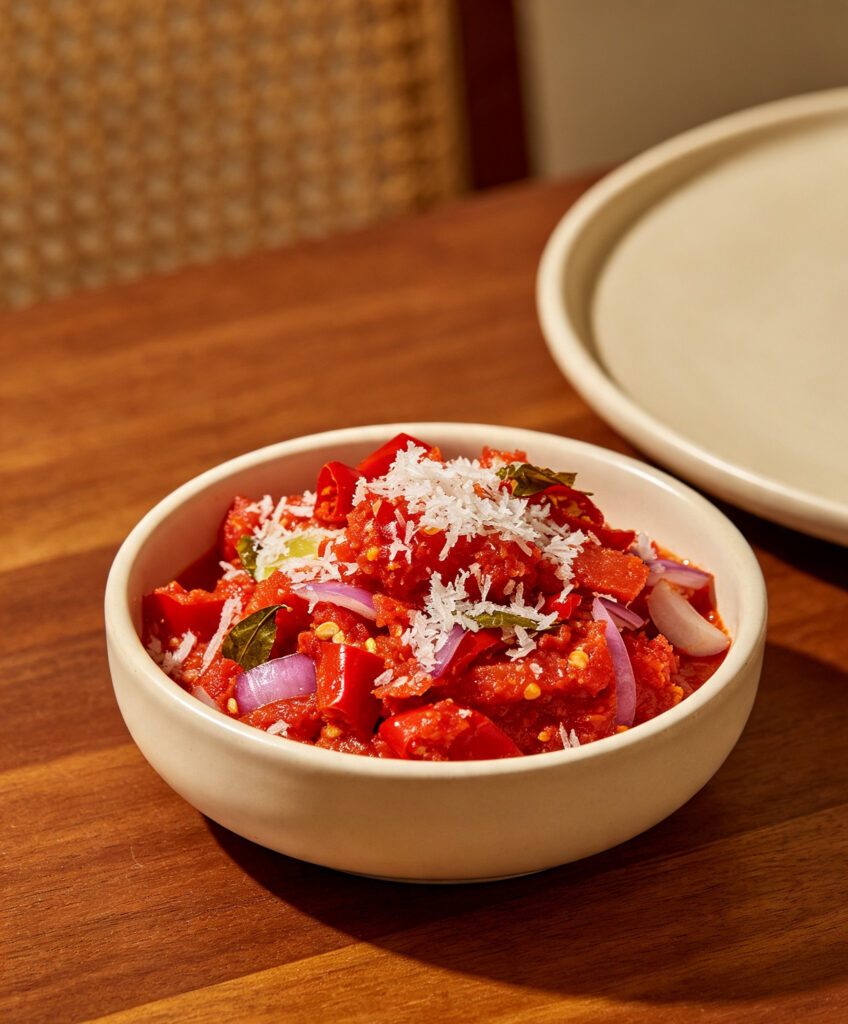
Pol Sambol (Coconut Relish)
The Quirky Foodster Team
Ingredients
- Freshly grated coconut (2 cups) — 200 g (7.1 oz)
- Tablespoons Kashmiri chilli powder, to taste (15-20 g) — 2-3
- Small red onion, finely chopped (60 g) — 1
- Maldive fish flakes, optional (1 teaspoon) [omit for vegetarian/vegan] — 3 g
- Lime juice (1 tablespoon) — 15 ml (1 tbsp)
- Salt — to taste
Method
- Place the grated coconut, chilli powder, onion, Maldive fish flakes (if using) and a pinch of salt in a mortar.
- Pound firmly with the pestle for 2-3 minutes, turning the mixture regularly, until the coconut is slightly moist, oily and holding together, rather than dry and separate.
- Stir in the lime juice and adjust salt and chilli to taste.
- Serve immediately as a side to rice, bread, hoppers or string hoppers.
Introduction: Pol sambol is perhaps the single most-eaten dish in Sri Lanka, a fiery, tangy relish of freshly grated coconut pounded with chilli, onion and lime that appears on breakfast and dinner tables alike.
Cultural Background: Pol sambol is perhaps the single most-eaten dish in Sri Lanka, a fiery, tangy relish of freshly grated coconut pounded with chilli, onion and lime that appears on breakfast and dinner tables alike. Traditionally made using a mortar and pestle so the coconut releases its oils and takes on a slightly moist, clingy texture rather than staying dry and crumbly, it is the sharp counterpoint that makes plain rice, bread or hoppers come alive.
Tips: Pounding rather than just mixing is what gives proper pol sambol its texture – it releases the coconut's natural oils so the relish clings together. If using a food processor instead of a mortar, pulse rather than blend continuously, to avoid turning it into a paste. Add lime juice just before serving, as it can make the coconut turn slightly bitter if left to sit too long.
Variations: Katta sambol swaps grated coconut for finely sliced onion pounded with chilli and lime for an even sharper, coconut-free relish. Add a small piece of tomato for extra freshness and colour in some households. Omit the Maldive fish flakes to make this fully vegetarian and vegan; many households make it this way by default.
Storage: Refrigerate in an airtight container for up to 2 days; the coconut oxidises and loses freshness after that.
Reheating: Not applicable – served cold or at room temperature.
Nutrition: Approx. 130 kcal, 2 g protein, 12 g fat, 5 g carbohydrates, 3 g fibre per serving
FAQs:
Q: Can I use desiccated coconut instead of fresh?
A: Fresh grated coconut is strongly preferred for texture and moisture; if using desiccated, soak it in a little warm water for 10 minutes first to rehydrate before pounding.
Q: What is Maldive fish and can I leave it out?
A: Maldive fish is dried, cured tuna, used in small amounts for umami depth; it can be left out entirely for a vegetarian version without major loss of character.
Q: How spicy is pol sambol meant to be?
A: It's traditionally quite spicy, but the chilli quantity can be adjusted freely to taste without affecting the technique.
- Freshly grated coconut (2 cups) — 200 g (7.1 oz)
- Tablespoons Kashmiri chilli powder, to taste (15-20 g) — 2-3
- Small red onion, finely chopped (60 g) — 1
- Maldive fish flakes, optional (1 teaspoon) [omit for vegetarian/vegan] — 3 g
- Lime juice (1 tablespoon) — 15 ml (1 tbsp)
- Salt — to taste
Please log in to leave a comment.