
Sabaayad
The Quirky Foodster Team
Ingredients
- Plain flour, plus extra for dusting — 500 g (4 cups)
- Salt — 1 tsp
- Warm water — 300 ml (1 1/4 cups)
- Vegetable oil, plus extra for cooking — 80 ml (1/3 cup)
Method
- Prep Time 25 minutes (plus 30 minutes Cook Time 20 minutes resting)
- Total Time 1 hour 15 minutes Difficulty Medium
- Occasion Everyday; served with tea or stew Season Year-round
- Servings Serves 4 (makes 8 flatbreads) Dietary Tags Vegan
- Native Recipe Sabaayad SEO Keywords sabaayad recipe, somali flatbread,
- Name somali layered bread, how to make sabaayad
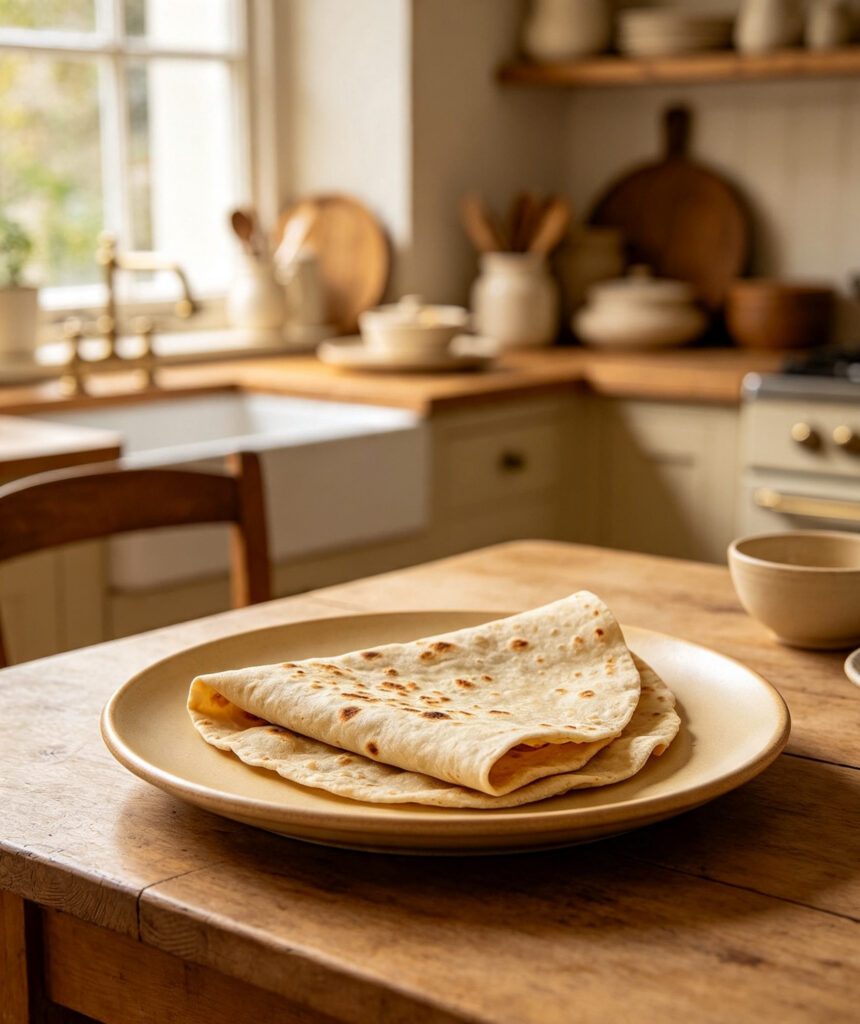
Introduction: Flaky, layered pan-fried flatbread
Cultural Background: Sabaayad is a rich, flaky layered flatbread related to the parathas of South Asia, brought into Somali cuisine through centuries of trade across the Indian Ocean and adapted with local technique and taste. The dough is rolled thin, brushed with oil, and folded repeatedly to create the characteristic flaky layers before being pan-fried until golden. It's a favourite at breakfast or dinner, torn and used to scoop up maraq or a spiced stew.
Tips: Rolling the dough as thinly as possible before folding is the key to visible, flaky layers. Resting the coiled dough briefly before the final roll makes it easier to shape without tearing.
Variations: A pinch of nigella or cumin seeds worked into the dough adds a subtle savoury note. Some cooks add a beaten egg between layers for extra richness (no longer vegan in that version). Already fully vegan as written.
Storage: Store cooled sabaayad in an airtight container or wrapped in foil at room temperature for up to 2 days, or refrigerate for up to 5 days.
Reheating: Reheat in a dry pan over medium heat for about 1 minute per side, or wrap in foil and warm in a 160°C (325°F) oven for 8–10 minutes.
Nutrition: Per piece (approx.): 260 kcal, 5 g protein, 38 g carbohydrate, 9 g fat, 1 g fibre
FAQs:
Q: Why isn't my sabaayad flaky?
A: This usually comes down to not rolling the dough thin enough before folding, or using too little oil between the layers — both are needed to create the separation that makes it flaky.
Q: What is sabaayad usually eaten with?
A: It's commonly torn and dipped into maraq (soup) or a spiced stew, or eaten simply with tea.
- Plain flour, plus extra for dusting — 500 g (4 cups)
- Salt — 1 tsp
- Warm water — 300 ml (1 1/4 cups)
- Vegetable oil, plus extra for cooking — 80 ml (1/3 cup)
Please log in to leave a comment.