
Songpyeon (Half-Moon Rice Cakes)
The Quirky Foodster Team
Ingredients
- Rice flour (from short-grain rice) — 400 g (3 1/4 cups)
- Salt — 1/2 tsp (3 g)
- Hot water, as needed — 180–220 ml (3/4–scant 1 cup)
- Toasted sesame seeds, ground with 3 tbsp sugar and a pinch of salt (or use Sweetened red bean paste or chestnut paste) (for the filling) — 100 g (3.5 oz)
- Sesame oil, for coating — 1 tsp (5 ml)
- Fresh pine needles, rinsed (optional, for traditional steaming) — a handful
Method
- Combine the rice flour and salt in a bowl. Gradually add the hot water, mixing and then kneading with your hands until a smooth, pliable dough forms that doesn't crack at the edges — add water a little at a time as needed.
- Divide the dough into small, walnut-sized pieces, keeping the rest covered with a damp cloth to prevent drying out.
- Flatten each piece into a small disc, place a teaspoon of the sesame filling (or bean or chestnut paste) in the centre, and fold and pinch the edges together firmly to seal, shaping into a traditional half-moon.
- Line a steamer basket with rinsed pine needles if using (or baking paper as an alternative), and arrange the songpyeon in a single layer without touching.
- Steam over boiling water for 20–25 minutes until the cakes look glossy and slightly translucent.
- Remove from the steamer and immediately brush or toss the warm songpyeon lightly with sesame oil to give them a glossy sheen and prevent sticking. Serve warm or at room temperature.
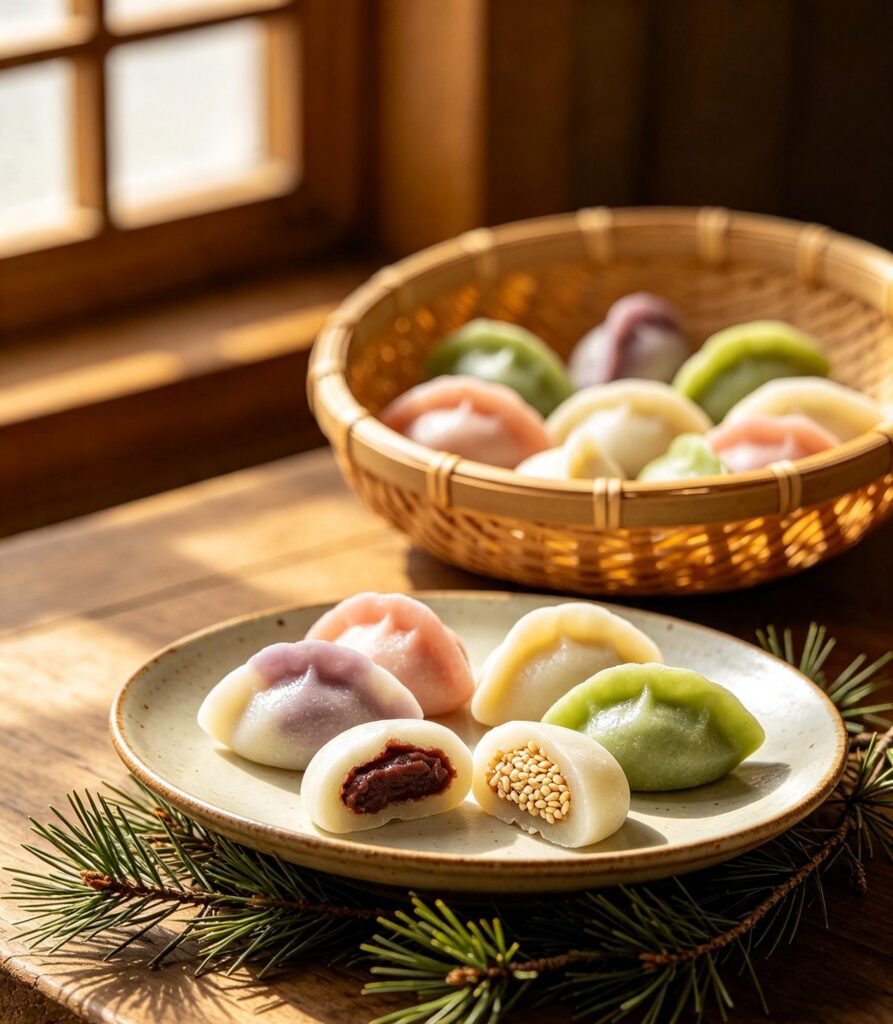
Introduction: Songpyeon are small half-moon-shaped rice cakes filled with sweetened sesame, chestnut or bean fillings, traditionally made by the whole family together in the days before Chuseok, Korea's autumn harvest festival.
Cultural Background: Songpyeon are small half-moon-shaped rice cakes filled with sweetened sesame, chestnut or bean fillings, traditionally made by the whole family together in the days before Chuseok, Korea's autumn harvest festival. Steamed over a bed of pine needles, which lend a faint fragrance, songpyeon-making is itself a cherished holiday ritual, with a widespread belief that skilled shapers of songpyeon will have good fortune, such as a beautiful marriage.
Tips: Knead the dough thoroughly with hot water until it's smooth and crack-free — cracked dough will split open during steaming and let the filling leak out. Brushing the finished songpyeon with sesame oil immediately after steaming is what gives them their characteristic glossy finish and stops them drying out.
Variations: Use natural food colouring such as mugwort (for green), gardenia (for yellow) or beet or omija juice (for pink) to make a colourful assortment of doughs. Fill with sweetened mashed chestnut or red bean paste instead of sesame for variety within the same batch. Already vegan as written using plant-based fillings.
Storage: Store in an airtight container at room temperature for 1 day, or refrigerate for up to 3 days; freeze for up to 1 month.
Reheating: Re-steam for 3–5 minutes to soften and refresh, or briefly microwave with a damp paper towel over them; brush with a little extra sesame oil after reheating.
Nutrition: Calories: 90 kcal | Protein: 2 g | Carbs: 16 g | Fat: 2 g | Fibre: 1 g | Sodium: 40 mg Per piece; estimate only.
FAQs:
Q: Why are pine needles used in steaming?
A: Steaming over pine needles imparts a very subtle fragrance to the rice cakes and reflects an old traditional method still followed by many families at Chuseok.
Q: What does the half-moon shape symbolise?
A: The crescent shape is tied to a traditional Korean belief in the growing moon as a symbol of hope and a bright, improving future, distinct from the full-moon associations of Chinese mooncakes.
Q: Is it true that good songpyeon-shaping brings luck?
A: It's a well-known Korean folk belief, often told to young, unmarried family members while making songpyeon together, that shaping the rice cakes well brings good fortune such as a good marriage.
- Rice flour (from short-grain rice) — 400 g (3 1/4 cups)
- Salt — 1/2 tsp (3 g)
- Hot water, as needed — 180–220 ml (3/4–scant 1 cup)
- Toasted sesame seeds, ground with 3 tbsp sugar and a pinch of salt (or use Sweetened red bean paste or chestnut paste) (for the filling) — 100 g (3.5 oz)
- Sesame oil, for coating — 1 tsp (5 ml)
- Fresh pine needles, rinsed (optional, for traditional steaming) — a handful
Please log in to leave a comment.