
Jjinppang (Steamed Red Bean Buns)
The Quirky Foodster Team
Ingredients
- Plain flour — 400 g (3 1/4 cups)
- Instant yeast — 1 tsp (5 g)
- Sugar — 50 g (1/4 cup)
- Salt — 1/4 tsp (1.5 g)
- Baking powder — 1 tsp (5 g)
- Warm water or milk — 220 ml (scant 1 cup)
- Vegetable oil — 1 tbsp (15 ml)
- Sweetened red bean paste — 300 g (10.5 oz)
- Small squares of baking paper, for steaming — 12
Method
- Combine the flour, yeast, sugar and salt in a large bowl. Add the warm water and oil, and mix into a smooth, soft dough. Knead for 8–10 minutes until elastic.
- Cover and proof in a warm place for 1 to 1.5 hours until doubled in size.
- Punch down the dough, knead in the baking powder briefly, and divide into 12 equal pieces.
- Flatten each piece into a small disc, place a spoonful of red bean paste in the centre, and gather the edges up to seal tightly into a smooth round bun. Place each bun seam-side down on a small square of baking paper.
- Arrange the buns in a steamer basket with space between them to expand, cover, and let rest for a final 15–20 minutes.
- Steam over vigorously boiling water for 15–18 minutes until the buns are puffed, glossy and cooked through. Remove promptly to prevent them collapsing, and serve warm.
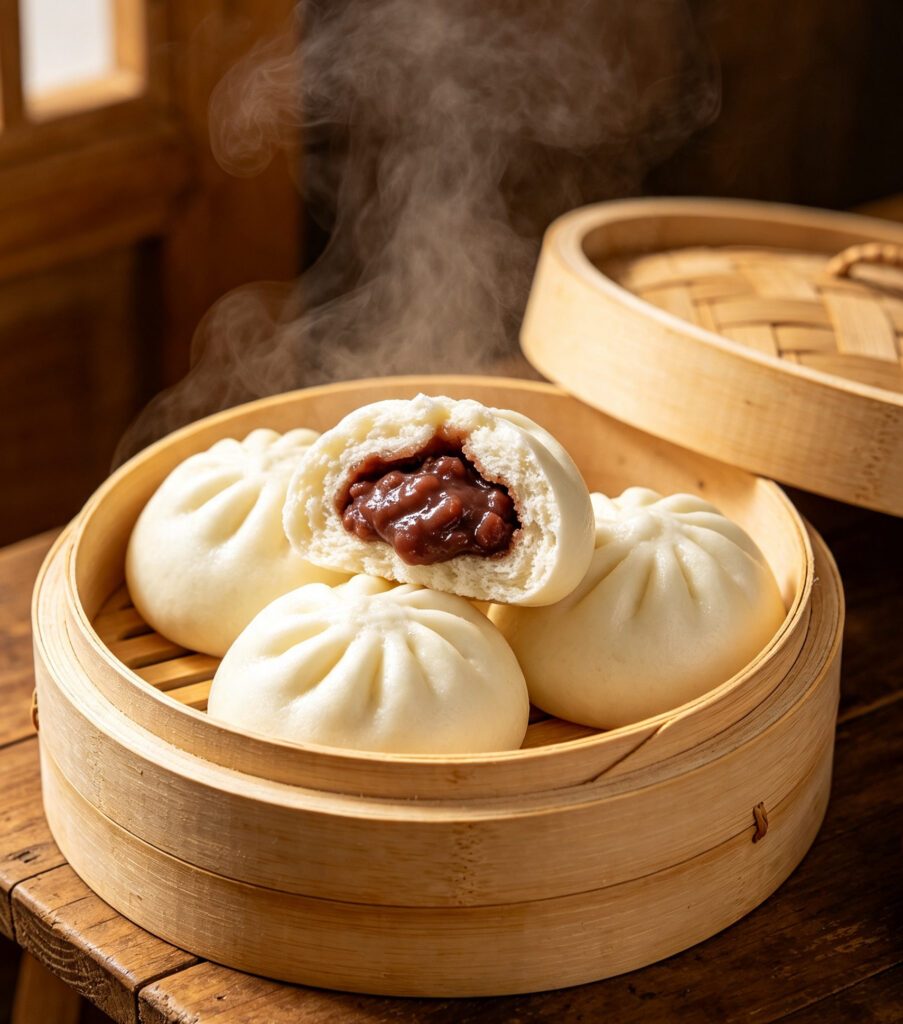
Introduction: Jjinppang are soft, pillowy steamed buns traditionally filled with sweetened red bean paste, closely associated with the small town of Anheung, which has built a whole culinary reputation around them.
Cultural Background: Jjinppang are soft, pillowy steamed buns traditionally filled with sweetened red bean paste, closely associated with the small town of Anheung, which has built a whole culinary reputation around them. Long a favourite winter snack sold at train stations and markets, their soft steamed dough and sweet filling make them one of Korea's most comforting cold-weather treats.
Tips: Leave plenty of space between buns in the steamer, as they expand significantly during steaming. Remove the lid carefully and avoid dripping condensation onto the finished buns, which can leave wet marks on the surface.
Variations: Fill with sweetened mashed pumpkin or a savoury vegetable-and-glass-noodle mixture instead of red bean for a different flavour. Shape into a single large bun instead of individual portions for a shareable centrepiece version. Already vegan as written when made with water rather than milk.
Storage: Store in an airtight container at room temperature for 1 day, or refrigerate for up to 4 days; freeze for up to 1 month.
Reheating: Re-steam for 5–8 minutes until soft and warmed through, or microwave briefly wrapped in a damp paper towel to prevent drying out.
Nutrition: Calories: 220 kcal | Protein: 5 g | Carbs: 44 g | Fat: 3 g | Fibre: 3 g | Sodium: 95 mg Per bun; estimate only.
FAQs:
Q: Why did my buns collapse after steaming?
A: This is usually from removing them from the heat too abruptly or opening the lid too early — turn off the heat and let them sit for a minute with the lid ajar before removing.
Q: Can I use canned red bean paste?
A: Yes, canned or store-bought sweetened red bean paste (anko) works well and saves significant time over making it from scratch.
Q: Why is baking powder added if the dough already has yeast?
A: The small amount of baking powder gives an extra lift during steaming, helping the buns stay light and fluffy rather than dense.
- Plain flour — 400 g (3 1/4 cups)
- Instant yeast — 1 tsp (5 g)
- Sugar — 50 g (1/4 cup)
- Salt — 1/4 tsp (1.5 g)
- Baking powder — 1 tsp (5 g)
- Warm water or milk — 220 ml (scant 1 cup)
- Vegetable oil — 1 tbsp (15 ml)
- Sweetened red bean paste — 300 g (10.5 oz)
- Small squares of baking paper, for steaming — 12
Please log in to leave a comment.