
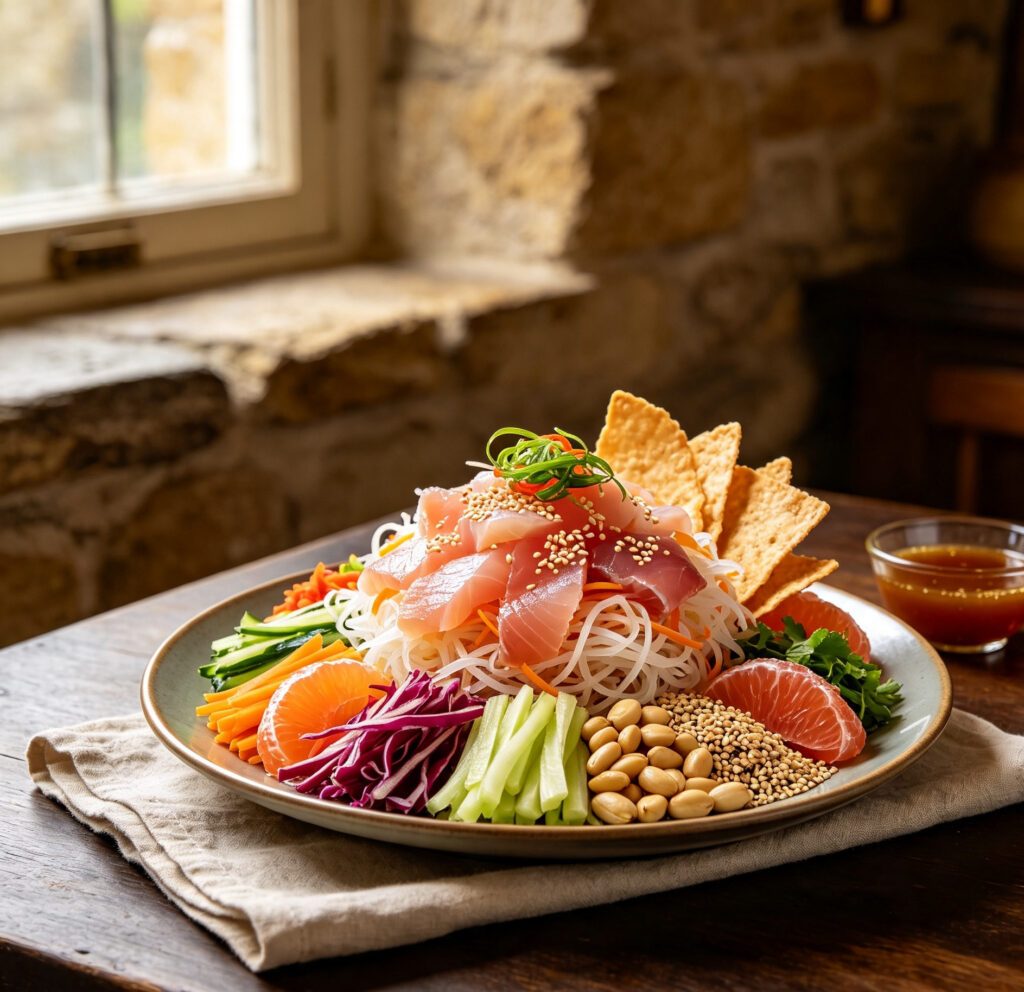
Yu Sheng (Lo Hei Prosperity Salad)
The Quirky Foodster Team
Ingredients
- Sashimi-grade salmon, thinly sliced — 200 g (7 oz)
- Daikon radish, julienned — 150 g (5 oz)
- Carrot, julienned — 150 g (5 oz)
- Pickled ginger, julienned — 100 g (3.5 oz)
- Pickled shallots, sliced — 50 g (1.75 oz)
- Roasted peanuts, crushed — 50 g (1/3 cup)
- Sesame seeds, toasted — 2 tbsp
- Crispy fried flour crackers — 50 g (1.75 oz)
- Plum sauce — 4 tbsp
- Sesame oil — 2 tbsp
- Lime, juiced — 1
- Five-spice powder — 1 tsp
- Of white pepper — pinch
Method
- Arrange the julienned daikon and carrot in separate sections on a large flat platter.
- Add the pickled ginger and shallots in their own sections around the platter.
- Lay the sliced salmon attractively in the centre of the dish.
- Scatter the crushed peanuts, toasted sesame seeds and crispy crackers over the top just before serving.
- Drizzle with plum sauce, sesame oil and lime juice, then dust with five-spice powder and white pepper.
- At the table, have everyone stand, use chopsticks to toss all the ingredients high together while calling out New Year wishes, and mix well before eating.
Introduction: Yu sheng, or 'raw fish salad', is a colourful dish of shredded vegetables, pickles and raw fish eaten during Chinese New Year in Singapore, tossed together at the table in a ritual called 'lo hei'.
Cultural Background: Yu sheng, or 'raw fish salad', is a colourful dish of shredded vegetables, pickles and raw fish eaten during Chinese New Year in Singapore, tossed together at the table in a ritual called 'lo hei'. Diners stand and toss the ingredients high with chopsticks while calling out auspicious phrases, a tradition believed to bring prosperity, abundance and good fortune for the year ahead.
Tips: Prepare all the components ahead of time and arrange them just before guests arrive, adding the sauces and crackers only at the very last moment. Encourage guests to toss the ingredients as high as they comfortably can, as tradition holds that higher tosses bring greater prosperity.
Variations: Use smoked salmon instead of raw sashimi-grade fish for guests who prefer not to eat raw fish. Add pomelo segments for extra freshness and a traditional citrus note. Omit the raw salmon and add extra pickled vegetables or thin strips of mango for a vegetarian version of this dish.
Storage: Best assembled fresh for the tossing ritual; components can be prepped and refrigerated separately for up to 1 day.
Reheating: Not applicable; this is a cold, ceremonial salad eaten immediately after tossing.
Nutrition: Approx. 280 kcal, 14g protein, 26g carbs, 14g fat, 3g fibre per serving.
FAQs:
Q: What does 'lo hei' mean?
A: Lo hei is a Cantonese phrase roughly meaning 'tossing up good fortune', referring to the communal tossing ritual performed with this salad during Chinese New Year.
Q: Why is yu sheng eaten during Chinese New Year specifically?
A: Many of its ingredients carry symbolic meanings for prosperity, abundance and good luck, making it a fitting dish to usher in the new year.
- Sashimi-grade salmon, thinly sliced — 200 g (7 oz)
- Daikon radish, julienned — 150 g (5 oz)
- Carrot, julienned — 150 g (5 oz)
- Pickled ginger, julienned — 100 g (3.5 oz)
- Pickled shallots, sliced — 50 g (1.75 oz)
- Roasted peanuts, crushed — 50 g (1/3 cup)
- Sesame seeds, toasted — 2 tbsp
- Crispy fried flour crackers — 50 g (1.75 oz)
- Plum sauce — 4 tbsp
- Sesame oil — 2 tbsp
- Lime, juiced — 1
- Five-spice powder — 1 tsp
- Of white pepper — pinch
Please log in to leave a comment.