
Nasi Lemak
The Quirky Foodster Team
Ingredients
- Jasmine rice, rinsed — 400 g (2 cups)
- Coconut milk — 400 ml (1 3/4 cups)
- Water — 200 ml (3/4 cup plus 2 tbsp)
- Pandan leaves, knotted — 2
- Salt — 1/2 tsp
- Dried anchovies (ikan bilis) — 50 g (1/2 cup)
- Roasted peanuts — 50 g (1/3 cup)
- Eggs, hard-boiled and halved — 4
- Cucumber, sliced — 1
- Sambal chilli paste — 3 tbsp
- Vegetable oil, for frying
Method
- Combine the rice, coconut milk, water, pandan leaves and salt in a rice cooker or saucepan and cook until tender, about 20 minutes.
- Rinse the dried anchovies and pat dry, then fry in a little oil over medium heat for 3-4 minutes until crisp. Drain on paper towel.
- Warm the sambal in a small saucepan over low heat for 2-3 minutes until fragrant, adjusting seasoning to taste.
- Fluff the cooked coconut rice with a fork and remove the pandan leaves.
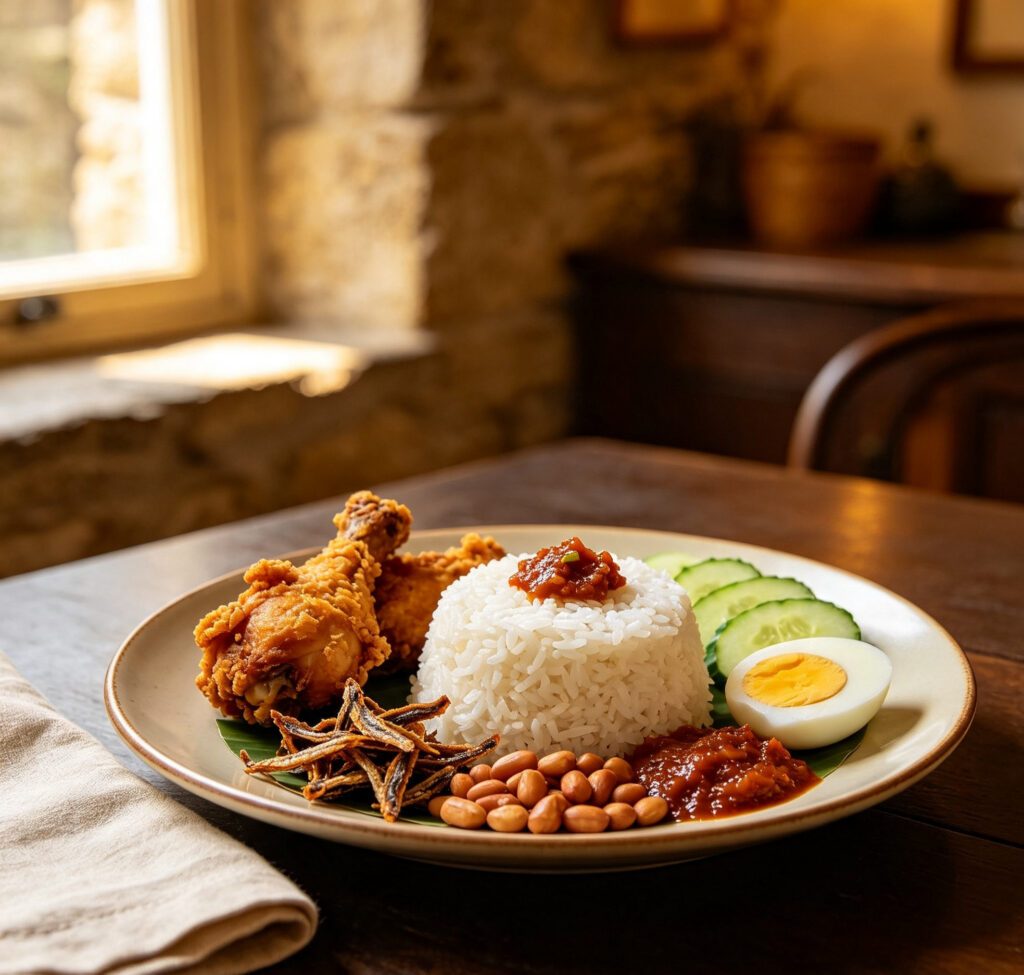
- Plate the rice with the crispy anchovies, roasted peanuts, halved boiled eggs and cucumber slices arranged around it.
- Finish with a generous spoonful of warm sambal on the side.
Introduction: Nasi lemak, meaning 'rich rice' in Malay, is coconut milk-infused rice traditionally served with sambal, crispy anchovies, roasted peanuts, cucumber and a hard-boiled egg.
Cultural Background: Nasi lemak, meaning 'rich rice' in Malay, is coconut milk-infused rice traditionally served with sambal, crispy anchovies, roasted peanuts, cucumber and a hard-boiled egg. A dish of Malay origin, it is enjoyed across Singapore's multicultural communities at any time of day, though it began, and remains popular, as a hearty breakfast or lunch.
Tips: Toast the pandan leaves gently before knotting to release more of their fragrance into the rice. Frying the anchovies until fully crisp, and draining well, keeps them from turning soggy once served.
Variations: Add fried chicken wings or rendang beef alongside for a more substantial meal, a common modern addition. Use a shop-bought quality sambal if short on time; look for one with a good balance of sweet and spicy. Omit the dried anchovies and use a vegetarian sambal without shrimp paste for a vegetarian version.
Storage: Refrigerate rice, sambal and toppings separately in airtight containers for up to 2 days.
Reheating: Steam or microwave the rice until warmed through; reheat sambal gently in a small pan and re-crisp anchovies briefly if needed.
Nutrition: Approx. 540 kcal, 16g protein, 62g carbs, 26g fat, 3g fibre per serving.
FAQs:
Q: What is sambal made from?
A: Sambal is a chilli paste typically made from blended chillies, shallots, garlic, shrimp paste and a touch of sugar, fried until deeply fragrant.
Q: Can nasi lemak be made vegetarian?
A: Yes, omit the anchovies and use a shrimp-paste-free sambal, replacing the savoury depth with extra fried shallots or tempeh.
- Jasmine rice, rinsed — 400 g (2 cups)
- Coconut milk — 400 ml (1 3/4 cups)
- Water — 200 ml (3/4 cup plus 2 tbsp)
- Pandan leaves, knotted — 2
- Salt — 1/2 tsp
- Dried anchovies (ikan bilis) — 50 g (1/2 cup)
- Roasted peanuts — 50 g (1/3 cup)
- Eggs, hard-boiled and halved — 4
- Cucumber, sliced — 1
- Sambal chilli paste — 3 tbsp
- Vegetable oil, for frying
Please log in to leave a comment.