
Slava Zito
The Quirky Foodster Team
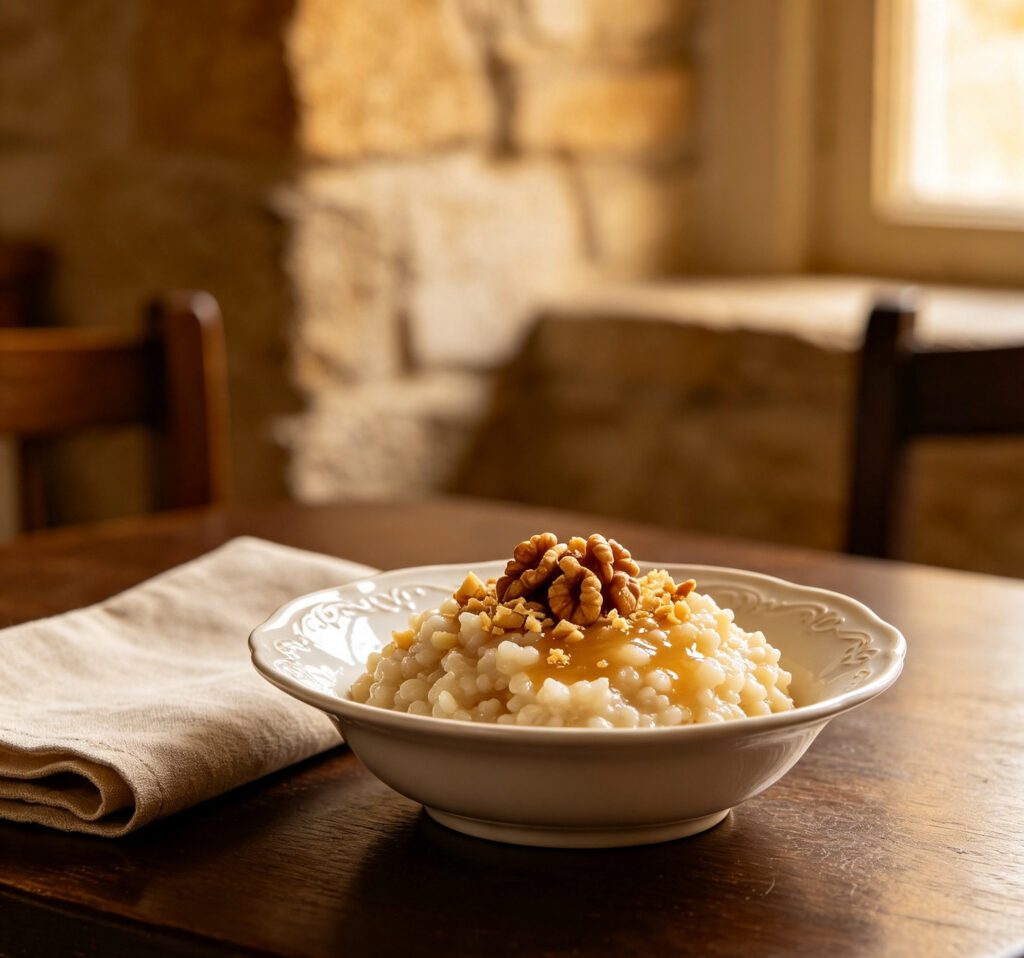
Ingredients
- Whole wheat berries, soaked overnight — 500 g (2 3/4 cups)
- Water — 1.5 L (6 cups)
- Sugar — 150 g (3/4 cup)
- Ground walnuts — 100 g (1 cup)
- Vanilla extract — 1 tsp
- Icing sugar, for decorating
- Whole walnuts or pomegranate seeds, for decoration
Method
- Drain the soaked wheat berries and place in a large pot with the water.
- Bring to a boil, then reduce heat and simmer for 1.5-2 hours until the wheat is very tender.
- Drain the cooked wheat, reserving a little of the cooking liquid.
- Stir the sugar, ground walnuts and vanilla into the warm wheat, adding a splash of the reserved liquid if needed for consistency.
- Mound the mixture onto a decorative serving plate, shaping into a smooth dome.
- Dust generously with icing sugar and decorate with walnuts or pomegranate seeds in a traditional pattern.
- Present at the Slava table or memorial service as tradition dictates.
Introduction: Sweetened boiled wheat, a symbolic dish central to Slava, the Serbian family patron saint celebration.
Cultural Background: Žito, boiled wheat sweetened and decorated, holds deep religious and symbolic significance in Serbian Orthodox tradition, prepared for Slava (the family's patron saint day) and also served at memorial services, representing resurrection and eternal life.
Tips: Soak the wheat berries a full night for even, thorough cooking. Take care and time with the decoration, as žito's presentation carries symbolic importance at the Slava celebration.
Variations: Some families add raisins or a little ground cinnamon to the mixture; the decorative pattern on top is often personalised to the family or occasion.
Storage: Store covered in the refrigerator for up to 3 days.
Reheating: This dish is traditionally served at room temperature and is not reheated.
Nutrition: Approx. 260 kcal, 7 g protein, 42 g carbohydrate, 8 g fat per serving.
FAQs:
Q: What is Slava?
A: A uniquely Serbian Orthodox tradition celebrating a family's patron saint, passed down through generations, marked with religious observance and a festive family gathering.
Q: Why is wheat used symbolically in žito?
A: Boiled wheat represents resurrection and eternal life in Orthodox Christian tradition, making it central to both Slava celebrations and memorial services.
- Whole wheat berries, soaked overnight — 500 g (2 3/4 cups)
- Water — 1.5 L (6 cups)
- Sugar — 150 g (3/4 cup)
- Ground walnuts — 100 g (1 cup)
- Vanilla extract — 1 tsp
- Icing sugar, for decorating
- Whole walnuts or pomegranate seeds, for decoration
Please log in to leave a comment.