
Pogaca
The Quirky Foodster Team
Ingredients
- All-purpose flour — 500 g (4 cups)
- Instant yeast — 7 g (2 1/4 tsp)
- Sugar — 1 tsp
- Salt — 10 g (2 tsp)
- Warm water — 300 ml (1 1/4 cups)
- Olive oil — 2 tbsp
- Egg, beaten, for glazing — 1
Method
- Combine the flour, yeast, sugar and salt in a large bowl.
- Add the warm water and olive oil, mixing to form a soft dough.
- Knead for 10 minutes until smooth and elastic.
- Cover and let rise in a warm place for 1-1.5 hours until doubled.
- Gently deflate the dough and shape into a round loaf.
- Place on a baking tray, cover, and let rise a further 30-40 minutes.
- Preheat the oven to 200°C (400°F).
- Brush the top with beaten egg and score a cross or decorative pattern on top.
- Bake for 30-35 minutes until deeply golden and hollow-sounding when tapped.
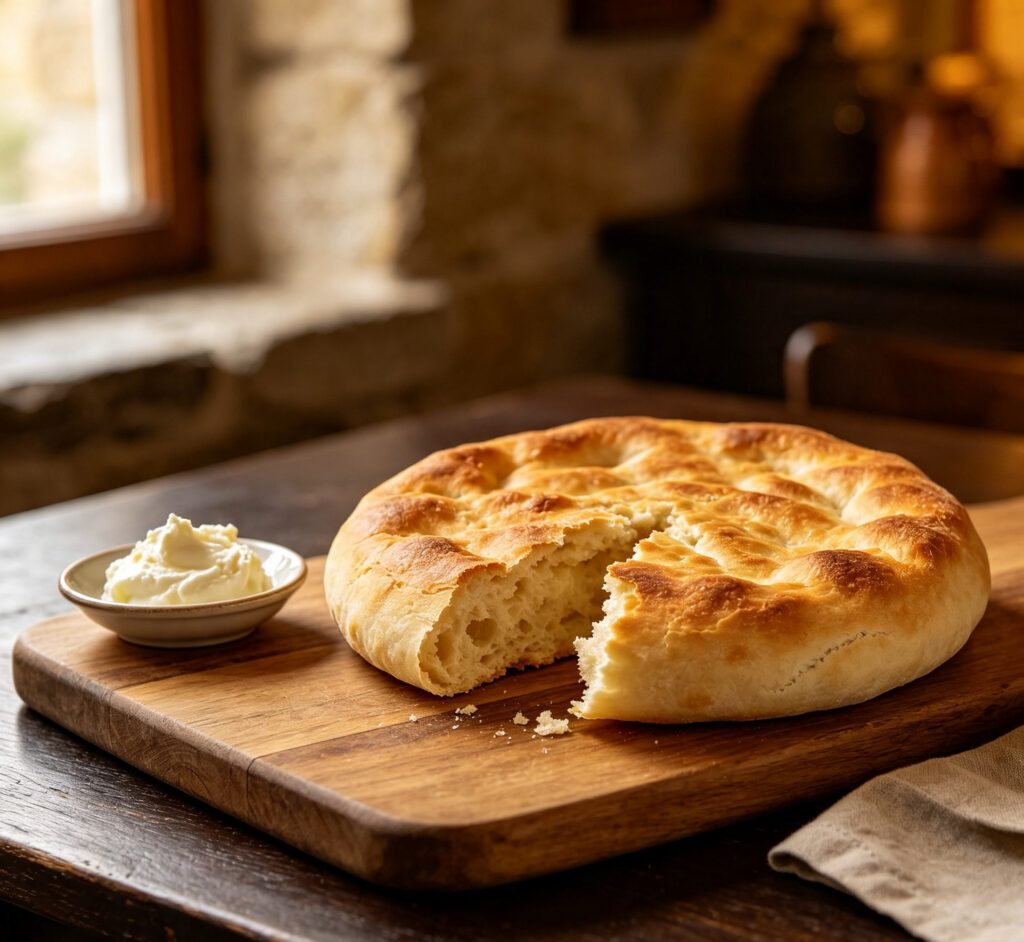
Introduction: A soft, round leavened bread, traditionally torn and shared, central to Serbian celebrations and hospitality.
Cultural Background: Pogača, a round soft bread, holds deep symbolic significance in Serbian tradition, torn and shared at celebrations, weddings and religious holidays as a gesture of unity and hospitality.
Tips: Score a decorative pattern on top before baking, as this is traditional for celebratory pogača. Let the bread cool fully before tearing to share, as is customary.
Variations: Add a handful of crumbled cheese to the dough for a savoury variation; some regional versions are enriched with a little extra oil or butter for a softer crumb.
Storage: Store wrapped in a cloth at room temperature for up to 3 days.
Reheating: Refresh day-old bread by warming briefly in a hot oven for a few minutes to restore some softness.
Nutrition: Approx. 190 kcal, 6 g protein, 36 g carbohydrate, 3 g fat per slice.
FAQs:
Q: Why is pogača torn rather than sliced?
A: Tearing and sharing pogača by hand is a traditional gesture of unity and hospitality at Serbian gatherings and celebrations.
Q: Is pogača served at specific occasions?
A: Yes, it holds particular significance at weddings, Slava (family patron saint day) celebrations, and other important gatherings.
- All-purpose flour — 500 g (4 cups)
- Instant yeast — 7 g (2 1/4 tsp)
- Sugar — 1 tsp
- Salt — 10 g (2 tsp)
- Warm water — 300 ml (1 1/4 cups)
- Olive oil — 2 tbsp
- Egg, beaten, for glazing — 1
Please log in to leave a comment.