
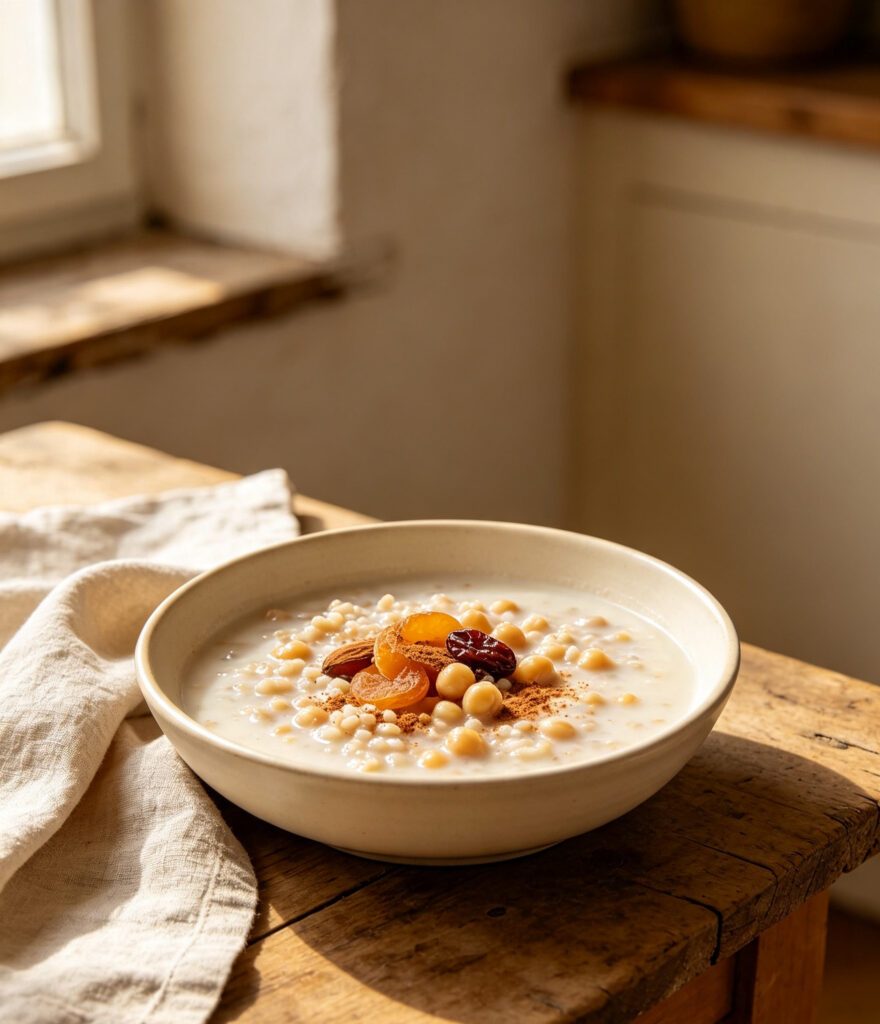
Aşure (Noah’s Pudding)
The Quirky Foodster Team
Ingredients
- Wheat berries, soaked overnight — 150 g (3/4 cup)
- Chickpeas, soaked overnight — 75 g (1/3 cup)
- White beans, soaked overnight — 75 g (1/3 cup)
- Rice, rinsed — 100 g (1/2 cup)
- Water, plus extra as needed — 2 L (8 cups)
- Sugar — 200 g (1 cup)
- Dried apricots, chopped — 100 g (2/3 cup)
- Dried figs, chopped — 100 g (2/3 cup)
- Raisins — 75 g (1/2 cup)
- Dried chickpeas or roasted hazelnuts, for topping — 50 g (1/3 cup)
- Ground cinnamon — 1 tsp
- Pomegranate seeds, walnuts and ground cinnamon, to garnish
Method
- Drain the soaked wheat berries, chickpeas and white beans, and rinse well.
- Place the wheat berries in a large pot with plenty of water and simmer for 45 minutes until tender; drain.
- In a separate pot, cook the chickpeas and white beans separately in fresh water until tender, about 40–50 minutes each; drain.
- In a very large pot, combine the cooked wheat, chickpeas, beans and rinsed rice with the 2 l of water.
- Bring to a boil, then reduce to a simmer and cook for 25–30 minutes, stirring occasionally, until the rice is very soft and the mixture has thickened.
- Stir in the sugar, dried apricots, figs and raisins, and simmer for a further 15 minutes, adding more water if it becomes too thick, until everything is tender and the pudding has a thick, spoonable consistency.
- Ladle into individual serving bowls and let cool to room temperature or chill.
- Garnish generously with pomegranate seeds, chopped walnuts and a light dusting of cinnamon before serving.
Introduction: Aşure, also called Noah's Pudding, is a rich, ceremonial dessert made from a wide mix of grains, legumes,
dried fruits and nuts, traditionally prepared during the Islamic month of Muharram and shared generously
among neighbours as an act of community and remembrance.
Cultural Background: Aşure, also called Noah's Pudding, is a rich, ceremonial dessert made from a wide mix of grains, legumes,
dried fruits and nuts, traditionally prepared during the Islamic month of Muharram and shared generously
among neighbours as an act of community and remembrance.
Tips: Cooking the beans and wheat separately before combining ensures everything reaches the right tenderness without overcooking any one ingredient. Aşure is traditionally shared with neighbours in small bowls — make a generous batch if you plan to follow this custom.
Variations: Some recipes include dried mulberries or currants for extra variety. Adjust the sweetness and fruit mix generously to taste, as recipes vary widely by family. Naturally vegan and vegetarian.
Storage: Refrigerate in a covered container for up to 5 days.
Reheating: Serve cold or at room temperature; not typically reheated.
FAQs:
Q: What is the significance of aşure?
A: It's traditionally prepared during Muharram and associated with themes of abundance, community and sharing, and is often linked in folklore to the story of Noah's Ark.
Q: Can I use canned beans and chickpeas?
A: Yes, to save time; add them after par-cooking the wheat and rice, adjusting simmering time accordingly.
Q: Why so many different ingredients?
A: The variety of grains, legumes, fruits and nuts is symbolic of abundance and is part of what makes aşure a special-occasion dish.
- Wheat berries, soaked overnight — 150 g (3/4 cup)
- Chickpeas, soaked overnight — 75 g (1/3 cup)
- White beans, soaked overnight — 75 g (1/3 cup)
- Rice, rinsed — 100 g (1/2 cup)
- Water, plus extra as needed — 2 L (8 cups)
- Sugar — 200 g (1 cup)
- Dried apricots, chopped — 100 g (2/3 cup)
- Dried figs, chopped — 100 g (2/3 cup)
- Raisins — 75 g (1/2 cup)
- Dried chickpeas or roasted hazelnuts, for topping — 50 g (1/3 cup)
- Ground cinnamon — 1 tsp
- Pomegranate seeds, walnuts and ground cinnamon, to garnish
Please log in to leave a comment.