
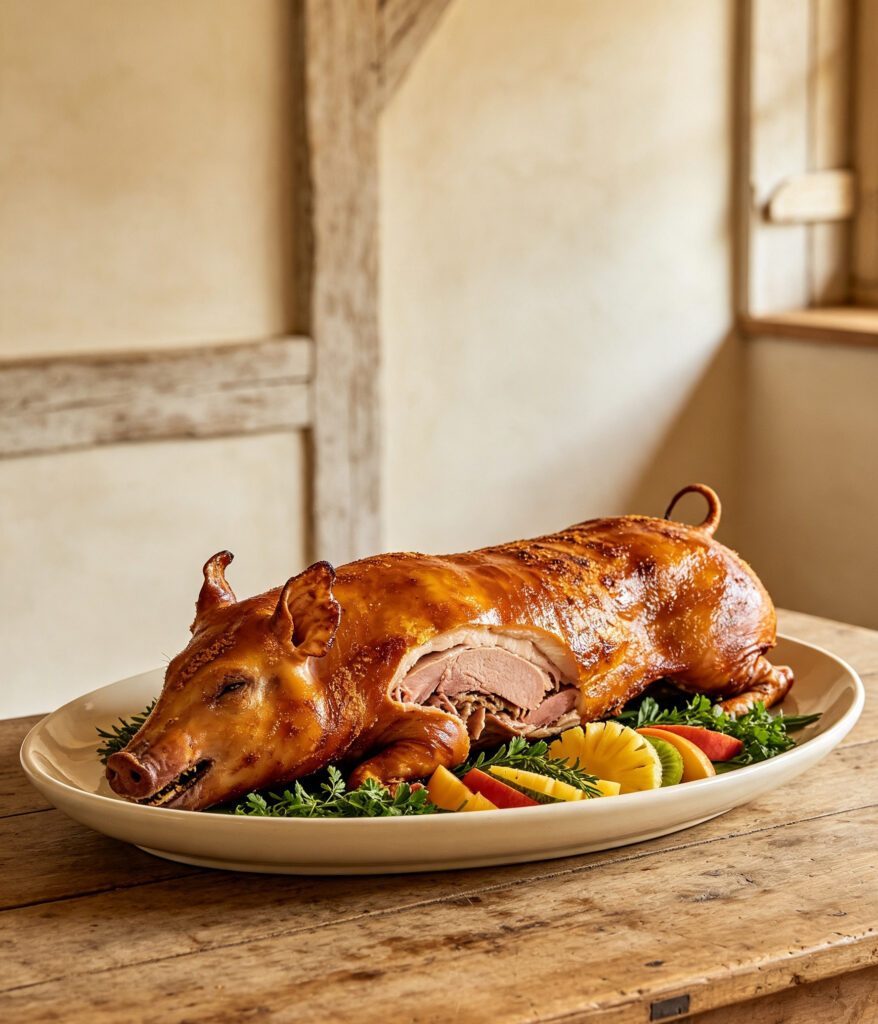
Puaka Tunu (Umu-Roasted Suckling Pig)
The Quirky Foodster Team
Ingredients
- Whole suckling pig (about 8–10 kg/18–22 lb), cleaned and prepared by a butcher — 1
- Salt — 4 tbsp
- Black pepper — 2 tbsp
- Garlic cloves, crushed — 6
- Onions, quartered — 2
- Banana leaves and/or taro leaves, for wrapping
- Water — 250 ml (1 cup)
Method
- Rub the pig generously, inside and out, with salt, pepper and crushed garlic, and place the quartered onions inside the cavity.
- If using a traditional umu, prepare a pit lined with hot volcanic stones; if oven-roasting at home, preheat a large oven to 150°C (300°F).
- Wrap the pig generously in banana leaves and, if using an umu, additional layers of leaves and earth to seal in the heat; if oven-roasting, wrap tightly in heavy-duty foil with the water added to the pan.
- Cook slowly for 3–4 hours (timing will vary considerably by size and method), until the meat is completely tender and pulls easily from the bone.
- For an umu, carefully unearth and unwrap the pig once cooking time is complete; for an oven method, unwrap and, if desired, increase the oven temperature to 220°C (425°F) for a final 15–20 minutes to crisp the skin.
- Rest for 15–20 minutes before carving and serving as the centrepiece of the feast, alongside other dishes such as lu pulu, 'ota 'ika and root vegetables.
Introduction: A whole roasted suckling pig is the centrepiece of any major Tongan feast, traditionally cooked for hours in
an umu, an underground oven made by heating volcanic stones and covering the food with banana and
taro leaves.
Cultural Background: A whole roasted suckling pig is the centrepiece of any major Tongan feast, traditionally cooked for hours in
an umu, an underground oven made by heating volcanic stones and covering the food with banana and
taro leaves. Its presence defines a celebration, whether a wedding, a funeral, or a significant community
gathering.
Tips: This is a dish traditionally prepared by experienced cooks for a whole community — enlist help and plan well ahead if attempting it at home. An oven-roasting method can approximate the result at a smaller home scale, though the smoky depth of a true umu is hard to fully replicate.
Variations: Smaller cuts of pork, such as a whole leg or shoulder, can be prepared with the same seasoning and wrapping method for a home-scale version. Some families add sliced pineapple inside the cavity for extra sweetness. This dish is inherently built around a whole roasted pig and is central to Tongan feast culture; no
vegetarian version exists for this specific occasion dish.
Storage: Refrigerate leftover meat in an airtight container for up to 4 days; freezes well for up to 3 months.
Reheating: Reheat portions in a covered dish in a 160°C (325°F) oven until warmed through, adding a splash of water
to keep it moist.
FAQs:
Q: What is an umu?
A: A traditional underground earth oven, made by heating stones over a fire and using them to slow-cook food wrapped in leaves, covered with earth to trap the heat.
Q: Can this be made without a pit oven?
A: Yes, a low, slow oven roast wrapped tightly in foil can approximate the result at home, though it won't have the same smoky character as a true umu.
Q: What occasions call for this dish?
A: Major life events — weddings, funerals, and significant community or church gatherings — where a whole roasted pig signifies the importance of the occasion.
- Whole suckling pig (about 8–10 kg/18–22 lb), cleaned and prepared by a butcher — 1
- Salt — 4 tbsp
- Black pepper — 2 tbsp
- Garlic cloves, crushed — 6
- Onions, quartered — 2
- Banana leaves and/or taro leaves, for wrapping
- Water — 250 ml (1 cup)
Please log in to leave a comment.