
Fufu (Pounded Yam)
The Quirky Foodster Team
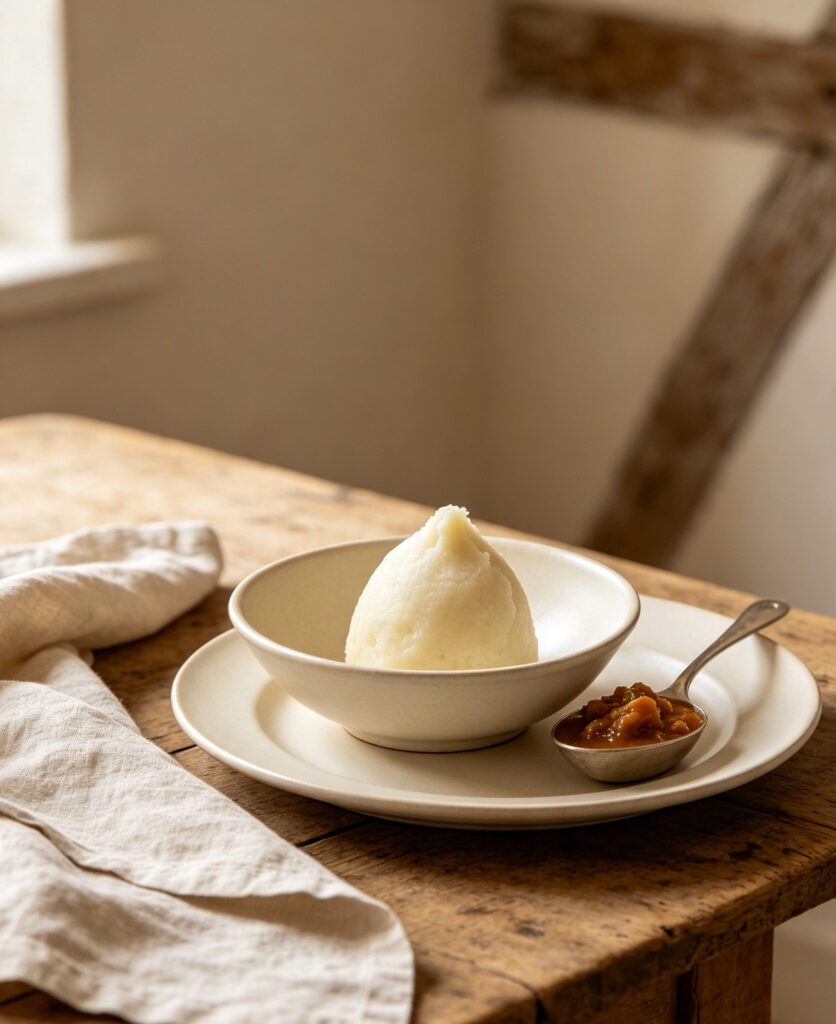
Ingredients
- White yam, peeled and cut into chunks — 1.2 kg (2.6 lb)
- Water, for boiling — 2 L (8 cups)
- Salt — a pinch
Method
- Peel the yam and cut into large, even chunks for consistent cooking.
- Place yam chunks in a large pot, cover with water, and add a pinch of salt.
- Bring to a boil and cook for 25–30 minutes until the yam is completely tender and a knife slides through easily.
- Drain the yam thoroughly, reserving a little of the cooking water in case it’s needed later.
- Traditional method: transfer the hot yam to a large mortar and pound vigorously and continuously with a pestle, folding the mass over itself, until it becomes smooth, stretchy, and free of lumps, about 10–15 minutes.
- Modern method: process the hot yam in a stand mixer fitted with a dough hook, or pulse in a food processor, adding a splash of the reserved cooking water as needed, until smooth and elastic.
- Shape the finished fufu into smooth balls or mounds with wet hands and serve immediately, warm, alongside soup or stew.
Introduction: Fufu made from pounded yam is a foundational side across Togo, served alongside soups and stews as the main starch of the meal.
Cultural Background: Fufu made from pounded yam is a foundational side across Togo, served alongside soups and stews as the main starch of the meal. Traditionally pounded by hand in a large wooden mortar with a long pestle, it has a smooth, elastic texture prized for scooping up rich sauces like gboma dessi or fetri detsi.
Tips: Keep the yam hot throughout pounding or processing — fufu becomes difficult to smooth out properly once it cools, so work quickly.
Variations: Cassava or a yam-cassava blend can be used instead of pure yam for a slightly different, equally traditional texture and flavour.
Storage: Fufu is best eaten fresh, but can be wrapped tightly and refrigerated for up to 2 days.
Reheating: Reheat by steaming with a little water, or microwave covered with a damp cloth, then briefly re-knead by hand to restore smoothness.
FAQs:
Q: Why is my fufu lumpy?
A: Under-pounding or letting the yam cool too much before finishing are the most common causes — pound thoroughly while still hot.
Q: Is fufu gluten-free?
A: Yes, traditional yam fufu is naturally gluten-free.
Q: Can I make fufu without a mortar and pestle?
A: Yes, a stand mixer with a dough hook or a food processor can achieve a similar smooth texture with much less effort.
- White yam, peeled and cut into chunks — 1.2 kg (2.6 lb)
- Water, for boiling — 2 L (8 cups)
- Salt — a pinch
Please log in to leave a comment.