
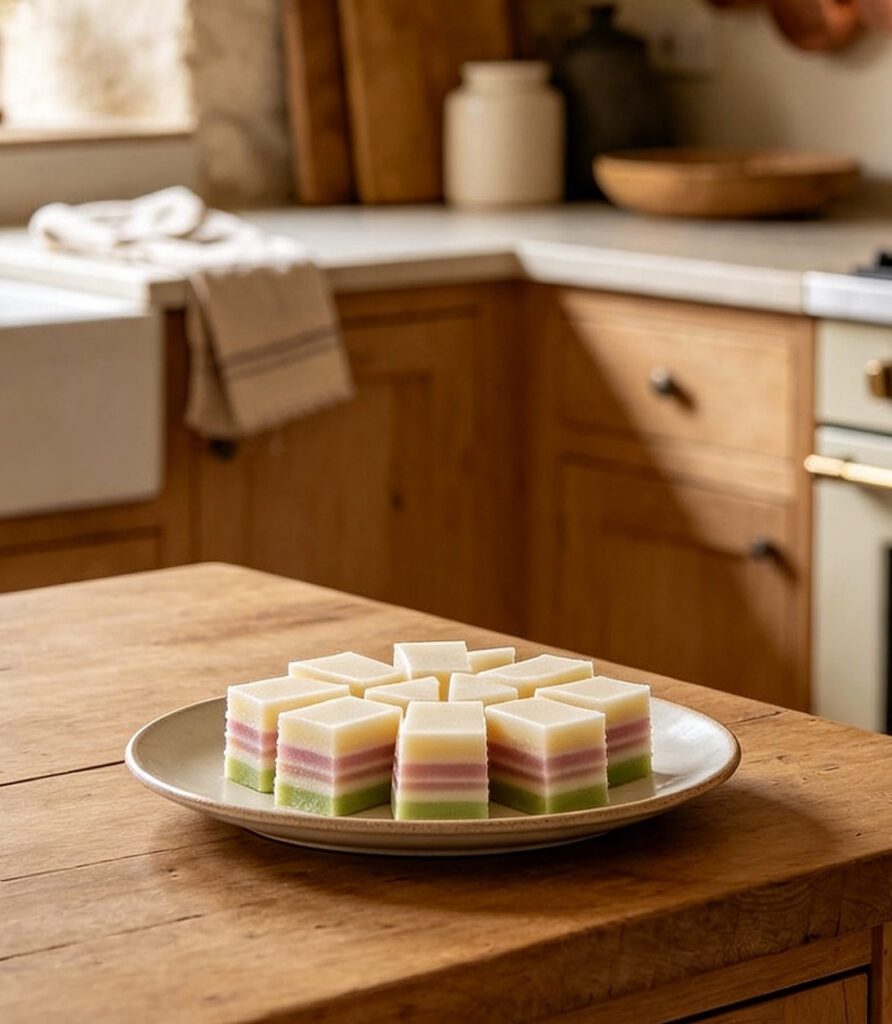
Khanom Chan (Nine-Layer Steamed Cake)
The Quirky Foodster Team
Ingredients
- Tapioca starch — 200 g (1 1/3 cups)
- Rice flour — 100 g (2/3 cup)
- Mung bean starch (or extra tapioca starch) — 50 g (1/3 cup)
- Sugar — 300 g (1 1/2 cups)
- Coconut milk — 600 ml (2 1/2 cups)
- Salt — 1/4 tsp
- Drops natural green food colouring (such as pandan extract) or butterfly pea flower extract for blue — a few
Method
- In a large bowl, whisk together the tapioca starch, rice flour, mung bean starch and sugar.
- Gradually whisk in the coconut milk and salt until you have a smooth, thin batter with no lumps.
- Divide the batter evenly between two bowls. Leave one plain (or tint pale) and colour the other with a few drops of the natural food colouring.
- Set up a steamer with the pan or tin inside, and preheat over simmering water for a few minutes, lightly greasing the pan.
- Ladle a thin, even layer of the plain batter into the hot pan, spreading evenly, and steam for 4–5 minutes, until just set.
- Ladle a thin layer of the coloured batter directly on top of the set layer, and steam for a further 4–5 minutes, until set.
- Continue alternating layers, steaming each for 4–5 minutes before adding the next, until you have used all the batter (traditionally nine layers total).
- After the final layer, steam for an additional 10 minutes to ensure everything is fully cooked through.
- Let the cake cool completely, then chill for at least 2 hours before turning out and cutting into diamond-shaped pieces.
Introduction: Khanom chan, a striking layered steamed dessert traditionally made with nine layers for good fortune (the
Thai word for nine, kao, sounds like the word for progress), is a fixture at Thai weddings, ceremonies and
festivals, its soft, chewy texture and vivid colour built up one thin layer at a time.
Cultural Background: Khanom chan, a striking layered steamed dessert traditionally made with nine layers for good fortune (the
Thai word for nine, kao, sounds like the word for progress), is a fixture at Thai weddings, ceremonies and
festivals, its soft, chewy texture and vivid colour built up one thin layer at a time.
Tips: Keep each layer thin and even, and make sure it's fully set before adding the next, or the layers can blend together. Chilling the finished cake thoroughly before cutting makes it much easier to slice into clean, neat pieces.
Variations: Use different natural colourings and flavourings for each layer, such as pandan for green or butterfly pea for blue. Make a simpler 5-layer version if short on time, while keeping the same alternating technique. Naturally vegetarian.
Storage: Refrigerate in an airtight container for up to 5 days.
Reheating: Best served cold or at room temperature; not typically reheated.
FAQs:
Q: Why nine layers specifically?
A: The number nine (kao) is considered auspicious in Thai culture, as it sounds similar to the word for 'progress' or 'advancement,' making this cake a popular choice for weddings and ceremonies.
Q: Can I make fewer layers?
A: Yes, a simplified version with fewer layers is easier for home cooks, though the traditional celebratory version uses nine.
Q: Why does each layer need to fully set before adding the next?
A: This ensures the layers stay distinct and don't bleed into one another, giving the cake its clean, striped appearance when sliced.
- Tapioca starch — 200 g (1 1/3 cups)
- Rice flour — 100 g (2/3 cup)
- Mung bean starch (or extra tapioca starch) — 50 g (1/3 cup)
- Sugar — 300 g (1 1/2 cups)
- Coconut milk — 600 ml (2 1/2 cups)
- Salt — 1/4 tsp
- Drops natural green food colouring (such as pandan extract) or butterfly pea flower extract for blue — a few
Please log in to leave a comment.