
Earth Oven Feast
The Quirky Foodster Team
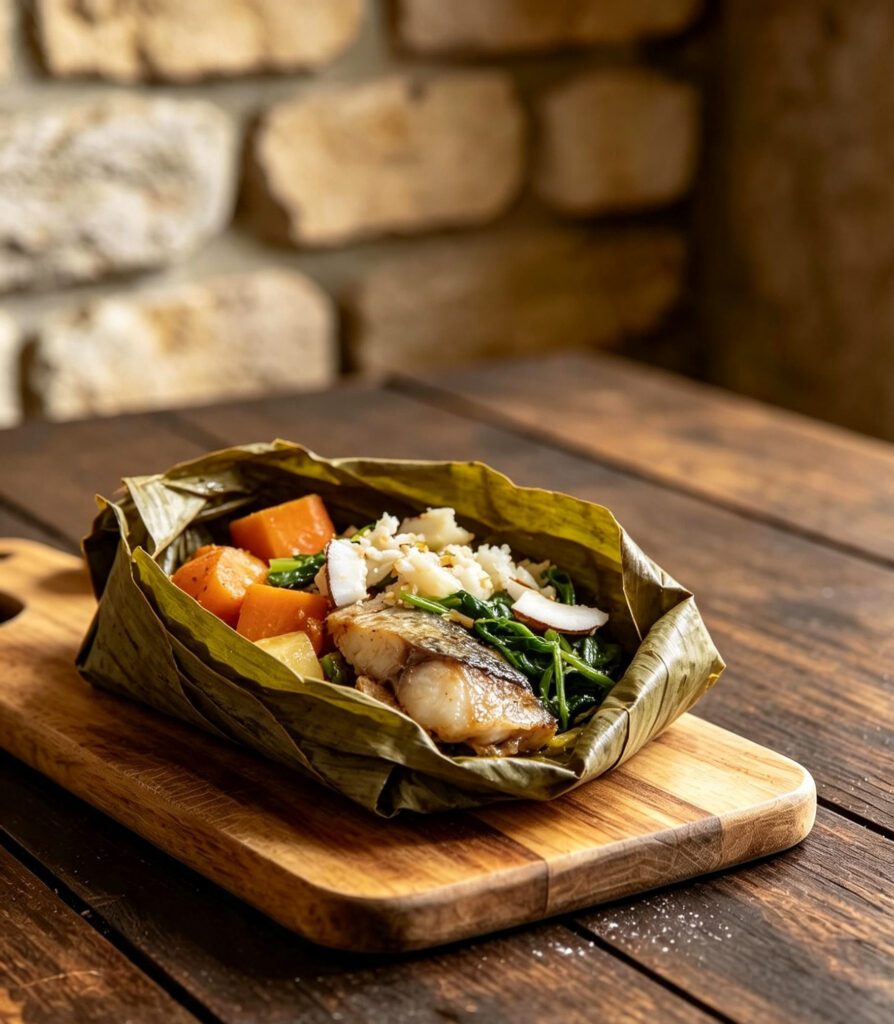
Ingredients
- Pork, cut into large pieces — 2 kg (4.4 lb)
- Mixed yam, taro and sweet potato, peeled and left whole or halved — 1.5 kg (3.3 lb)
- Lap lap mixture (grated root vegetable with coconut milk, as per the Lap Lap recipe) — 1 kg (2.2 lb)
- Banana leaves, in large quantities, softened over a flame
- Salt, — to taste
- Hot stones (heated in a fire) and a pit or large deep pot as a modern alternative
Method
- For the traditional method: dig a pit and build a fire with stones inside, allowing the stones to heat thoroughly for at least an hour.
- Once the stones are very hot, remove the fire embers, leaving the hot stones in place, and cover with a layer of banana leaves.
- Season the pork with salt and wrap tightly in banana leaves, along with the whole root vegetables and prepared lap lap mixture, each wrapped separately or together in large leaf bundles.
- Place the wrapped food on top of the hot stones, cover with more banana leaves, then a layer of earth or a heavy covering, sealing in the heat completely.
- Leave to cook slowly for 3-4 hours, until the pork is very tender and the root vegetables and lap lap are fully cooked through.
- Carefully uncover and unwrap, then serve the pork, root vegetables and lap lap together as a large communal feast.
- For a modern home alternative: wrap the ingredients tightly in banana leaves and foil, and cook in a very large covered roasting pan in an oven preheated to 150°C (300°F) for 4-5 hours, until everything is fully tender.
Introduction: The earth oven, or 'lovo' style cooking, is central to major Ni-Vanuatu celebrations, where meat, root vegetables and lap lap are wrapped in leaves and slow-cooked over hot stones buried in the ground.
Cultural Background: The earth oven, or 'lovo' style cooking, is central to major Ni-Vanuatu celebrations, where meat, root vegetables and lap lap are wrapped in leaves and slow-cooked over hot stones buried in the ground. This communal cooking method is reserved for significant community gatherings, weddings and ceremonies.
Tips: This dish is traditionally a large communal effort — enlist help for preparation, wrapping and the long cooking process. Wrap the food tightly and thoroughly to retain moisture and heat throughout the long, slow cooking time. If using a modern oven method, check periodically and add a little extra covering or foil if things appear to be drying out.
Variations: Adjust the meat and root vegetable quantities based on the size of the gathering. Some communities include chicken alongside or instead of pork. Add whole fish wrapped separately for a coastal variation of the feast. A vegetarian version can focus on the root vegetables and lap lap components alone, omitting the pork, though this departs significantly from the traditional communal feast.
Storage: Refrigerate leftover portions separately in airtight containers for up to 3 days.
Reheating: Reheat gently in a covered dish in a low oven, or by steaming, until warmed through.
FAQs:
Q: What is an earth oven?
A: An earth oven, sometimes called a 'lovo', is a traditional Pacific Islands cooking method using heated stones buried in a pit to slow-cook large quantities of food, wrapped in leaves, for community feasts and celebrations.
Q: Can this be made without a traditional earth oven?
A: Yes, a very large covered roasting pan in a conventional oven, cooked low and slow, can approximate the results at home, though it won't have quite the same smoky, earthy flavour.
Q: What occasions is this feast prepared for?
A: It's reserved for significant community and family celebrations, including weddings, important ceremonies and major gatherings across Vanuatu.
- Pork, cut into large pieces — 2 kg (4.4 lb)
- Mixed yam, taro and sweet potato, peeled and left whole or halved — 1.5 kg (3.3 lb)
- Lap lap mixture (grated root vegetable with coconut milk, as per the Lap Lap recipe) — 1 kg (2.2 lb)
- Banana leaves, in large quantities, softened over a flame
- Salt, — to taste
- Hot stones (heated in a fire) and a pit or large deep pot as a modern alternative
Please log in to leave a comment.