
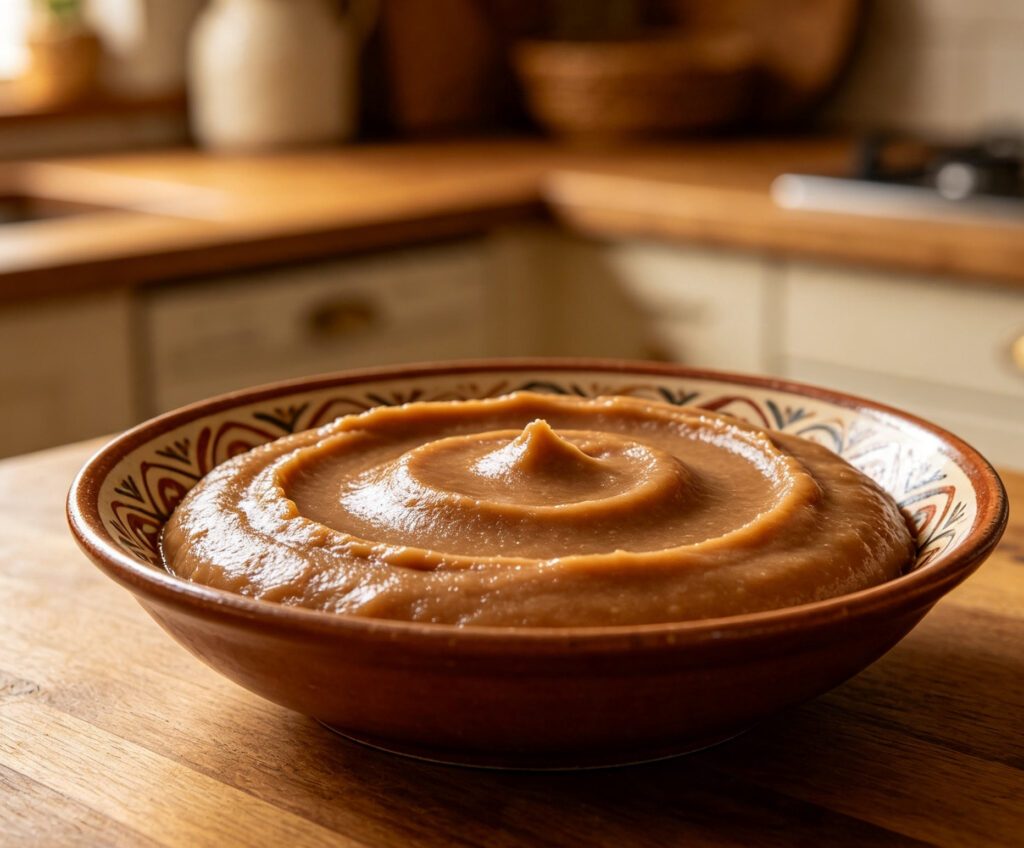
Sumalak (Navruz Wheat Germ Pudding)
The Quirky Foodster Team
Ingredients
- Wheat grains, sprouted (sprouted 5–7 days in advance) — 1 kg (2.2 lb)
- Vegetable oil — 250 ml (1 cup)
- Water, plus more as needed — 2.5 L (10 cups)
- Plain flour — 200 g (1.5 cups)
- Smooth, clean small stones (traditional, optional, for symbolic luck) — 7
- Salt — a pinch
Method
- Once the wheat has sprouted (with shoots about 1–2 cm long), blend the sprouted wheat with a little water in a blender or food processor until it forms a smooth, milky liquid.
- Strain the blended wheat mixture through a fine sieve or cheesecloth into a large bowl, pressing to extract as much liquid as possible. Reserve this liquid; discard the coarse solids or repeat the process to extract more liquid.
- In a very large heavy-bottomed pot, heat the oil over medium heat.
- Whisk the flour into the strained wheat liquid until smooth and lump-free, then pour this mixture into the pot along with the water and a pinch of salt.
- Add the clean stones to the pot if using (traditionally for good luck; they also help prevent the pudding from sticking to the bottom).
- Bring to a gentle simmer, then reduce heat to very low. Cook, stirring almost continuously, for 6–8 hours, or until the mixture turns a deep caramel-brown color and thickens significantly.
- Add more hot water gradually throughout cooking if the mixture becomes too thick before it develops its deep color.
- Once thickened and deep brown, remove from heat and let cool slightly.
- Pour into a serving dish and let set for several hours or overnight before serving at room temperature.
Introduction: Sumalak is a sweet, dense pudding made entirely from sprouted wheat, cooked slowly for many hours without any added sugar, its sweetness coming naturally from the sprouted grain.
Cultural Background: Sumalak is a sweet, dense pudding made entirely from sprouted wheat, cooked slowly for many hours without any added sugar, its sweetness coming naturally from the sprouted grain. It is the signature dish of Navruz, the Persian New Year celebration marking the arrival of spring, and is traditionally prepared communally by women who take turns stirring the pot throughout the night while singing and sharing stories, symbolizing renewal, abundance, and collective effort.
Tips: Constant, gentle stirring over very low heat is essential to prevent burning during the long cooking process; this is traditionally done by multiple people in shifts. The pudding's sweetness and color develop naturally through slow cooking, so patience is key; there is no shortcut to reduce the cooking time significantly. If stones are included, warn guests in advance, as finding one in your portion is considered good luck.
Variations: Some regional versions add a few walnuts or almonds during cooking for texture. The dish is inherently free of dairy and eggs, making it naturally vegan. This recipe is naturally vegan as written.
Storage: Store in an airtight container in the refrigerator for up to 1 week.
Reheating: Sumalak is traditionally served at room temperature or slightly warmed. If reheating, warm gently in a saucepan over low heat, stirring frequently, for a few minutes.
FAQs:
Q: How long does it take to sprout the wheat?
A: Wheat grains typically take 5–7 days to sprout properly, soaked and rinsed daily in a warm, dark place.
Q: Why does sumalak taste sweet without any added sugar?
A: The natural enzymes released during the wheat's sprouting process convert starches into sugars, giving the dish its distinctive sweetness.
Q: Why are stones added to the pot?
A: Traditionally, smooth stones are added for symbolic good luck and to help prevent the thick mixture from sticking and burning at the bottom of the pot.
- Wheat grains, sprouted (sprouted 5–7 days in advance) — 1 kg (2.2 lb)
- Vegetable oil — 250 ml (1 cup)
- Water, plus more as needed — 2.5 L (10 cups)
- Plain flour — 200 g (1.5 cups)
- Smooth, clean small stones (traditional, optional, for symbolic luck) — 7
- Salt — a pinch
Please log in to leave a comment.