
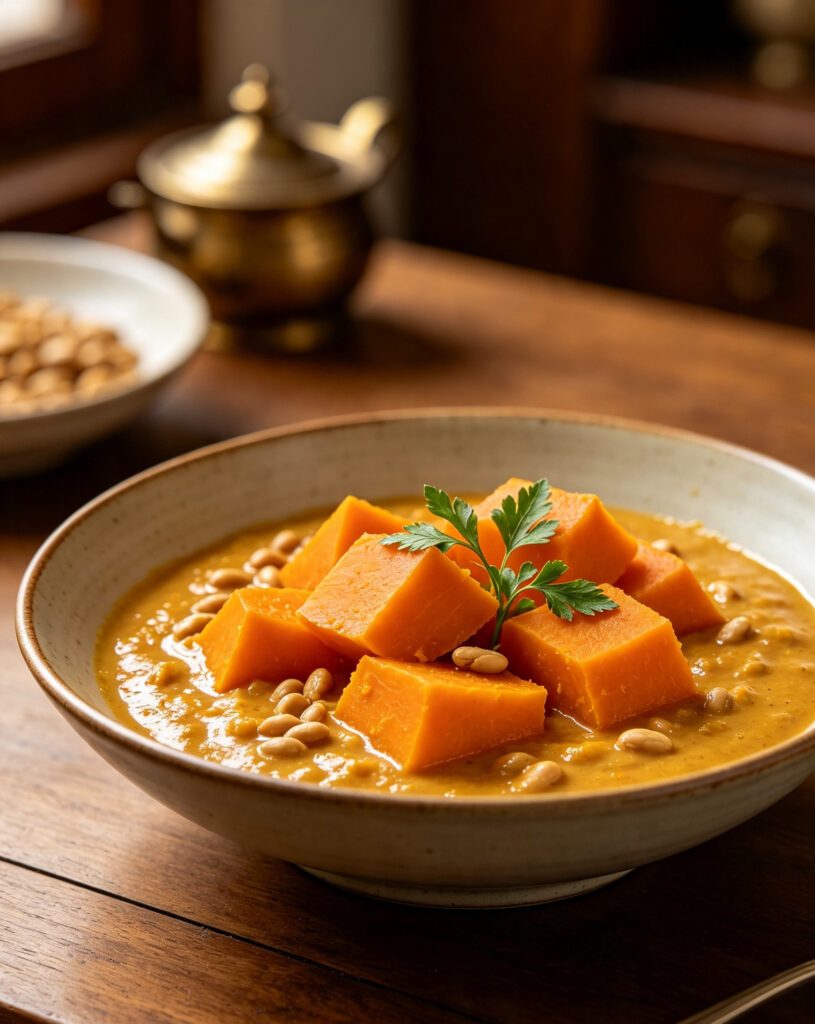
Ensujju (Steamed Pumpkin with Groundnut Sauce)
The Quirky Foodster Team
Ingredients
- Pumpkin, peeled and cubed — 800 g (1 3/4 lb)
- Raw groundnuts (peanuts), ground — 100 g (2/3 cup)
- Small Onion, finely chopped — 1
- Water — 200 ml (3/4 cup + 1 tbsp)
- Vegetable oil — 2 tbsp
- Fine salt — 1 tsp
Method
- Steam the pumpkin cubes over simmering water for 20-25 minutes, until tender.
- Meanwhile, sauté the onion in oil for 4-5 minutes until soft.
- Whisk the ground groundnuts with the water to form a smooth paste and stir into the onion.
- Simmer gently for 8-10 minutes, stirring often, until thickened, then season with salt.
- Arrange the steamed pumpkin on a serving plate and spoon the groundnut sauce generously over the top.
Introduction: Pumpkin is grown widely across Uganda, and its young leaves as well as the flesh are both used in cooking.
Cultural Background: Pumpkin is grown widely across Uganda, and its young leaves as well as the flesh are both used in cooking. Steamed pumpkin finished with a spoonful of groundnut sauce is a common, comforting side dish that makes good use of this abundant, easy-to-grow vegetable.
Tips: Steaming rather than boiling the pumpkin keeps its flavour concentrated and prevents it becoming watery. Stir the groundnut sauce constantly as it thickens to stop it catching.
Variations: Mash the steamed pumpkin into the sauce for a single combined dish. Add a pinch of ground cinnamon to the pumpkin for extra warmth. Naturally vegetarian as written. Naturally vegan as written; contains no animal products.
Storage: Refrigerate pumpkin and sauce separately in airtight containers for up to 3 days.
Reheating: Reheat pumpkin by steaming for 5 minutes; reheat sauce gently on the stovetop over low heat, stirring, for 5 minutes.
FAQs:
Q: Can butternut squash be used instead of pumpkin?
A: Yes, it is a good substitute with a similar texture and mild sweetness.
Q: Is ensujju served as a main or a side?
A: It is generally served as a side dish alongside a starch such as posho, rice or matoke, and sometimes a protein.
- Pumpkin, peeled and cubed — 800 g (1 3/4 lb)
- Raw groundnuts (peanuts), ground — 100 g (2/3 cup)
- Small Onion, finely chopped — 1
- Water — 200 ml (3/4 cup + 1 tbsp)
- Vegetable oil — 2 tbsp
- Fine salt — 1 tsp
Please log in to leave a comment.