
Thareed (Emirati Bread And Meat Stew For Eid And Ramadan)
The Quirky Foodster Team
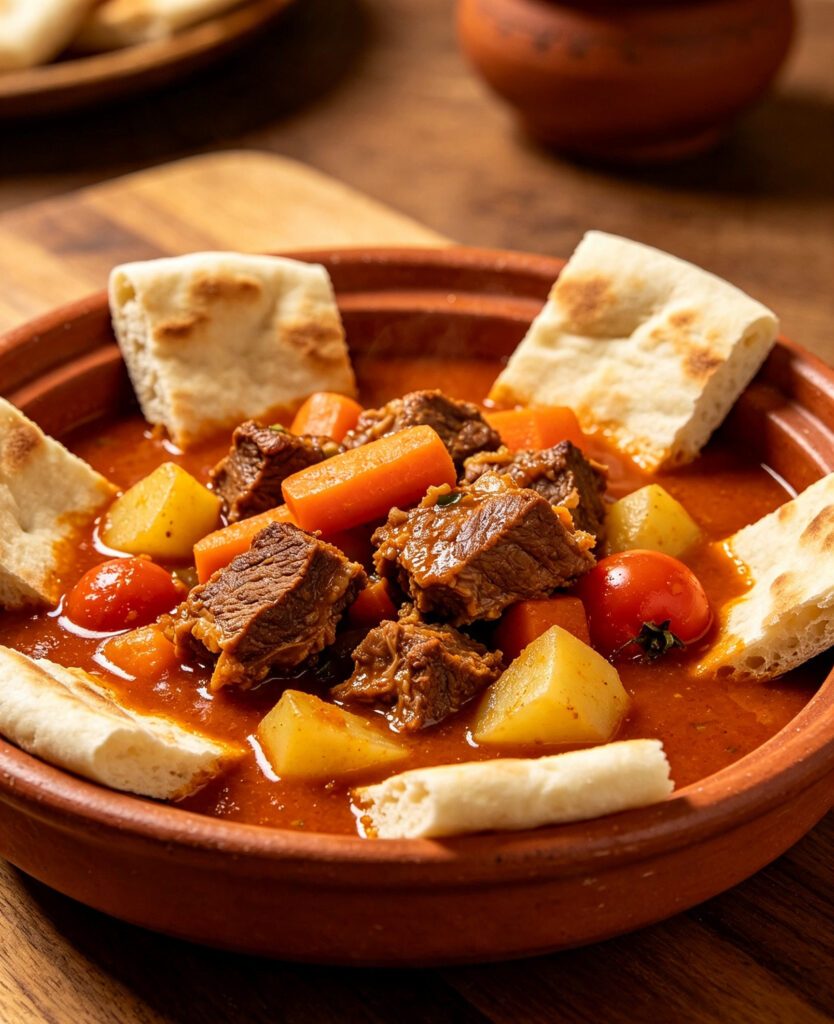
Ingredients
- Lamb or chicken, cut into pieces — 1 kg (2.2 lb)
- Vegetable oil — 3 tbsp
- Large onions, chopped — 2
- Garlic cloves, minced — 4
- Emirati baharat spice blend — 2 tbsp
- Ground turmeric — 1 tsp
- Dried black limes (loomi), pierced — 3
- Canned or fresh chopped tomatoes — 400 g (14 oz)
- Medium potatoes, cubed — 2
- Medium carrots, sliced — 2
- Medium zucchini, cubed — 1
- Water or stock — 1.5 L (6 cups)
- Salt and black pepper, — to taste
- Thin Emirati flatbread (regag or similar), torn into pieces — 6 pieces
- Fresh cilantro, chopped, for garnish
Method
- Heat the oil in a large pot over medium-high heat. Brown the meat on all sides, about 8 minutes.
- Add the onions and cook until softened, about 5 minutes. Add the garlic and cook for a further minute until fragrant.
- Stir in the baharat spice blend and turmeric, cooking for 1 minute to toast the spices.
- Add the pierced dried limes and tomatoes, stirring well.
- Pour in the water or stock, season with salt and pepper, and bring to a simmer. Cover and cook for 45–60 minutes until the meat is tender.
- Add the potatoes and carrots, and simmer for 15 minutes. Add the zucchini and continue cooking for a further 10 minutes until all the vegetables and meat are fully tender.
- Arrange the torn bread pieces in a large serving dish. Ladle the hot stew generously over the bread, allowing it to soak for a few minutes.
- Garnish with fresh cilantro and serve immediately while hot.
Introduction: Thareed is a richly spiced meat and vegetable stew served over layers of thin bread, historically regarded as a favored dish and holding particular religious significance in Islamic tradition.
Cultural Background: Thareed is a richly spiced meat and vegetable stew served over layers of thin bread, historically regarded as a favored dish and holding particular religious significance in Islamic tradition. Frequently prepared for Ramadan iftar and Eid celebrations across the UAE, thareed exemplifies the practice of soaking bread in a flavorful broth, transforming a simple combination of stew and bread into a deeply comforting, symbolically significant meal.
Tips: Use a slightly firm, day-old flatbread, as very fresh bread can turn overly mushy when soaked in the hot stew. Let the bread soak briefly before serving so it absorbs the flavorful broth without disintegrating completely. The stew itself can be made ahead of time and reheated, assembling with fresh bread just before serving.
Variations: Add chickpeas to the stew for extra heartiness. Some regional versions include eggplant in place of or alongside zucchini. Vegetarian version: omit the meat, use a rich vegetable stock, and add extra vegetables and chickpeas for protein.
Storage: Store the stew and bread separately in airtight containers in the refrigerator for up to 4 days; assemble with fresh bread when ready to serve.
Reheating: Reheat the stew in a pot over medium heat for 8–10 minutes until piping hot, then pour over freshly torn bread to serve.
FAQs:
Q: Why does thareed hold religious significance?
A: It is a dish with deep historical roots in Islamic tradition, often mentioned in religious texts as a favored meal, which has helped cement its place at Ramadan and Eid tables.
Q: Can I prepare thareed in advance for a gathering?
A: Yes, the stew portion can be made a day ahead and gently reheated; assemble the bread and broth together fresh just before serving for the best texture.
Q: What's the difference between thareed and fereed?
A: Both involve bread soaked in a savory broth, but thareed typically includes a fuller vegetable and meat stew, while fereed tends to focus more simply on a spiced meat broth.
- Lamb or chicken, cut into pieces — 1 kg (2.2 lb)
- Vegetable oil — 3 tbsp
- Large onions, chopped — 2
- Garlic cloves, minced — 4
- Emirati baharat spice blend — 2 tbsp
- Ground turmeric — 1 tsp
- Dried black limes (loomi), pierced — 3
- Canned or fresh chopped tomatoes — 400 g (14 oz)
- Medium potatoes, cubed — 2
- Medium carrots, sliced — 2
- Medium zucchini, cubed — 1
- Water or stock — 1.5 L (6 cups)
- Salt and black pepper, — to taste
- Thin Emirati flatbread (regag or similar), torn into pieces — 6 pieces
- Fresh cilantro, chopped, for garnish
Please log in to leave a comment.