
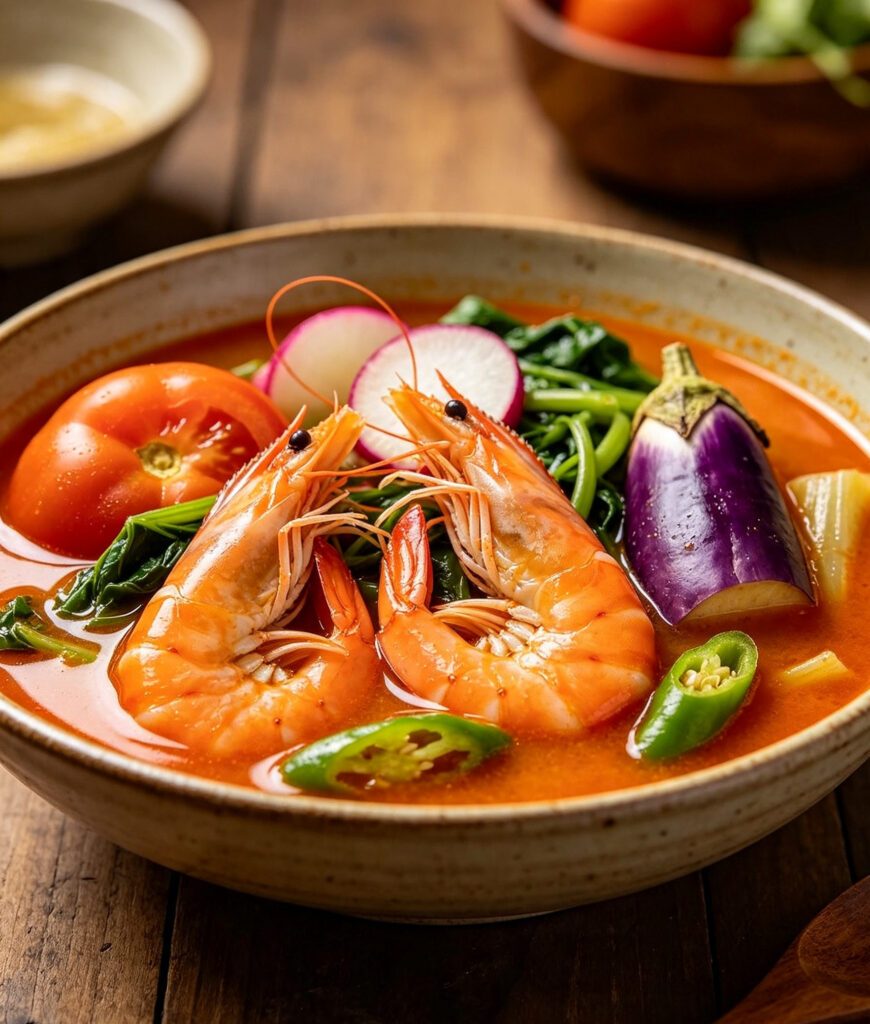
Sinigang na Hipon
The Quirky Foodster Team
Ingredients
- Shrimp, shell-on — 500 g (1 lb 2 oz)
- Onion, quartered — 1
- Tomatoes, quartered — 2
- Tamarind soup base — 1 packet (or 3 tbsp tamarind paste)
- Radish, sliced — 1
- Water spinach (kangkong) or spinach, chopped — 140 g (5 oz)
- Long green chillies — 2
- Water — 1.4 L (48 fl oz)
- Fish sauce, — to taste
- Salt and pepper — to taste
Method
- Bring the water to a boil in a large pot with the onion and tomato, and simmer for 10 minutes.
- Stir in the tamarind soup base or paste until dissolved.
- Add the radish and simmer for 8 minutes until tender.
- Add the shrimp and green chillies, and simmer for 3–4 minutes until the shrimp turns pink.
- Add the water spinach and cook for a final 1–2 minutes until just wilted.
- Season with fish sauce, salt and pepper before serving hot with rice.
Introduction: A sour, tamarind-based shrimp and vegetable soup, a lighter and equally beloved variation of the Philippines' classic sinigang.
Cultural Background: This shrimp version of sinigang reflects the Philippines' extensive coastline and love of seafood, its bright, sour broth offering the same comforting, palate-cleansing qualities as the pork version but with a lighter touch.
Tips: Add the shrimp last so it doesn't overcook and become rubbery. Adjust the tamarind quantity to achieve your preferred level of sourness.
Variations: Add okra or string beans for extra vegetables. Use peeled shrimp for a version that's easier to eat, though shell-on adds more flavour to the broth.
Storage: Refrigerate in an airtight container for up to 2 days.
Reheating: Reheat gently on the stovetop over medium heat, stirring carefully, until warmed through.
FAQs:
Q: Can this soup be made with peeled shrimp?
A: Yes, though shell-on shrimp adds extra flavour to the broth during cooking.
Q: What gives sinigang its sour flavour?
A: Traditionally tamarind, though other souring agents like guava or green mango are used in regional variations.
- Shrimp, shell-on — 500 g (1 lb 2 oz)
- Onion, quartered — 1
- Tomatoes, quartered — 2
- Tamarind soup base — 1 packet (or 3 tbsp tamarind paste)
- Radish, sliced — 1
- Water spinach (kangkong) or spinach, chopped — 140 g (5 oz)
- Long green chillies — 2
- Water — 1.4 L (48 fl oz)
- Fish sauce, — to taste
- Salt and pepper — to taste
Please log in to leave a comment.