
Ka’ak bi Ajwa
The Quirky Foodster Team
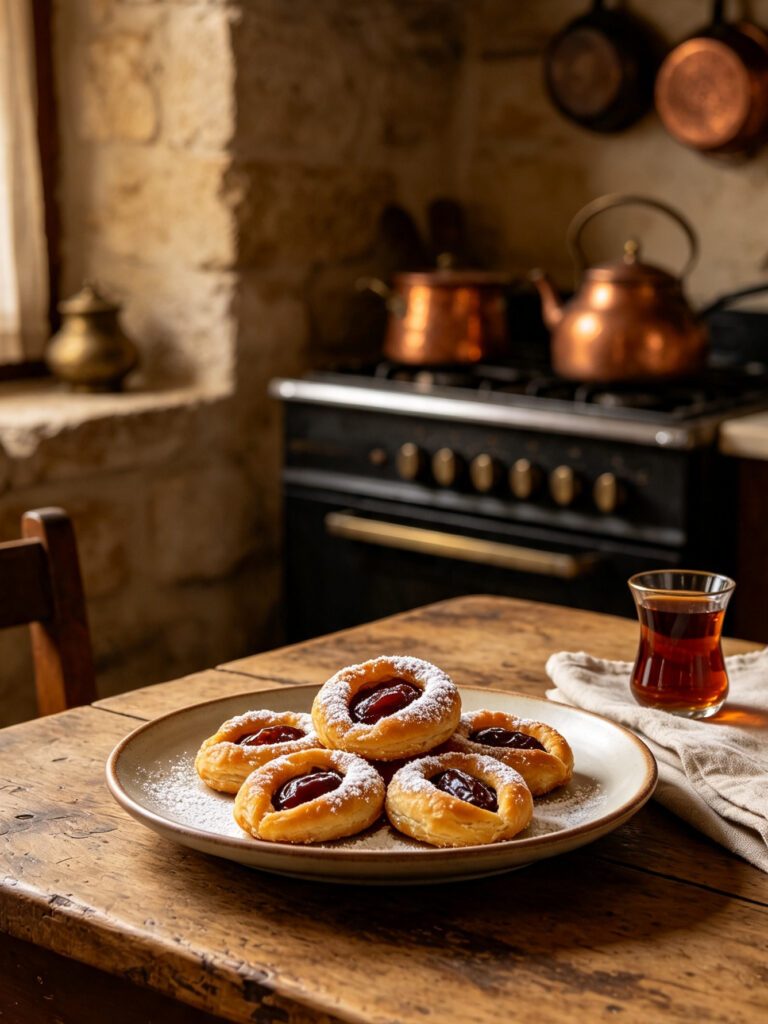
Ingredients
- Semolina — 540 g (1.2 lb)
- Plain flour — 120 g (4 oz)
- Butter, softened — 225 g (8 oz)
- Sugar — 100 g (3.5 oz)
- Ground mahlab or a pinch of ground anise — 1/2 tsp (optional)
- Warm milk — 120 ml (4 fl oz)
- Pitted dates, for the filling — 300 g (10.5 oz)
- Water, for the date paste — 2 tbsp
- Ground cinnamon, for the filling — 1/2 tsp
Method
- Rub the softened butter into the semolina and flour until evenly combined, then let rest for 1 hour.
- Meanwhile, simmer the dates with the water and cinnamon in a saucepan over low heat, mashing until a smooth, thick paste forms; let cool.
- Add the sugar, mahlab and enough warm milk to the semolina mixture to form a firm, smooth dough.
- Preheat the oven to 180°C (350°F).
- Divide the dough into small balls, flatten each, and place a spoonful of date paste in the centre.
- Fold the dough around the filling and shape into rings, using a ka'ak mould if available for the traditional patterned edge.
- Place on a baking tray and bake for 20–25 minutes until pale gold (ka'ak should not brown too much).
- Let cool completely before serving.
Introduction: Ring-shaped semolina cookies filled with sweet date paste, a beloved Palestinian treat especially associated with religious holidays.
Cultural Background: Ka'ak bi ajwa is prepared in large batches for Eid celebrations across Palestine, families gathering to shape and fill the delicate, crumbly cookies together as part of the festive preparations.
Tips: Resting the semolina dough allows it to hydrate properly, resulting in the classic tender, crumbly texture. Bake until just pale gold rather than deeply browned, as ka'ak is meant to stay light in colour.
Variations: Fill with a spiced walnut mixture instead of dates for a variation called ma'amoul bi jouz. Dust with a little icing sugar after baking, though this is optional.
Storage: Store in an airtight container at room temperature for up to 2 weeks.
Reheating: Not applicable — served at room temperature.
FAQs:
Q: What is mahlab?
A: A fragrant spice ground from cherry pit kernels, traditionally used in Levantine baking for a subtle, distinctive aroma.
Q: When is ka'ak bi ajwa traditionally made?
A: Especially for Eid celebrations, when families prepare large batches to share with visiting guests.
- Semolina — 540 g (1.2 lb)
- Plain flour — 120 g (4 oz)
- Butter, softened — 225 g (8 oz)
- Sugar — 100 g (3.5 oz)
- Ground mahlab or a pinch of ground anise — 1/2 tsp (optional)
- Warm milk — 120 ml (4 fl oz)
- Pitted dates, for the filling — 300 g (10.5 oz)
- Water, for the date paste — 2 tbsp
- Ground cinnamon, for the filling — 1/2 tsp
Please log in to leave a comment.