
Songpyeon
The Quirky Foodster Team
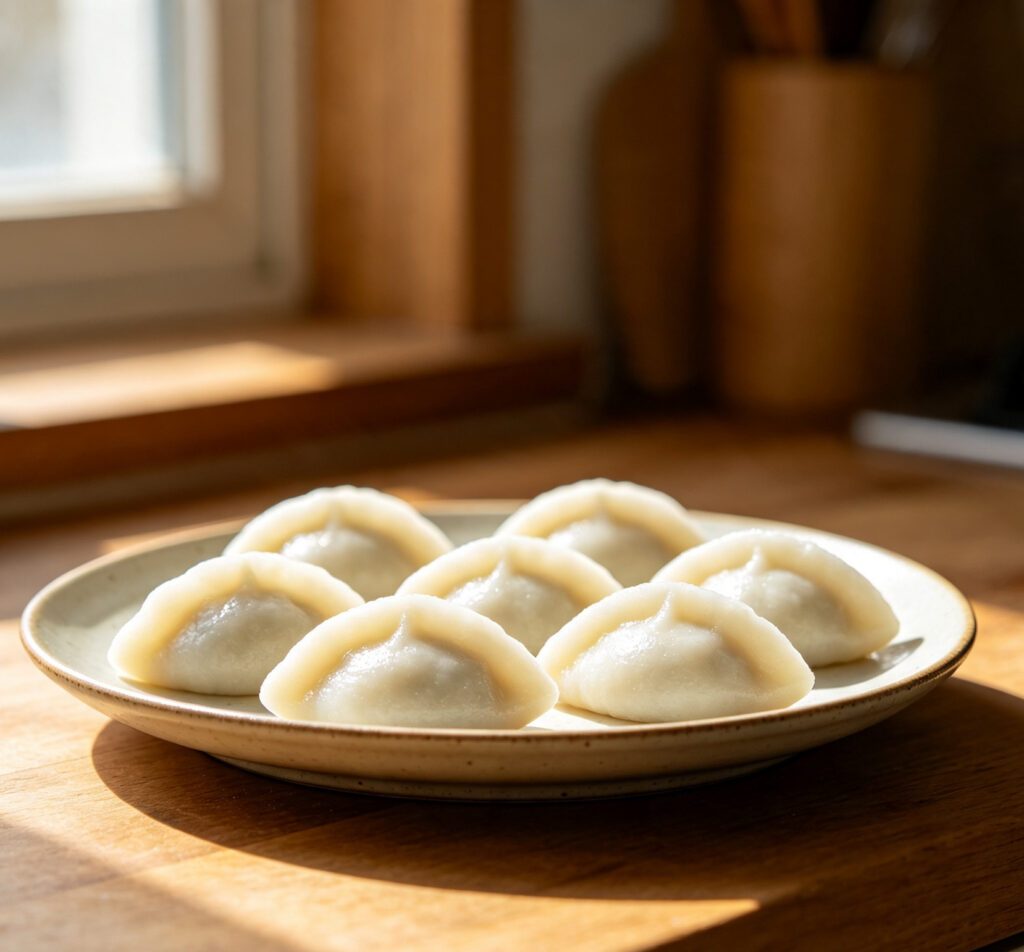
Ingredients
- Rice flour — 375 g (13 oz)
- Hot water, plus more as needed — 240 ml (8 fl oz)
- Toasted sesame seeds, ground, for the filling — 60 g (2 oz)
- Honey, for the filling — 3 tbsp
- Of Salt — pinch
- Fresh pine needles, for steaming (optional)
- Sesame oil, for brushing
Method
- Combine the rice flour and salt in a bowl, then gradually add hot water, kneading until a smooth, pliable dough forms.
- Combine the ground sesame seeds and honey for the filling.
- Divide the dough into small balls, flatten each into a disc, and place a small spoonful of filling in the centre.
- Fold the dough over into a half-moon shape, pinching the edges to seal firmly.
- Line a steamer with pine needles if using, or parchment paper.
- Steam the songpyeon for 20 minutes until translucent and cooked through.
- Brush lightly with sesame oil while still warm to prevent sticking and add shine.
Introduction: Delicate half-moon shaped rice cakes filled with sweetened sesame or bean paste, steamed over pine needles for a subtle fragrance.
Cultural Background: Songpyeon is traditionally made and shared during the autumn harvest festival, its half-moon shape symbolising a bright future, and families often gather together to fold and shape them by hand.
Tips: Seal the edges firmly to prevent the filling from leaking out during steaming. Steaming over pine needles, a traditional technique, imparts a subtle, distinctive fragrance to the finished rice cakes.
Variations: Use sweetened red bean paste as an alternative filling. Tint portions of the dough with natural colours like mugwort or pumpkin for a festive, multicoloured presentation.
Storage: Store cooled songpyeon in an airtight container at room temperature for up to 1 day, or refrigerate for 3 days.
Reheating: Reheat briefly by steaming for a few minutes to soften if they have firmed up.
FAQs:
Q: Why is songpyeon shaped like a half-moon?
A: The shape is symbolic, traditionally believed to represent a bright, hopeful future for those who make and eat it.
Q: What is the significance of steaming over pine needles?
A: It's a traditional technique believed to impart a subtle fragrance and also prevents the rice cakes from sticking together.
- Rice flour — 375 g (13 oz)
- Hot water, plus more as needed — 240 ml (8 fl oz)
- Toasted sesame seeds, ground, for the filling — 60 g (2 oz)
- Honey, for the filling — 3 tbsp
- Of Salt — pinch
- Fresh pine needles, for steaming (optional)
- Sesame oil, for brushing
Please log in to leave a comment.