
Nigerian Chapati
The Quirky Foodster Team
Ingredients
- Plain flour — 375 g (13 oz)
- Warm water — 240 ml (8 fl oz)
- Salt — 1/2 tsp
- Oil, plus extra for cooking and folding — 3 tbsp
Method
- Combine the flour and salt in a bowl.
- Gradually add warm water and 1 tbsp of the oil, kneading for 8–10 minutes until smooth and elastic.
- Rest the dough for 20 minutes.
- Divide into balls, roll each thin, brush with oil, and fold into a coil to create layers, then roll out again into a flat round.
- Heat a little oil on a griddle over medium heat and cook each chapati for 2–3 minutes per side, pressing gently, until golden and flaky.
- Serve warm.
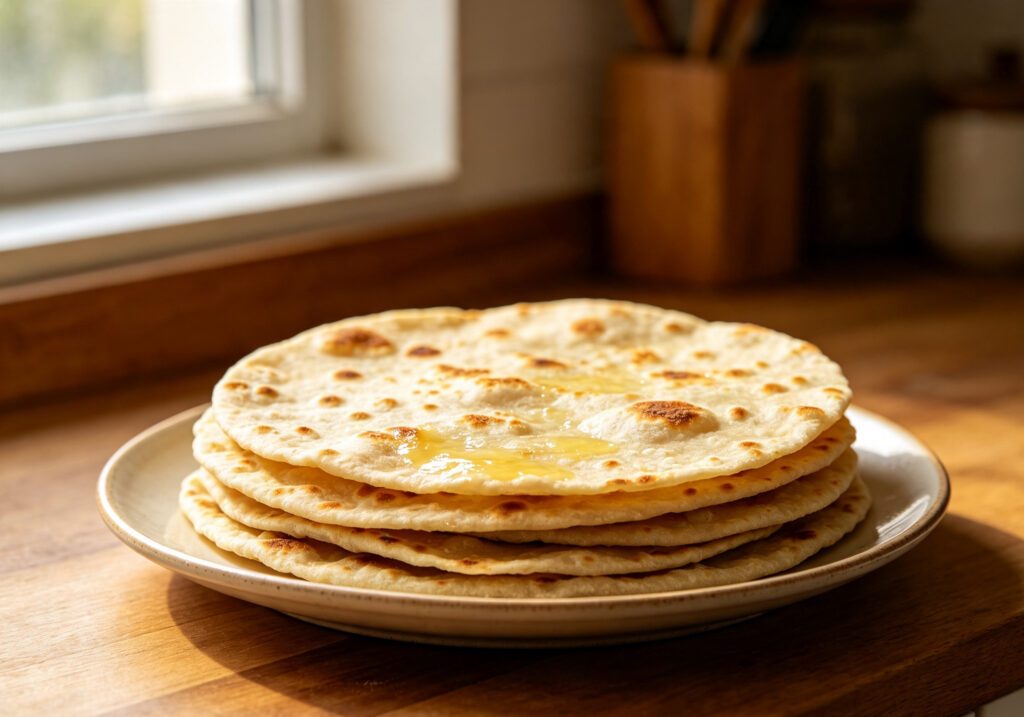
Introduction: A soft, layered flatbread, cooked on a griddle, enjoyed across Nigeria especially alongside stews and beans.
Cultural Background: Chapati reflects South Asian culinary influence found across Nigeria, its soft, slightly flaky layers making it a popular alternative bread served alongside beans, stews and suya.
Tips: Rolling and folding the dough carefully is what creates the characteristic flaky layers — don't rush this step. Cook over moderate heat so the layers cook through without burning.
Variations: Serve alongside a bean stew or suya for a filling meal. Add a little sugar to the dough for a subtly sweet version.
Storage: Store cooled chapati in an airtight container at room temperature for up to 1 day.
Reheating: Warm briefly on a dry griddle or in a dry pan for 30 seconds per side.
FAQs:
Q: Is Nigerian chapati the same as Indian chapati?
A: They share South Asian roots, though the Nigerian version tends to be a layered, slightly flaky flatbread similar to a paratha.
Q: What is chapati typically served with?
A: Beans, stews or suya, as a filling accompaniment.
- Plain flour — 375 g (13 oz)
- Warm water — 240 ml (8 fl oz)
- Salt — 1/2 tsp
- Oil, plus extra for cooking and folding — 3 tbsp
Please log in to leave a comment.