
Agege Bread
The Quirky Foodster Team
Ingredients
- Bread flour — 625 g (1 lb 6 oz)
- Active dry yeast — 2 tsp
- Sugar — 65 g (2.25 oz)
- Warm milk — 480 ml (16 fl oz)
- Butter, softened — 60 g (2 oz)
- Salt — 2 tsp
Method
- Dissolve the yeast and sugar in the warm milk and let sit for 10 minutes until foamy.
- Combine the flour and salt in a large bowl, then add the yeast mixture and softened butter.
- Knead for 12–15 minutes until very smooth and elastic — this bread benefits from extended kneading.
- Cover and let rise in a warm place for 1.5 hours, or until doubled.
- Punch down and shape into a loaf, placing it in a greased loaf tin.
- Let rise for a further 40 minutes.
- Preheat the oven to 180°C (350°F) and bake for 35–40 minutes until golden and hollow-sounding when tapped.
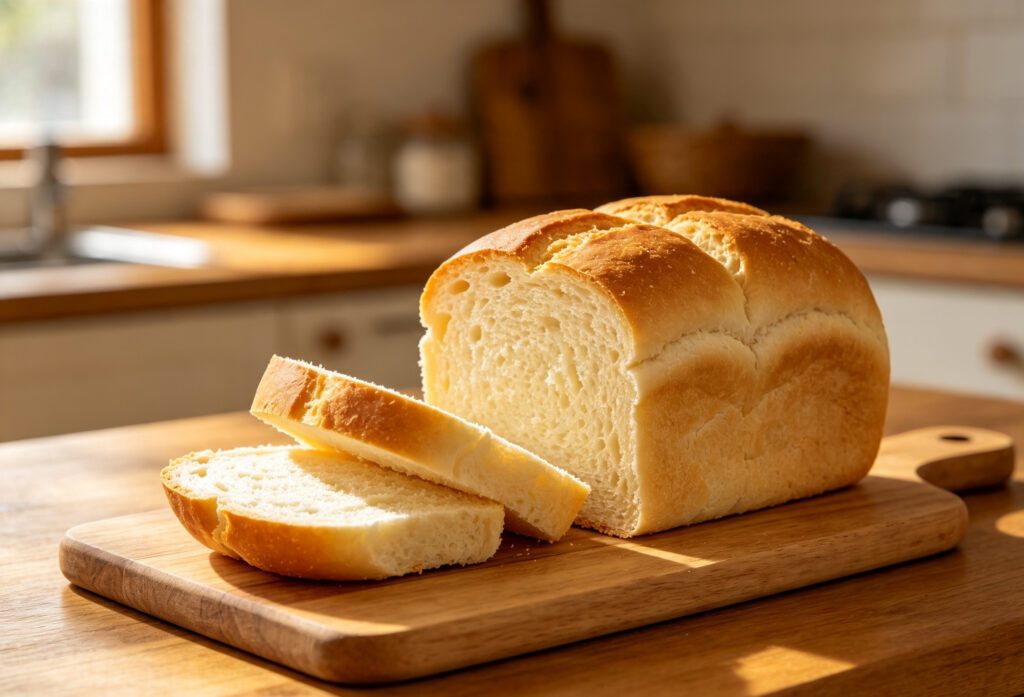
Introduction: A soft, dense, sweet white bread with a distinctive springy texture, one of Nigeria's most iconic and beloved everyday breads.
Cultural Background: Named after the Agege area of Lagos where it was first popularised, this bread has become a nationwide staple, its dense, springy crumb and slight sweetness making it a favourite for sandwiches and simply eaten on its own.
Tips: Extended kneading is key to Agege bread's distinctively dense, springy, slightly chewy crumb. Let the loaf cool fully before slicing for the cleanest cuts.
Variations: Shape into individual rolls for smaller portions. Add a touch more sugar for a sweeter version, as some bakeries prepare it.
Storage: Store at room temperature wrapped in a bag for up to 3 days.
Reheating: Toast slices as needed; the loaf itself is not otherwise reheated.
FAQs:
Q: Why does Agege bread have such a dense texture?
A: Extended, thorough kneading develops the gluten fully, giving the bread its characteristic dense, springy crumb.
Q: Where does Agege bread come from?
A: It's named after the Agege area of Lagos, where it was first popularised before spreading nationwide.
- Bread flour — 625 g (1 lb 6 oz)
- Active dry yeast — 2 tsp
- Sugar — 65 g (2.25 oz)
- Warm milk — 480 ml (16 fl oz)
- Butter, softened — 60 g (2 oz)
- Salt — 2 tsp
Please log in to leave a comment.