
Nepali Thukpa
The Quirky Foodster Team
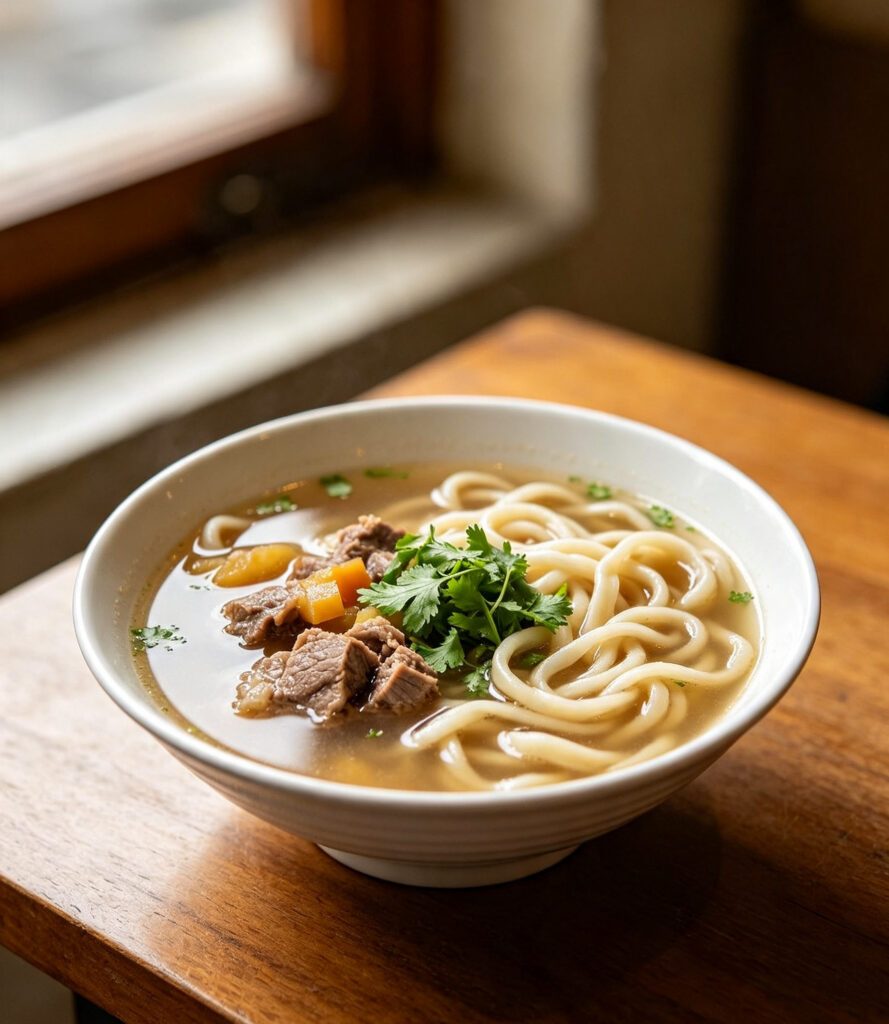
Ingredients
- Wheat noodles — 200 g (7 oz)
- Chicken or beef, sliced — 200 g (7 oz)
- Onion, sliced — 1
- Garlic, minced — 2 cloves
- Ginger, minced — 1 tbsp
- Carrot, julienned — 1
- Cabbage, shredded — 70 g (2.5 oz)
- Curry powder — 1 tsp
- Oil — 2 tbsp
- Stock — 1.4 L (48 fl oz)
- Salt and pepper — to taste
- Chopped spring onion, to garnish
Method
- Heat the oil in a large pot and sauté the onion, garlic and ginger until fragrant.
- Add the meat and curry powder, cooking until the meat is browned.
- Add the stock and bring to a boil.
- Simmer for 15 minutes until the meat is nearly tender.
- Add the carrot and cabbage, and simmer for a further 5 minutes.
- Add the noodles and cook according to package timing until tender.
- Season with salt and pepper, and garnish with chopped spring onion before serving hot.
Introduction: A warming noodle soup with vegetables and meat in a lightly spiced broth, popular in Nepal's higher-altitude regions with Tibetan influence.
Cultural Background: Thukpa reflects Nepal's cultural and culinary connections with Tibet, particularly in mountain regions, and has become a beloved comfort food nationwide, especially welcome in cold weather.
Tips: Add the noodles last so they don't overcook and become mushy in the hot broth. Adjust the vegetables to what's seasonally available, as is traditional.
Variations: Make a vegetarian version with tofu and extra vegetables in place of meat. Add a spoonful of chilli paste for extra heat.
Storage: Refrigerate the broth and meat separately from the noodles in airtight containers for up to 2 days.
Reheating: Reheat the broth gently on the stovetop; add fresh noodles if reheating a large batch to avoid overly soft noodles.
FAQs:
Q: Is thukpa spicy?
A: It's typically mild by default, with heat added separately via a chilli condiment if desired.
Q: What regions is thukpa most associated with?
A: Nepal's higher-altitude and mountain regions, reflecting Tibetan culinary influence.
- Wheat noodles — 200 g (7 oz)
- Chicken or beef, sliced — 200 g (7 oz)
- Onion, sliced — 1
- Garlic, minced — 2 cloves
- Ginger, minced — 1 tbsp
- Carrot, julienned — 1
- Cabbage, shredded — 70 g (2.5 oz)
- Curry powder — 1 tsp
- Oil — 2 tbsp
- Stock — 1.4 L (48 fl oz)
- Salt and pepper — to taste
- Chopped spring onion, to garnish
Please log in to leave a comment.