
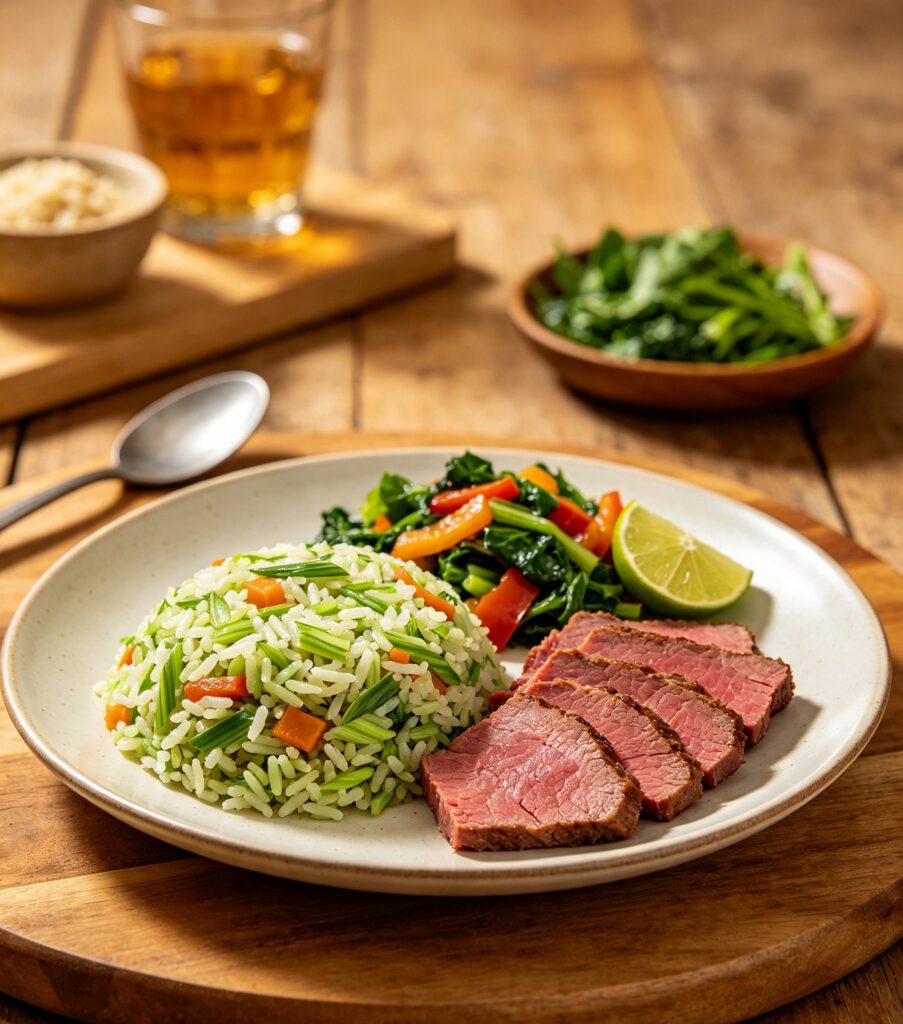
Pandanus and Corned Beef Plate
The Quirky Foodster Team
Ingredients
- Ripe pandanus fruit, segments separated and pulp scraped — 2
- Can corned beef — 340 g (12 oz)
- Onion, sliced — 1
- Tomato, chopped — 1
- Oil — 1 tbsp
- Salt and pepper — to taste
Method
- Heat the oil in a frying pan and sauté the onion until softened.
- Add the corned beef, breaking it up with a spoon, and cook for 5 minutes until heated through and lightly browned.
- Stir in the chopped tomato and cook for a further 2–3 minutes.
- Season with salt and pepper.
- Serve the corned beef alongside the scraped pandanus pulp.
Introduction: Cooked pandanus fruit served alongside a simple corned beef and onion sauté, a filling midday meal combining local produce with a Pacific pantry staple.
Cultural Background: Pandanus trees grow well on Nauru, and pairing the fruit with canned corned beef — a common Pacific import — reflects the blend of local produce and imported goods found in everyday Nauruan cooking.
Tips: Choose a fully ripe, fragrant pandanus fruit for the best flavour. Break up the corned beef well while cooking so it browns evenly.
Variations: Add a chopped chilli to the corned beef for extra heat. Serve with rice for a more substantial plate.
Storage: Refrigerate leftovers in an airtight container for up to 2 days.
Reheating: Reheat the corned beef in a pan over medium heat; pandanus is best served fresh.
FAQs:
Q: Can I use fresh beef instead of canned corned beef?
A: Yes, though canned corned beef is the traditional and most common version used in this dish.
Q: What does pandanus fruit taste like?
A: A distinctive tropical sweetness, somewhat similar to a mix of mango and apricot.
- Ripe pandanus fruit, segments separated and pulp scraped — 2
- Can corned beef — 340 g (12 oz)
- Onion, sliced — 1
- Tomato, chopped — 1
- Oil — 1 tbsp
- Salt and pepper — to taste
Please log in to leave a comment.