
Palata
The Quirky Foodster Team
Ingredients
- Plain flour — 3 cups (375 g / 13 oz)
- Warm water — 1 cup (240 ml / 8 fl oz)
- Salt — 1/2 tsp
- Sugar — 1 tsp
- Oil, plus extra for folding and cooking — 1/4 cup (60 ml / 2 fl oz)
Method
- Combine the flour, salt and sugar in a bowl, then gradually add warm water and oil, kneading for 10 minutes until smooth and elastic.
- Divide the dough into balls, coat each lightly in oil, and rest for at least 30 minutes, ideally longer.
- Working on an oiled surface, stretch each ball as thin as possible by hand, then fold into a coil to create layers, tucking the end underneath.
- Rest the coiled dough for a further 10 minutes.
- Flatten each coil gently into a round.
- Heat a little oil on a griddle and cook each palata for 2–3 minutes per side, pressing gently, until golden and flaky.
- While still hot, gently crumple each palata between your palms to separate the layers before serving.
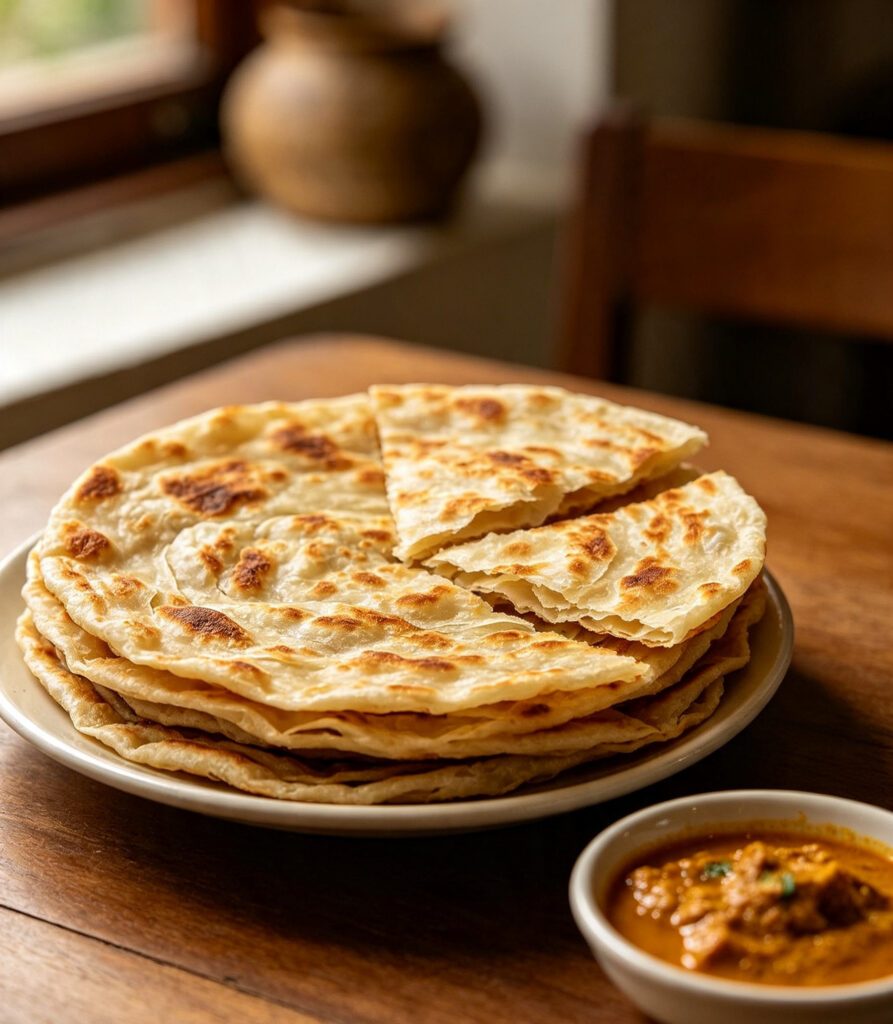
Introduction: A rich, flaky layered flatbread, pan-fried until golden, a popular sweet or savoury tea shop treat across Myanmar.
Cultural Background: Palata shares roots with South Asian paratha and roti canai found across Southeast Asia, and in Myanmar it has become a beloved tea shop item, served plain, with condensed milk, or alongside a curry.
Tips: Stretch the dough as thin as possible before coiling, as this is what creates the many delicate layers. Resting the dough sufficiently makes it much easier to stretch without tearing.
Variations: Serve with sweetened condensed milk for a dessert-style treat. Serve alongside a bean or meat curry for a savoury meal.
Storage: Store cooled palata in an airtight container at room temperature for up to 1 day.
Reheating: Reheat in a dry pan over low heat for 1–2 minutes per side to restore flakiness.
Nutrition: Per serving (approx., 1 palata): 320 kcal, 6 g protein, 14 g fat, 42 g carbohydrate.
FAQs:
Q: What is palata usually eaten with?
A: Sweetened condensed milk for a dessert version, or
Q: Why must the dough rest so long?
A: Resting relaxes the gluten, making the dough much easier to
- Plain flour — 3 cups (375 g / 13 oz)
- Warm water — 1 cup (240 ml / 8 fl oz)
- Salt — 1/2 tsp
- Sugar — 1 tsp
- Oil, plus extra for folding and cooking — 1/4 cup (60 ml / 2 fl oz)
Please log in to leave a comment.