
Somun
The Quirky Foodster Team
Ingredients
- Bread flour — 4 cups (500 g / 1 lb 2 oz)
- Warm water — 1.5 cups (360 ml / 12 fl oz)
- Active dry yeast — 2 tsp
- Sugar — 1 tsp
- Salt — 2 tsp
- Oil — 1 tbsp
Method
- Dissolve the yeast and sugar in the warm water and let sit for 10 minutes until foamy.
- Combine the flour and salt in a large bowl, then add the yeast mixture and oil.
- Mix and knead for 10 minutes until smooth and elastic.
- Cover and let rise in a warm place for 1 hour, or until doubled in size.
- Shape the dough into a round, slightly domed loaf and place on a baking tray.
- Score the top lightly in a criss-cross pattern.
- Let rise for a further 25 minutes.
- Preheat the oven to 220°C (425°F) and bake for 20–25 minutes until golden and hollow-sounding when tapped.
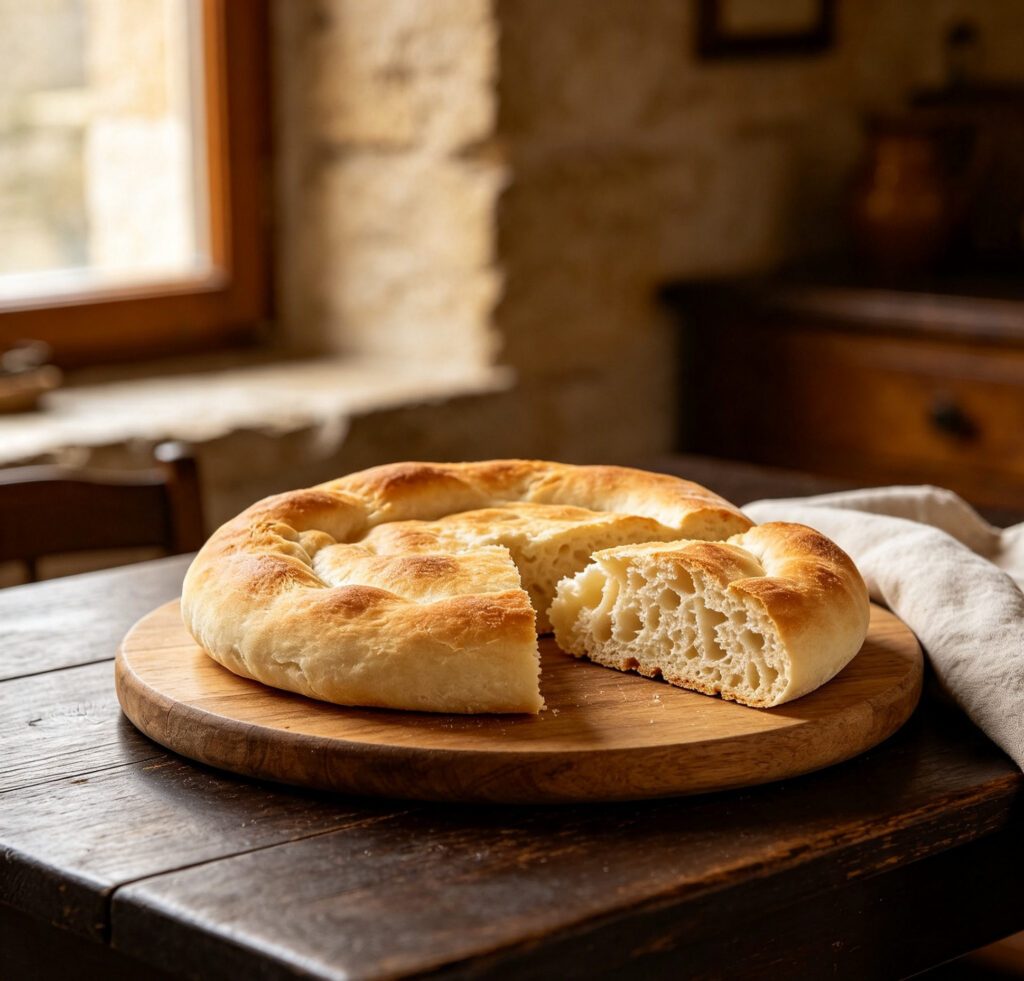
Introduction: A soft, slightly domed round bread, traditionally baked for special occasions and often served alongside stews and roasted meats.
Cultural Background: Somun shares roots with similar breads found across the wider Balkans and Ottoman-influenced regions, its slightly domed shape and soft crumb making it well suited to special-occasion meals.
Tips: Scoring the top helps the bread rise evenly and gives it its traditional appearance. A hot oven helps develop a good, even crust while keeping the interior soft.
Variations: Brush the top with a little water before baking for a shinier crust. Serve warm alongside stews for soaking up sauce.
Storage: Store at room temperature wrapped in a cloth for up to 1 day; freeze for longer storage.
Reheating: Warm in an oven at 180°C (350°F) for 5–8 minutes to refresh.
Nutrition: Per serving (approx., 1 slice): 170 kcal, 5 g protein, 2 g fat, 32 g carbohydrate.
FAQs:
Q: What occasions is somun traditionally served for?
A: It’s often baked for special gatherings and
Q: How is somun different from lepinja?
A: Somun tends to be a single larger, domed loaf, while
- Bread flour — 4 cups (500 g / 1 lb 2 oz)
- Warm water — 1.5 cups (360 ml / 12 fl oz)
- Active dry yeast — 2 tsp
- Sugar — 1 tsp
- Salt — 2 tsp
- Oil — 1 tbsp
Please log in to leave a comment.