
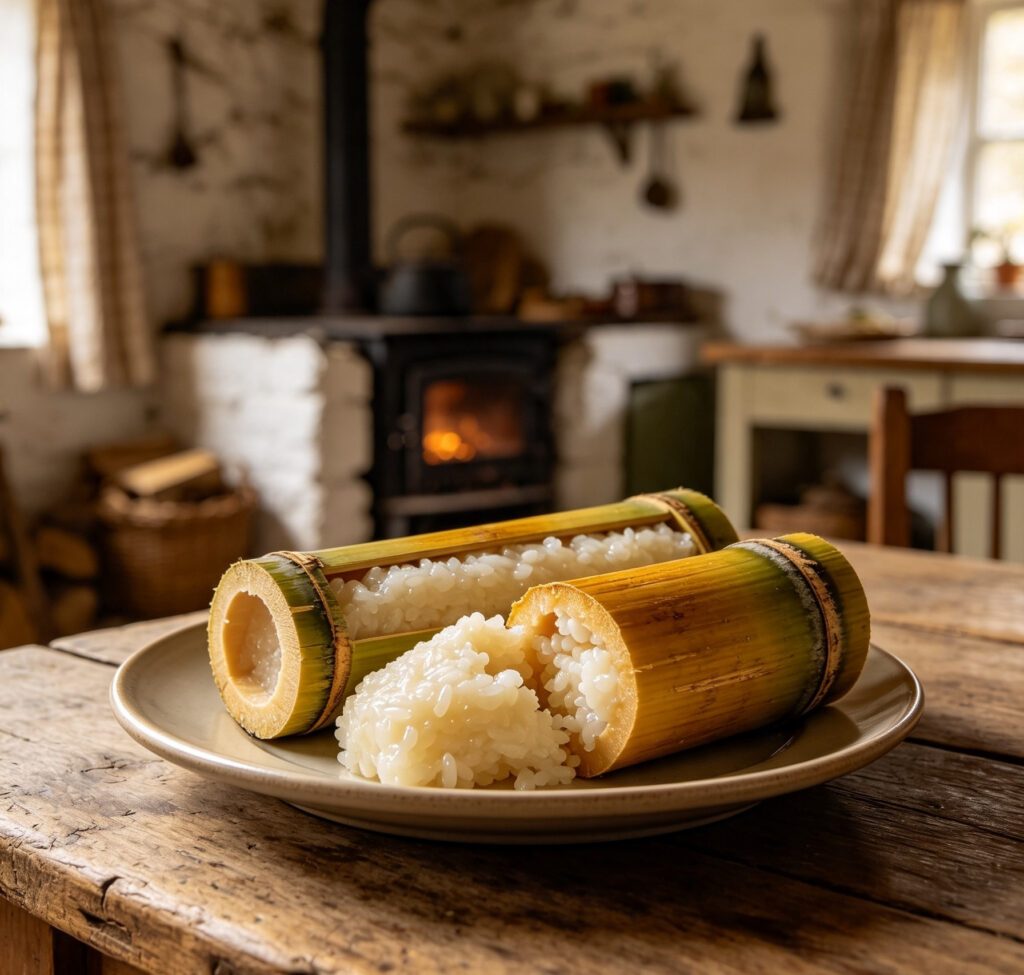
Lemang (Glutinous Rice Cooked in Bamboo, Hari Raya)
The Quirky Foodster Team
Ingredients
- Glutinous rice, soaked for at least 3 hours — 500 g (2 1/2 cups)
- Coconut milk — 400 ml (1 2/3 cups)
- Salt — 6 g (1 tsp)
- Fresh bamboo stalks (about 30 cm/12 in long, one end open), or a heavy-based pot as an oven alternative — 4–6
- Banana leaf, for lining — enough to line each bamboo stalk
Method
- Drain the soaked glutinous rice and mix with the salt.
- Line the inside of each bamboo stalk with a rolled piece of banana leaf, leaving enough overhang to fold over the top later.
- Fill each lined stalk about two-thirds full with the rice mixture, leaving room for the rice to expand.
- Pour coconut milk into each stalk until it just covers the rice (do not overfill, as the rice will absorb and swell).
- Fold the banana leaf overhang loosely over the opening to help retain moisture while still allowing steam to escape.
- Prop the bamboo stalks at an angle around a low, steady open fire (or on a grill over indirect medium heat), turning occasionally, and cook for 2 1/2 to 3 hours, until the rice is fully tender and infused with a smoky aroma.
- Allow to cool slightly, then split open the bamboo carefully, remove the banana leaf-wrapped rice log, and slice into rounds to serve, traditionally alongside rendang.
Introduction: Glutinous rice and coconut milk packed into bamboo stalks lined with banana leaf and slow-roasted over an open fire, yielding a smoky, subtly sweet rice cake traditionally eaten during Hari Raya.
Cultural Background: Lemang is one of the most anticipated dishes of Hari Raya (Eid) in Malaysia, with families and communities often gathering the day before the festival to tend fires and roast dozens of bamboo stalks together long into the night. Its labour-intensive preparation makes it a dish strongly associated with celebration, community effort and festive abundance.
Tips: Turning the bamboo regularly ensures the rice cooks evenly on all sides without burning. If bamboo is unavailable, the rice can be steamed in banana-leaf-lined tins for a similar, though less smoky, result. Do not overfill the bamboo with rice, as glutinous rice expands significantly during cooking.
Variations: Use a mix of white and black glutinous rice for a striking two-tone lemang. Serve with serunding (spiced coconut meat floss) as an alternative to rendang. Add a pandan leaf inside the bamboo for extra fragrance.
Storage: Store cooked lemang wrapped in its banana leaf in the refrigerator for up to 3 days.
Reheating: Reheat by steaming the sliced rounds for 8–10 minutes, or grilling briefly to restore a light char, until heated through.
Nutrition: Approx. per serving: 320 kcal, 5 g protein, 52 g carbohydrate, 10 g fat, 1 g fibre.
FAQs:
Q: Can I make lemang without bamboo?
A: Yes, pack the rice and coconut milk into banana-leaf-lined tins or moulds and steam for about 1 1/2 to 2 hours as a practical alternative, though it will lack the smoky flavour from the fire.
Q: What is lemang traditionally served with?
A: It is most classically paired with rendang, though it is also enjoyed with serunding or simply on its own during Hari Raya.
Q: Is lemang vegan?
A: Yes, as written it is entirely plant-based.
- Glutinous rice, soaked for at least 3 hours — 500 g (2 1/2 cups)
- Coconut milk — 400 ml (1 2/3 cups)
- Salt — 6 g (1 tsp)
- Fresh bamboo stalks (about 30 cm/12 in long, one end open), or a heavy-based pot as an oven alternative — 4–6
- Banana leaf, for lining — enough to line each bamboo stalk
Please log in to leave a comment.