
Rendang Daging (Dry Beef Rendang)
The Quirky Foodster Team
Ingredients
- Beef (chuck or shin), cubed — 900 g (2 lb)
- Coconut milk — 800 ml (3 1/3 cups)
- Dried red chilies, soaked — 12
- Shallots — 8
- Garlic — 5 cloves
- Ginger — 15 g (1 tbsp)
- Galangal — 15 g (1 tbsp)
- Lemongrass, tender part only, bruised — 2 stalks
- Turmeric leaf, torn (or 4 kaffir lime leaves), optional — 1
- Kerisik (toasted grated coconut, ground) — 60 g (1/2 cup)
- Tamarind pulp, soaked in 60 ml water, strained — 15 g (1 tbsp)
- Palm sugar or brown sugar — 20 g (1 1/2 tbsp)
- Cooking oil — 30 ml (2 tbsp)
- Salt — to taste
Method
- Blend the soaked chilies, shallots, garlic, ginger and galangal into a smooth, fragrant paste.
- Heat the oil in the pot and fry the paste over medium heat for 8–10 minutes, stirring frequently, until fragrant and the oil begins to separate.
- Add the beef and bruised lemongrass, and stir to coat well in the paste, cooking for 5 minutes.
- Pour in the coconut milk and add the turmeric leaf, if using, then bring to a gentle boil.
- Reduce heat to low and simmer uncovered, stirring occasionally, for 1 1/2 to 2 hours, until the beef is very tender and the sauce has noticeably reduced.
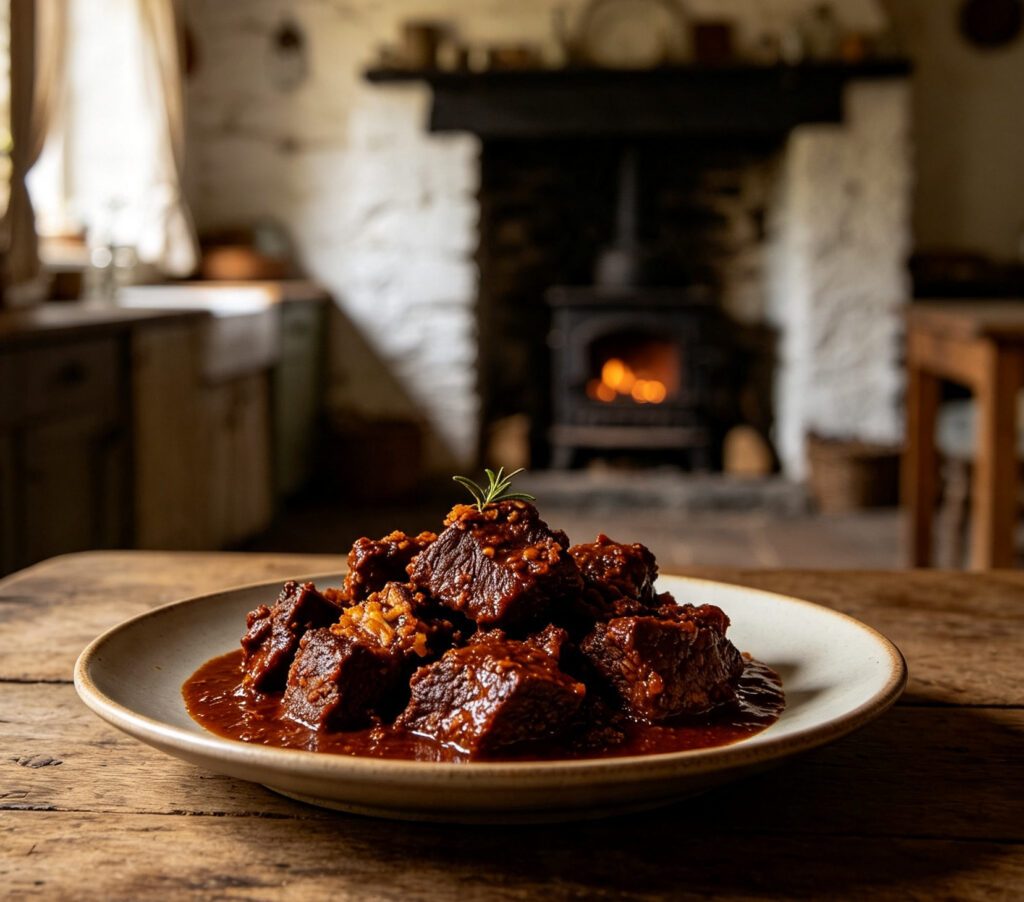
- Stir in the kerisik, tamarind liquid and palm sugar, and continue simmering, stirring more frequently as the sauce thickens, for a further 30–45 minutes, until the rendang turns a deep brown and the oil visibly separates and the sauce clings thickly to the meat.
- Season with salt to taste, and serve hot, traditionally alongside rice or ketupat.
Introduction: Beef slowly simmered in coconut milk and a fragrant spice paste until the liquid reduces to a thick, dark, richly spiced coating clinging to tender meat.
Cultural Background: Rendang has deep roots in Malay and wider Malay-Minangkabau culinary tradition and is a centrepiece dish at Malaysian festive occasions, particularly Hari Raya (Eid). Its long, patient cooking process — traditionally taking several hours until nearly all liquid evaporates — was originally developed as a way to preserve meat without refrigeration, and it remains a mark of a well-prepared celebratory feast.
Tips: Patience is essential — rendang requires a long, slow simmer to develop its characteristic thick, dark sauce and tender meat. Stir more frequently toward the end of cooking to prevent the thickened sauce from catching and burning on the bottom of the pot. Kerisik (toasted ground coconut) is what gives rendang its distinctive texture and nutty depth — do not substitute plain desiccated coconut without toasting it first.
Variations: Use chicken in place of beef for a quicker-cooking rendang ayam. Add whole boiled eggs into the sauce for the last 20 minutes for rendang telur. Adjust the number of dried chilies to control the final heat level.
Storage: Store in an airtight container in the refrigerator for up to 5 days, or freeze for up to 3 months; rendang is well known for tasting even better the day after cooking.
Reheating: Reheat gently in a saucepan over low-medium heat, stirring occasionally, until heated through, about 8–10 minutes; add a small splash of water if the sauce has thickened too much.
Nutrition: Approx. per serving: 480 kcal, 30 g protein, 12 g carbohydrate, 34 g fat, 3 g fibre.
FAQs:
Q: How do I make kerisik at home?
A: Toast desiccated or fresh grated coconut in a dry pan over low heat, stirring constantly, until deep golden brown, then grind to a paste using a mortar and pestle or food processor.
Q: Why is my rendang too wet?
A: It likely needs longer, uncovered simmering to reduce the liquid further; continue cooking over low heat, stirring often, until the sauce visibly thickens and clings to the meat.
Q: Is rendang traditionally very spicy?
A: Rendang has a warm, complex heat from the chilies balanced by rich coconut and aromatics; the heat level can be adjusted by using fewer or milder chilies.
- Beef (chuck or shin), cubed — 900 g (2 lb)
- Coconut milk — 800 ml (3 1/3 cups)
- Dried red chilies, soaked — 12
- Shallots — 8
- Garlic — 5 cloves
- Ginger — 15 g (1 tbsp)
- Galangal — 15 g (1 tbsp)
- Lemongrass, tender part only, bruised — 2 stalks
- Turmeric leaf, torn (or 4 kaffir lime leaves), optional — 1
- Kerisik (toasted grated coconut, ground) — 60 g (1/2 cup)
- Tamarind pulp, soaked in 60 ml water, strained — 15 g (1 tbsp)
- Palm sugar or brown sugar — 20 g (1 1/2 tbsp)
- Cooking oil — 30 ml (2 tbsp)
- Salt — to taste
Please log in to leave a comment.