
Nasi Lemak (Coconut Rice with Sambal, Egg, Anchovies and Peanuts)
The Quirky Foodster Team
Ingredients
- Jasmine rice, rinsed — 400 g (2 cups)
- Coconut milk — 300 ml (1 1/4 cups)
- Water — 200 ml (3/4 cup plus 1 tbsp)
- Pandan leaves, knotted, optional — 2
- Salt — 3 g (1/2 tsp)
- Dried anchovies (ikan bilis), whole — 80 g (1 cup)
- Roasted peanuts — 60 g (1/2 cup)
- Cooking oil, for frying anchovies and peanuts — 60 ml (1/4 cup)
- Large Eggs, hard-boiled or fried — 4
- Medium Cucumber, sliced — 1
- Dried red chilies, soaked — 8
- Shallots — 6
- Garlic — 3 cloves
- Shrimp paste (belacan) — 10 g (2 tsp)
- Tamarind pulp, soaked in 60 ml (1/4 cup) water, strained — 15 g (1 tbsp)
- Sugar — 15 g (1 tbsp)
Method
- Combine the rinsed rice, coconut milk, water, pandan leaves and salt in a rice cooker or saucepan; cook until the rice is tender and fragrant (about 15 minutes on the stovetop, covered, on low heat after boiling).
- While the rice cooks, heat 30 ml (2 tbsp) of the oil in a frying pan and fry the dried anchovies until crisp and golden, about 3–4 minutes. Remove and drain. In the same oil, lightly toast the peanuts for 2–3 minutes until golden; drain.
- Blend the soaked chilies, shallots, garlic and shrimp paste into a smooth paste.
- Heat the remaining oil in a small saucepan and fry the paste over medium heat for 8–10 minutes, stirring often, until fragrant and the oil separates slightly.
- Stir in the tamarind liquid and sugar, and simmer for 5 minutes until the sambal thickens to a jam-like consistency. Season with salt to taste.
- Fluff the cooked rice with a fork and mound onto plates.
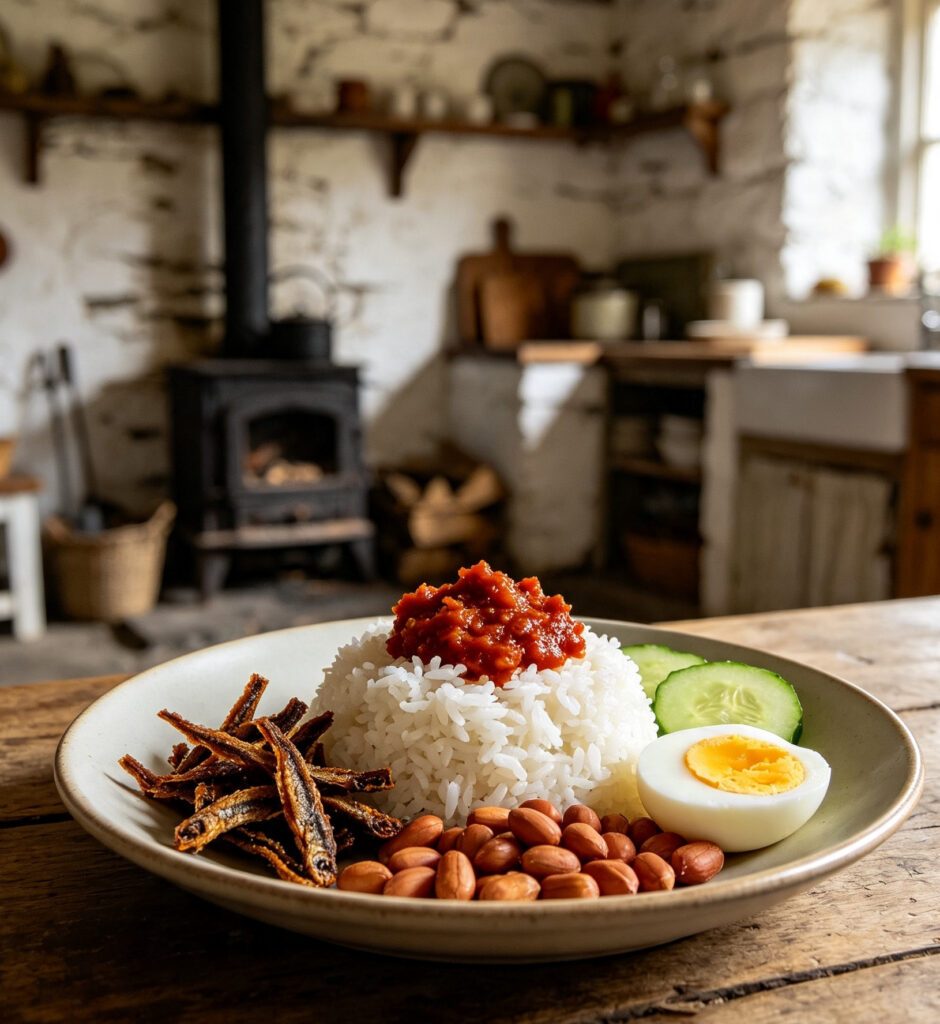
- Arrange the fried anchovies, peanuts, sliced cucumber, egg and a generous spoonful of sambal alongside the rice, and serve.
Introduction: Fragrant rice cooked in coconut milk and pandan leaf, served with spicy sambal, crisp fried anchovies, roasted peanuts, cucumber and a boiled or fried egg — widely regarded as Malaysia’s national dish.
Cultural Background: Nasi lemak began as a humble breakfast eaten by rural Malay farmers, wrapped in banana leaf for portability, and has since grown into a dish enjoyed at any hour across all of Malaysia’s communities. Its balanced plate of rich rice, protein, heat and crunch is often described as capturing the essence of Malaysian food culture in a single serving.
Tips: Toast the pandan leaves briefly and knot them before adding to the rice for the fullest fragrance. Fry the anchovies and peanuts separately, as anchovies release moisture that can make the peanuts soggy if fried together. The sambal can be made in a larger batch and stored, as its flavour deepens after a day.
Variations: Add fried chicken (ayam goreng) or beef rendang as a heartier accompaniment. Use freshly grated coconut milk in place of canned for a richer flavour. Wrap individual portions in banana leaf for the traditional grab-and-go presentation.
Storage: Store components separately in airtight containers in the refrigerator: rice for up to 2 days, sambal for up to 5 days, fried anchovies and peanuts for up to a week at room temperature in a sealed container.
Reheating: Reheat rice in a microwave or steamer with a few drops of water until hot. Reheat sambal gently in a small saucepan over low heat. Anchovies and peanuts do not need reheating; re-crisp briefly in a dry pan if softened.
Nutrition: Approx. per serving: 560 kcal, 15 g protein, 62 g carbohydrate, 27 g fat, 4 g fibre.
FAQs:
Q: Can I make nasi lemak less spicy?
A: Yes, reduce the number of dried chilies in the sambal and remove their seeds before soaking, which lowers the heat while keeping the flavour.
Q: What is belacan and can I substitute it?
A: Belacan is a fermented shrimp paste central to Malaysian cooking; if unavailable, a small amount of fish sauce can approximate the savoury depth, though the flavour will differ.
Q: Is nasi lemak traditionally vegetarian?
A: The base rice and sambal can be made vegetarian by using a fermented soybean paste instead of shrimp paste and omitting the anchovies; however, the classic version includes both.
- Jasmine rice, rinsed — 400 g (2 cups)
- Coconut milk — 300 ml (1 1/4 cups)
- Water — 200 ml (3/4 cup plus 1 tbsp)
- Pandan leaves, knotted, optional — 2
- Salt — 3 g (1/2 tsp)
- Dried anchovies (ikan bilis), whole — 80 g (1 cup)
- Roasted peanuts — 60 g (1/2 cup)
- Cooking oil, for frying anchovies and peanuts — 60 ml (1/4 cup)
- Large Eggs, hard-boiled or fried — 4
- Medium Cucumber, sliced — 1
- Dried red chilies, soaked — 8
- Shallots — 6
- Garlic — 3 cloves
- Shrimp paste (belacan) — 10 g (2 tsp)
- Tamarind pulp, soaked in 60 ml (1/4 cup) water, strained — 15 g (1 tbsp)
- Sugar — 15 g (1 tbsp)
Please log in to leave a comment.