
Sides
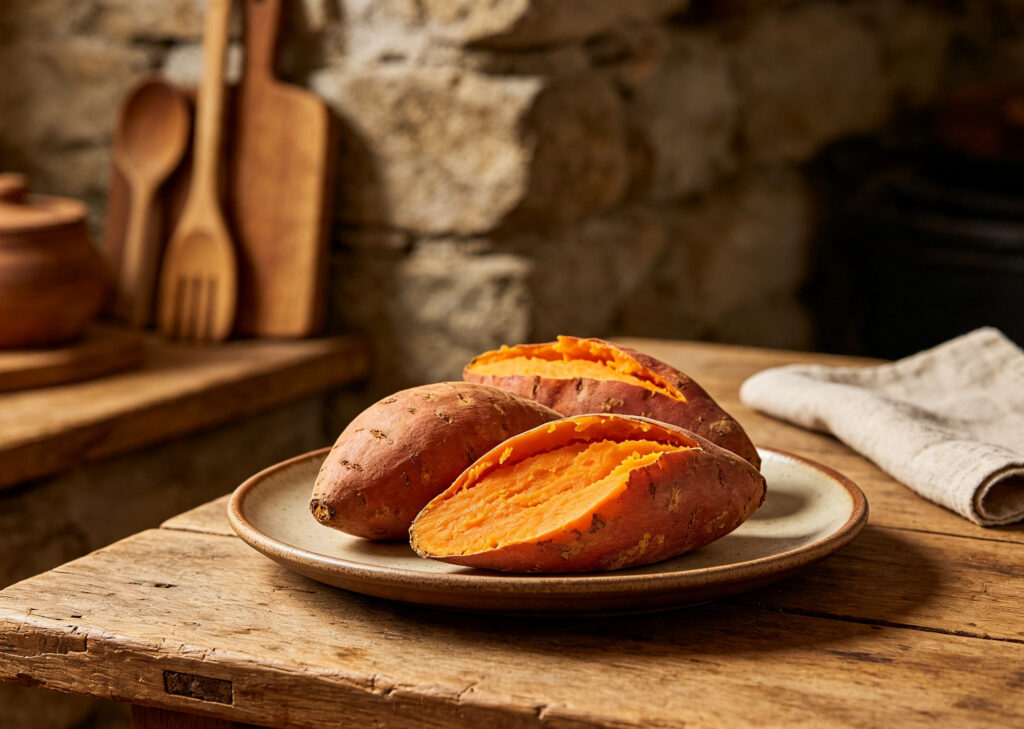
Mbambaira Yakabikwa
Ingredients
- 800 g (1.75 lb) sweet potatoes, scrubbed and left whole or halved
- 1 litre (4 cups) water
- Pinch of salt
Method
- Place the sweet potatoes in a large pot and cover with the water. Add a pinch of salt.
- Bring to a boil, then reduce heat and simmer, covered, for 25-35 minutes, depending on size, until a fork slides easily into the centre.
- Drain well in a colander.
- Peel if desired (skins can also be left on and eaten), and serve whole, halved or sliced.
- Serve warm as a simple side dish, plain or with a little butter.
Introduction: Simply boiled sweet potatoes are a common, comforting side across Zimbabwe, often served alongside tea for breakfast or as an accompaniment to a main meal, prized for their natural sweetness and simplicity.
Cultural Background: Simply boiled sweet potatoes are a common, comforting side across Zimbabwe, often served alongside tea for breakfast or as an accompaniment to a main meal, prized for their natural sweetness and simplicity.
Tips: Choose sweet potatoes of similar size so they cook evenly. Test doneness with a fork in the thickest part before draining. Leave the skins on for extra fibre and a more rustic presentation, if preferred.
Variations: Serve with a drizzle of honey for extra sweetness. Mash lightly with a little butter for a softer side dish. Serve alongside mafi or tea for a traditional breakfast pairing. Naturally vegan as written; no conversion needed.
Storage: Refrigerate in an airtight container for up to 4 days.
Reheating: Reheat in a covered pan with a splash of water over low heat, or in the microwave, until warmed through.
Nutrition: Per serving (approx.): 160 kcal, 2 g protein, 37 g carbohydrates, 0 g fat, 4 g fibre.
FAQs:
Q: Should I peel the sweet potatoes before boiling?
A: It’s not necessary; boiling with the skin on helps retain nutrients, and the skin can be peeled off easily afterward if preferred.
Q: How do I know when they’re done?
A: A fork should slide easily into the centre with little resistance.
Q: Can I roast these instead of boiling?
A: Yes, though boiling is the more traditional and common preparation for this particular dish.
Please log in to leave a comment.