
Sides
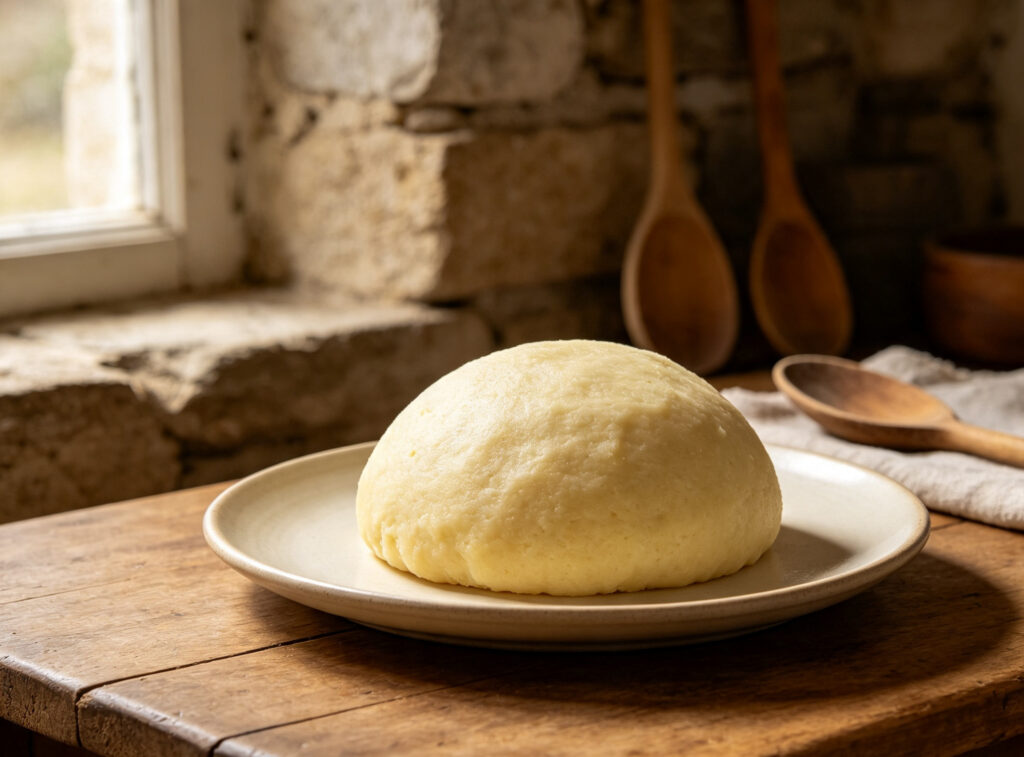
Sadza
Ingredients
- 400 g (2 cups) white maize meal, divided
- 1 litre (4 cups) water, divided
- Pinch of salt
Method
- Bring 700 ml of the water to a boil in a heavy-bottomed saucepan with a pinch of salt.
- Mix the remaining 300 ml of water with about a third of the maize meal to form a smooth, thin paste.
- Reduce the heat under the boiling water to low, stir in the paste, and cook for 2-3 minutes until slightly thickened.
- Gradually sprinkle in the remaining dry maize meal, stirring vigorously and continuously with a sturdy wooden spoon to prevent lumps.
- Continue stirring and folding for 8-10 minutes as the mixture thickens into a smooth, firm dough that pulls cleanly away from the sides of the pot.
- Cover and cook over very low heat for a further 3-4 minutes to fully cook through, then shape into a mound on a serving plate using a wet spoon.
- Serve immediately while hot, alongside a stew, greens or sauce.
Introduction: Sadza is the cornerstone of Zimbabwean cuisine — a thick, smooth maize meal dough cooked until firm, eaten daily as the base of nearly every meal.
Cultural Background: Sadza is the cornerstone of Zimbabwean cuisine — a thick, smooth maize meal dough cooked until firm, eaten daily as the base of nearly every meal. Simple in ingredients but requiring skill and strength to prepare correctly, it holds deep cultural significance as a symbol of home and daily life.
Tips: This dish requires real arm strength and constant stirring — don’t stop once you begin adding the dry meal. Keep a cup of water nearby to wet your spoon when shaping the sadza. Sadza is meant to be eaten hot and fresh, right after cooking, for the best texture.
Variations: Use a mix of maize meal and sorghum meal for a heartier, more traditional rural variation. Shape into individual portions for easier serving at large family meals. Make a softer version (sadza yemumvura) for very young children or elderly family members. Naturally vegan as written; no conversion needed.
Storage: Best eaten fresh; leftovers can be refrigerated for up to 2 days but the texture firms considerably and is best repurposed (such as in Mafi neSadza).
Reheating: Reheat by steaming over simmering water for 5-8 minutes, or microwave covered with a damp cloth, stirring halfway through.
Nutrition: Per serving (approx.): 190 kcal, 3 g protein, 42 g carbohydrates, 1 g fat, 2 g fibre.
FAQs:
Q: Why does my sadza turn out lumpy?
A: Lumps form when dry meal is added too quickly without enough vigorous stirring — add gradually and stir firmly throughout.
Q: What does sadza taste like?
A: It’s mild and neutral, designed as a plain base to complement flavourful stews, greens and sauces.
Q: Is sadza the same as pap or ugali?
A: It’s very similar in concept to pap (South Africa) and ugali (East Africa) — all are firm maize meal staples, with slight regional differences in texture and preparation.
Please log in to leave a comment.