
Breads
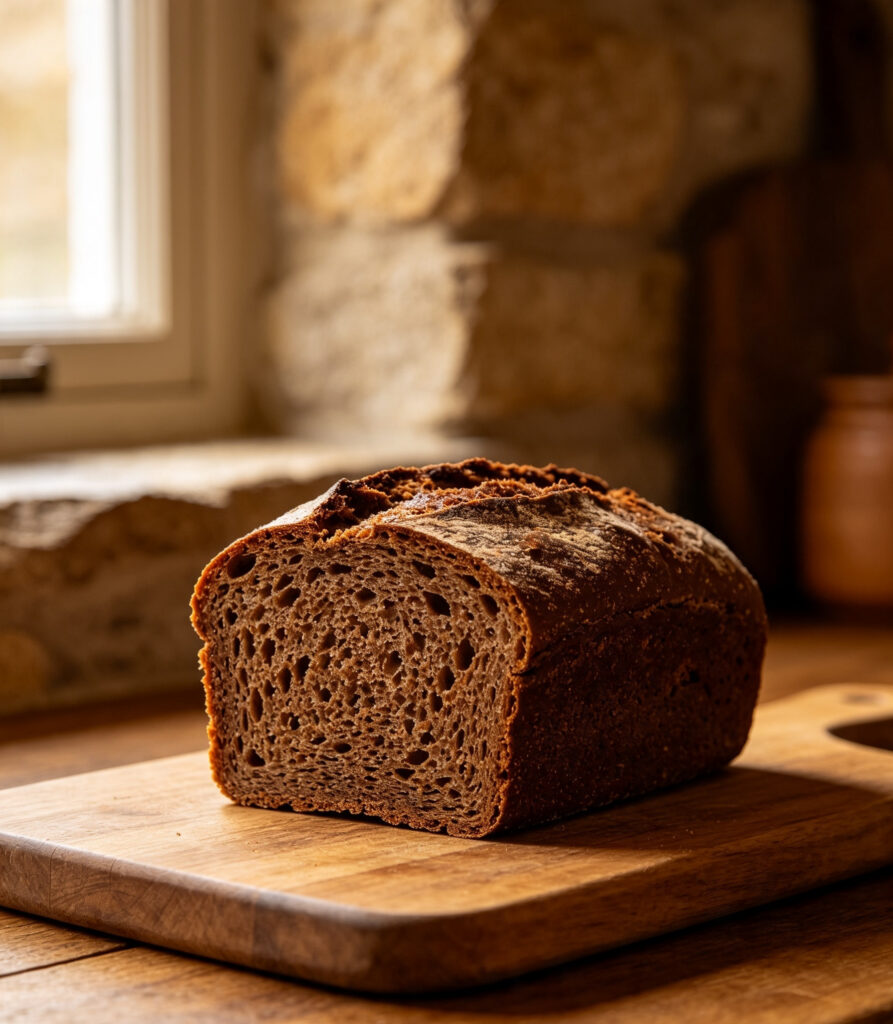
Lietuviška Ruginė Duona
Ingredients
- 500g (4 1/4 cups) Rye flour
- 200g (1 3/4 cups) Wheat flour
- 400ml (1 3/4 cups) Warm water
- 150g (5.3 oz) Active rye sourdough starter
- 1 tbsp (8g) Salt
- 1 tbsp (8g) Caraway seeds
- 1 tbsp (15g) Molasses
Method
- Combine the rye flour, wheat flour, water, sourdough starter, salt, caraway seeds, and molasses into a thick, sticky dough.
- Mix thoroughly for several minutes; rye dough won't develop the same gluten structure as wheat, so it stays dense.
- Divide between two greased loaf tins, smoothing the tops with a wet hand.
- Cover and leave to ferment in a warm place for 3-4 hours, or until visibly risen.
- Preheat the oven to 220°C (425°F) and bake for 50-60 minutes until the crust is dark brown and the loaf sounds hollow when tapped.
- Cool completely on a wire rack before slicing — rye bread needs time to set.
Introduction: Dark rye bread is central to Lithuanian identity at the table — dense, tangy, and slow-fermented, it has been the country's everyday bread for centuries and is treated with a respect bordering on reverence in rural households.
Cultural Background: Dark rye bread is central to Lithuanian identity at the table — dense, tangy, and slow-fermented, it has been the country's everyday bread for centuries and is treated with a respect bordering on reverence in rural households.
Tips: Resist slicing the bread while warm; dense rye loaves continue to set as they cool and will seem gummy if cut too early.
Variations: Add crushed coriander seed alongside the caraway for a different aromatic note, or fold in dried fruit for a slightly sweet variation.
Nutrition: Approx. 140 kcal, 4g protein, 1g fat, 29g carbohydrates per slice.
FAQs:
Q: Why is my rye bread so dense?
A: Rye bread is meant to be dense — it has far less gluten than wheat bread, so don't expect a light, airy crumb.
Q: Can I make this without a sourdough starter?
A: A starter gives the traditional tang and rise; without one, add extra yeast, though the flavour and texture will differ from the classic loaf.
Please log in to leave a comment.