
Sides
Papa (Stiff Maize Porridge)
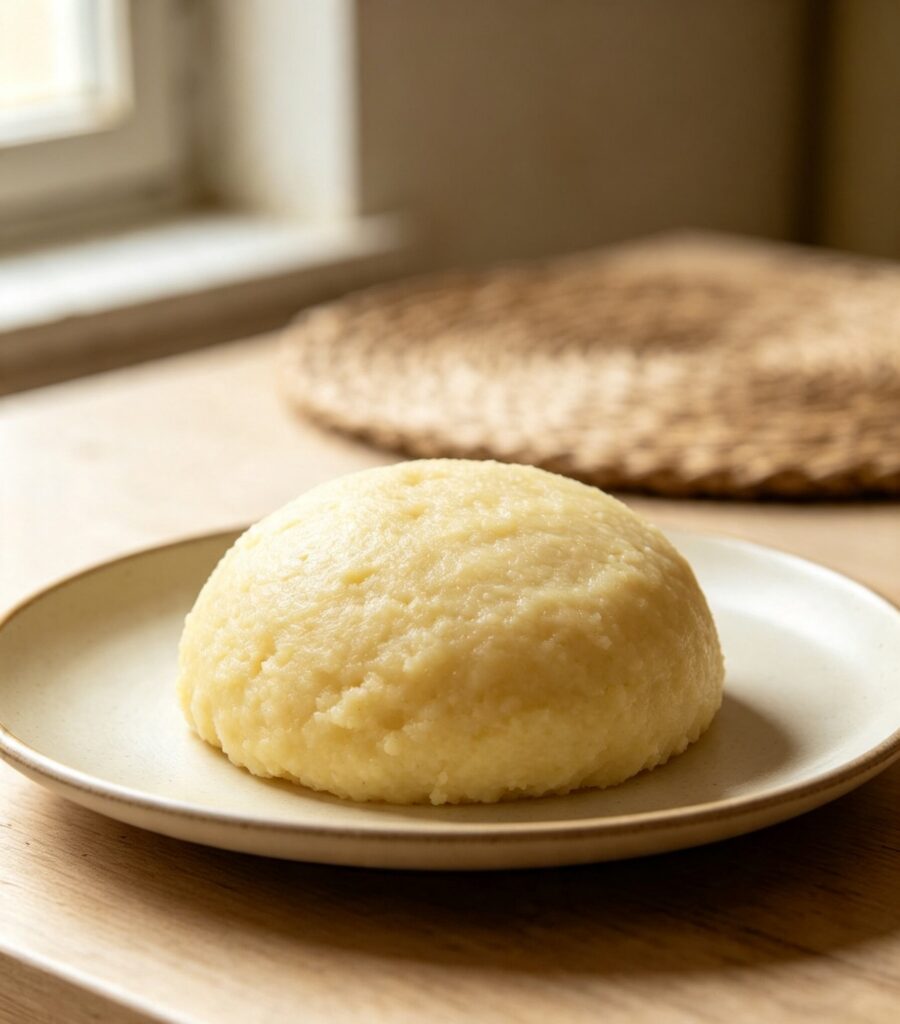
Ingredients
- 300 g (2 cups) white maize meal
- 900 ml (3 3/4 cups) water
- 1 tsp salt
Method
- Bring the water and salt to a rolling boil in the large pot.
- Stir in about a third of the maize meal to form a loose, thin porridge, then cover and simmer for 5 minutes.
- Add the remaining maize meal in two batches, beating vigorously with the wooden spoon after each addition to avoid lumps.
- Once fully incorporated, reduce the heat to very low, cover, and cook for 15–20 minutes, beating the mixture hard every 5 minutes.
- The papa is ready when it is smooth, stiff, and pulls away cleanly from the sides of the pot in one mass.
- Turn it out onto a plate or board, smooth the top with a wet spoon, and serve hot alongside stews, greens or meat.
Introduction: Papa is the foundational staple of the Basotho table, a stiff, dense maize porridge that accompanies nearly every savoury dish, from moroho to serobe to roasted meat.
Cultural Background: Papa is the foundational staple of the Basotho table, a stiff, dense maize porridge that accompanies nearly every savoury dish, from moroho to serobe to roasted meat. Cooked and beaten with a dedicated wooden spoon until it forms a single smooth mass, it is turned out and cut or torn to scoop up stews and relishes by hand.
Tips: A dedicated long-handled wooden spoon makes beating the thick papa much easier on the wrist. If the papa feels too soft, cook uncovered a little longer over very low heat to drive off excess moisture.
Variations: Yellow maize meal is used in some households for a slightly sweeter flavour and colour. Sorghum meal is blended in by some for a heartier, nuttier papa. Already vegetarian and vegan as written.
Storage: Wrap and refrigerate leftovers for up to 2 days.
Reheating: Steam over simmering water or microwave with a splash of water, covered, until soft again.
FAQs:
Q: Why is my papa lumpy?
A: Add the maize meal gradually and beat continuously rather than dumping it all in at once.
Q: Can papa be made ahead?
A: It's best fresh, as it firms up considerably once cold.
Please log in to leave a comment.