
Holidays & Special Occasions
Grey Peas with Bacon (Pelēkie Zirņi ar Speķi)
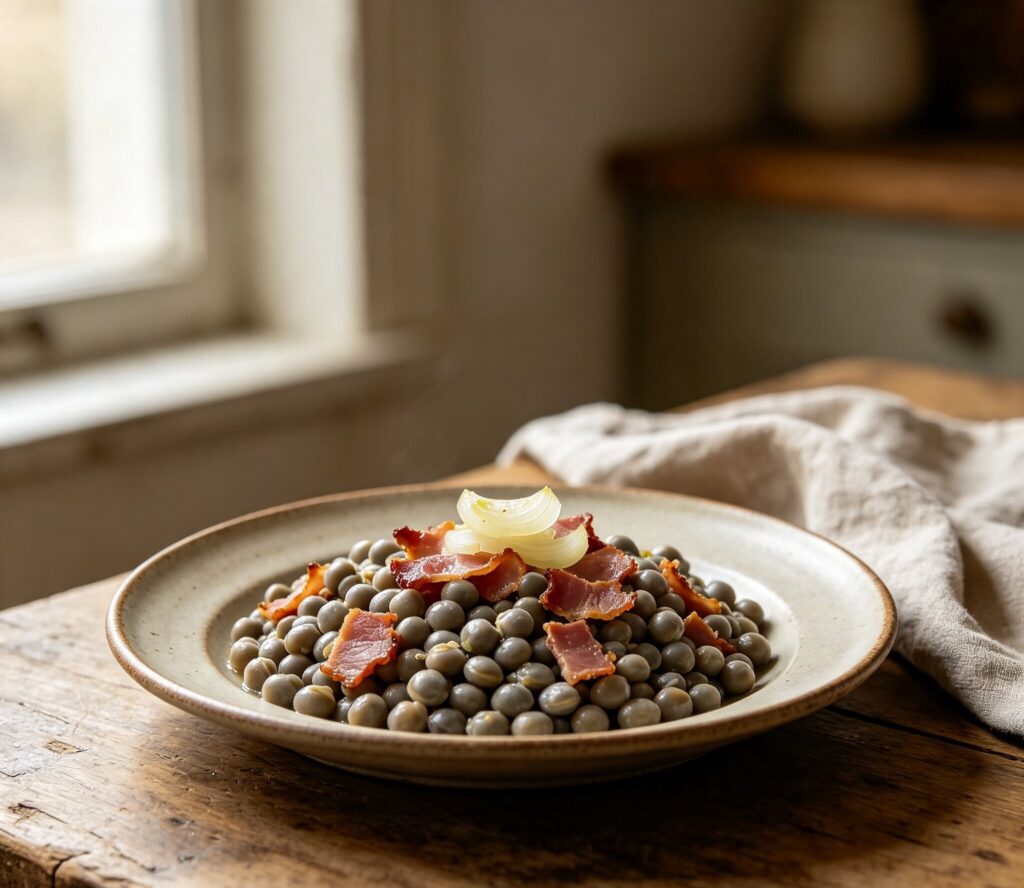
Ingredients
- 500 g (2 1/2 cups) dried grey peas, soaked overnight
- 1.5 litres (6 cups) water
- 1 bay leaf
- 250 g (9 oz) smoked bacon, diced
- 2 onions, finely chopped
- 1 tsp salt, or to taste
- 1/2 tsp black pepper
- 2 tbsp sunflower oil
Method
- Drain the soaked grey peas and place in a large pot with the fresh water and bay leaf.
- Bring to a boil, then reduce heat and simmer gently for 1.5-2 hours, until the peas are tender, topping up water as needed.
- Meanwhile, heat the oil in a frying pan and cook the bacon and onion together over medium heat for 10 minutes until golden and fragrant.
- Drain the cooked peas, discarding the bay leaf, and season with salt and pepper.
- Stir the bacon and onion mixture through the peas, or serve it spooned generously over the top.
Introduction: This hearty dish of slow-cooked grey field peas studded with bacon and onion is the single most iconic Latvian Christmas dish, traditionally served on Christmas Eve as part of a meal meant to ensure prosperity in the year ahead.
Cultural Background: This hearty dish of slow-cooked grey field peas studded with bacon and onion is the single most iconic Latvian Christmas dish, traditionally served on Christmas Eve as part of a meal meant to ensure prosperity in the year ahead. Its rustic, earthy flavour makes it equally at home at winter gatherings throughout the season.
Tips: Soaking the peas overnight is essential — this significantly reduces cooking time and gives a more even, creamy texture.
Variations: A vegetarian version omits the bacon, using extra caramelised onion and a drizzle of oil instead.
Storage: Refrigerate in an airtight container for up to 3 days.
Reheating: Reheat gently on the stovetop with a splash of water, stirring frequently.
FAQs:
Q: Where can grey peas be bought outside Latvia?
A: Specialty European grocers or online retailers stocking Baltic and Eastern European ingredients often carry dried grey peas; brown or green split peas can be substituted if unavailable.
Q: Why are these peas associated specifically with Christmas?
A: They stem from an older agricultural tradition of eating stored dried peas through winter, later becoming firmly tied to the Christmas Eve table.
Please log in to leave a comment.