
Sides
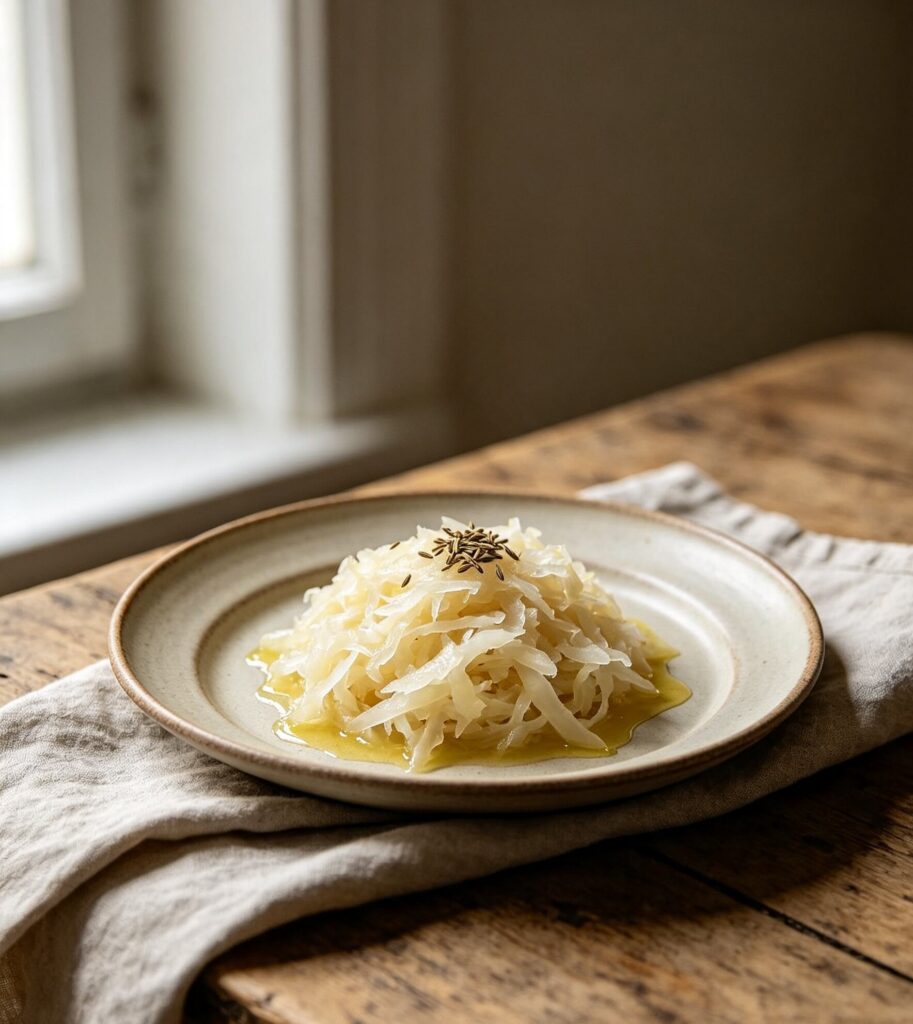
Latvian Sauerkraut (Skābēti Kāposti)
Ingredients
- 1.5 kg (3.3 lb) white cabbage, finely shredded
- 30 g (2 tbsp) coarse sea salt
- 2 medium carrots, grated
- 1 tbsp caraway seeds
- 2 bay leaves
Method
- Combine the shredded cabbage and salt in a large bowl, massaging firmly with your hands for 8-10 minutes until it releases plenty of liquid.
- Mix in the grated carrot, caraway seeds and bay leaves.
- Pack the mixture tightly into a fermentation crock or jar, pressing down until the liquid rises above the cabbage.
- Weigh down the cabbage to keep it fully submerged, cover loosely, and leave at room temperature for 5-7 days, checking daily.
- Once pleasantly sour, transfer to the refrigerator to slow fermentation before serving.
Introduction: Fermenting cabbage into sauerkraut was historically essential for surviving Latvia's long winters without fresh vegetables.
Cultural Background: Fermenting cabbage into sauerkraut was historically essential for surviving Latvia's long winters without fresh vegetables. Shredded cabbage packed with salt and left to ferment develops a distinctive sour tang, and it remains a staple side dish served alongside roasted and pan-fried meats throughout the colder months.
Tips: Keep the cabbage fully submerged under its own brine throughout fermentation to prevent mould from forming on exposed surfaces.
Variations: Add a few juniper berries or sliced apple for extra depth of flavour.
Storage: Refrigerate in a sealed jar for up to 2 months once fermentation is complete.
Reheating: Traditionally served cold or gently warmed through in a pan for a few minutes.
FAQs:
Q: How do I know when fermentation is complete?
A: The cabbage should taste pleasantly sour rather than simply salty, usually after 5-7 days at room temperature.
Q: Is a special crock necessary?
A: A crock helps but a large clean glass jar with a weight works just as well for home fermentation.
Please log in to leave a comment.