
Holidays & Special Occasions
Laap Sin
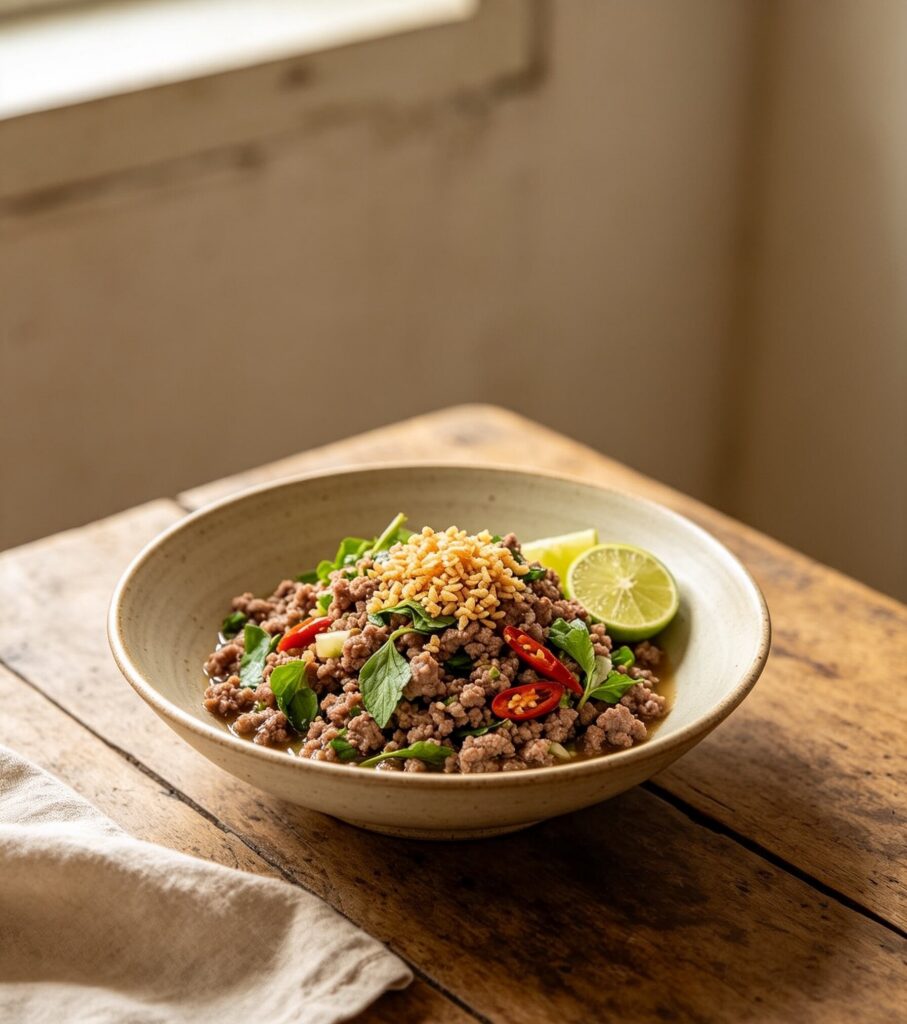
Ingredients
- 500 g (1.1 lb) minced beef
- 100 g (3.5 oz) beef liver, finely chopped and lightly cooked (optional, traditional)
- 3 tbsp toasted rice powder (khao khua)
- 3 tbsp lime juice
- 2 tbsp padaek or fish sauce
- 1 tbsp beef bile or extra lime juice for tartness (optional, traditional)
- 3-5 bird's eye chillies, crushed
- 2 shallots, thinly sliced
- 2 spring onions, chopped
- mint and coriander leaves
- sticky rice and fresh vegetables, to serve
Method
- Toast raw sticky rice in a dry pan until golden, then grind into khao khua powder.
- Cook the minced beef in a hot pan until just cooked through, breaking up lumps, keeping it slightly rare in the centre if preferred traditionally.
- Transfer to a mixing bowl while warm and add beef liver if using.
- Add lime juice, padaek, crushed chillies and shallots, tossing to combine.
- Stir through toasted rice powder, spring onions, mint and coriander.
- Arrange on a platter for the celebration table, served with sticky rice and fresh vegetables.
Introduction: Laap Sin, made with beef, is a festive centrepiece served during Boun Pi Mai (Lao New Year) and other major celebrations, reflecting the belief that laap – whose name echoes the Lao word for luck – brings prosperity for the year ahead.
Cultural Background: Laap Sin, made with beef, is a festive centrepiece served during Boun Pi Mai (Lao New Year) and other major celebrations, reflecting the belief that laap – whose name echoes the Lao word for luck – brings prosperity for the year ahead. Beef versions are typically reserved for larger, more significant gatherings than the everyday chicken version.
Tips: For a fully cooked, food-safe version suitable for most home cooks, ensure the beef is cooked through rather than left rare. Toast the rice powder just before use for the best aroma.
Variations: A milder version reduces chilli and omits the bitter bile traditionally used by some households. Laap Kai (chicken) is the everyday counterpart to this festive beef version (see Salads).
Storage: Best eaten fresh on the day of preparation, in keeping with festival tradition.
Reheating: Not applicable – served fresh at room temperature.
FAQs:
Q: Is Laap Sin always eaten at New Year?
A: It is especially associated with Boun Pi Mai and other major celebrations, though also enjoyed on other festive occasions.
Q: Is raw beef used?
A: Traditionally some households use rare or raw beef, but a fully cooked version is recommended for food safety.
Please log in to leave a comment.